









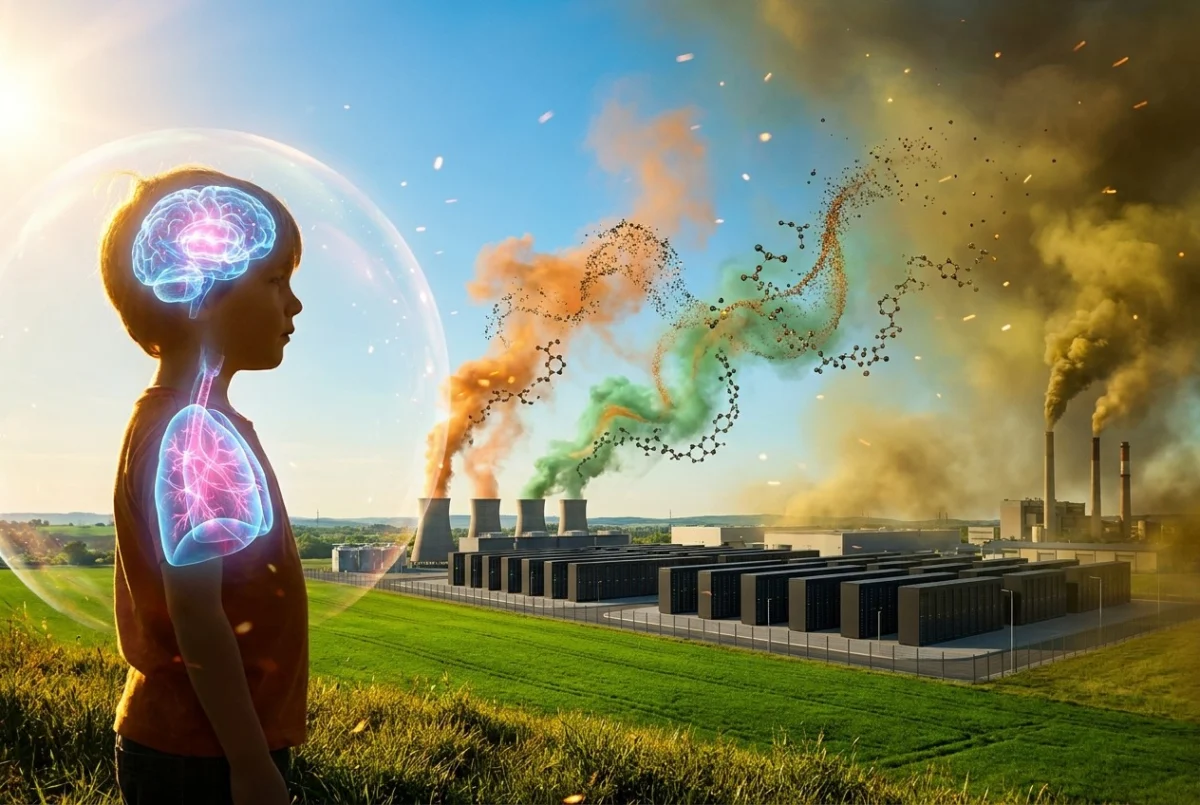
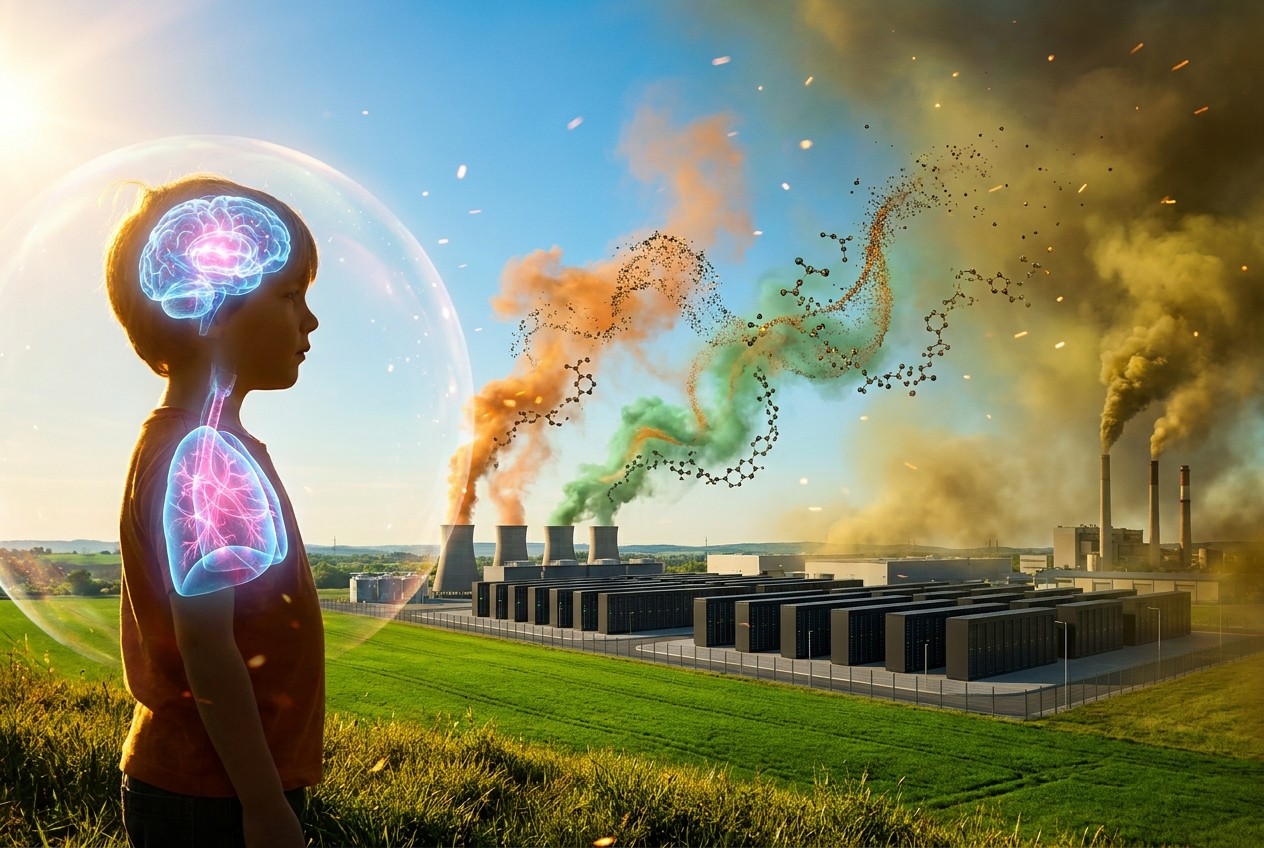
As the global race for artificial intelligence supremacy accelerates, a hidden infrastructure crisis is unfolding behind the scenes. While the public focuses on the capabilities of Large Language Models (LLMs) and generative AI, a new report from Children’s Health Defense (CHD) has cast a spotlight on the environmental and public health externalities of the physical plants powering this revolution. The report alleges that the rapid proliferation of AI data centers, fueled by massive electricity demands, is generating significant air pollution that poses specific, heightened risks to children’s developing brains and lungs.
The findings come at a time of burgeoning public resistance. With poll data from Heatmap News and other sources indicating that between 61% and 70% of Americans oppose the construction of data centers in their local communities, the tension between technological advancement and residential well-being has reached a critical inflection point.
The Infrastructure of Consumption: How AI Drives Pollution
The fundamental issue lies in the sheer scale of energy consumption required to train and maintain AI systems. Unlike traditional enterprise data centers, AI-specific facilities require consistent, high-density power and sophisticated cooling systems. As industry projections indicate that U.S. data centers could consume up to 18 billion cubic feet of natural gas per day by 2035—nearly double previous forecasts—the reliance on fossil fuel-backed power generation has intensified.
This energy demand is often met by local power plants, many of which utilize natural gas turbines and, in emergency scenarios, backup diesel generators. These systems emit a cocktail of pollutants, including fine particulate matter (PM2.5) and nitrogen oxides (NOx). These substances are well-documented triggers for respiratory distress and have been linked to long-term neurodevelopmental issues.
The Geography of Risk
A significant concern raised in the CHD report is the proximity of these facilities to residential zones. While some data centers are situated in remote locations—such as the Utah site near the Dugway Proving Ground—others are located within a half-mile of civilian housing. When industrial emissions are released in close proximity to schools, playgrounds, and homes, the cumulative exposure levels for children can rise significantly, often outpacing the safety buffers assumed by standard zoning regulations.
Chronology: A Rapid Expansion and Regulatory Backlash
The escalation of the AI energy crisis has been swift, catching many local municipalities off guard.
- 2023: The Supreme Court’s decision to limit the jurisdiction of the Clean Water Act, coupled with shifting EPA policies, created a regulatory environment where many developers could pursue streamlined permitting.
- Early 2025: Texas emerges as the epicenter of this expansion. The state approved a massive air pollution permit for a 7.65-gigawatt complex, signaling a trend toward "giga-scale" energy facilities dedicated exclusively to data processing.
- Mid-2025: Public opposition solidifies. Polls published by YourNews and ZeroHedge reveal a bipartisan consensus against data center proximity, with 60% of Republicans and similar majorities of the general public expressing strong opposition.
- Late 2025–Present: States begin to react. New York leads the nation by imposing a moratorium on hyperscale data centers requiring 50 megawatts or more, pending a comprehensive Generic Environmental Impact Statement (GEIS) to evaluate the cumulative effects on the grid, water supply, and air quality.
Supporting Data: Why Children Are Uniquely Vulnerable
Public health experts have long emphasized that children are not merely "little adults." Pediatrician and environmental health researcher Dr. Aaron Bernstein notes that the physiological development of children creates a "critical window" of vulnerability. Because children breathe more air relative to their body weight than adults and possess developing respiratory and neurological systems, their exposure to pollutants like NOx and particulate matter can have irreversible, lifelong consequences.
The report also highlights the issue of "forever chemicals" (PFAS). These synthetic substances, used in the high-performance cooling systems required by AI server racks and in the fabrication of advanced microchips, represent an additional layer of environmental contamination. Whether through air emissions or water runoff, the introduction of these chemicals into the local ecosystem adds a layer of toxicity that goes beyond traditional combustion pollutants.
Official Responses and Industry Defense
The data center industry has consistently defended its environmental track record. Industry spokespeople emphasize that modern data centers are among the most energy-efficient buildings in the world. They argue that they comply with all applicable environmental regulations and are actively investing in renewable energy projects to offset their carbon footprint.
"We take our responsibility to the communities where we operate seriously," one industry representative stated. "That means continuing to invest in efficiency, exploring cleaner power options, and engaging transparently with local officials."
However, the regulatory landscape remains fragmented. EPA Administrator Lee Zeldin has acknowledged the need to balance AI growth with environmental protection, yet environmental advocacy groups—represented by organizations like Earthjustice and CHIPS Communities United—argue that current oversight is insufficient. These groups have filed petitions under the Toxic Substances Control Act, alleging that the EPA has failed to adequately assess the risks posed by the chemicals and emissions associated with the massive scale of these new installations.
The Regulatory Gap: A "Wild West" of Permitting?
One of the most contentious aspects of the debate involves the use of "islanded" or off-grid electricity generators. According to reports cited by the Epoch Times, these generators, often used as backup or peak-shaving units during periods of high grid strain, may fall outside the purview of the federal Acid Rain Program under the Clean Air Act. This regulatory loophole allows facilities to operate high-emission generators with fewer oversight requirements than those applied to traditional power plants.
Furthermore, the "Cheating the System" report from CHD highlights how developers have utilized legal strategies to navigate the post-2023 regulatory environment. By qualifying for streamlined permits, many of these multi-gigawatt facilities avoid the rigorous, site-specific environmental impact studies that typically govern large industrial projects.
Implications for the Future of AI
The intersection of artificial intelligence and public health has created a complex policy challenge. The implications of this debate are far-reaching:
- Independent Assessment: There is a growing call for mandatory, independent health impact assessments to be conducted before any new data center construction is approved, regardless of existing zoning.
- Cumulative Impact Modeling: Researchers are urging for a shift in how pollution is measured. Instead of looking at individual facilities, regulators should be modeling the "cumulative exposure" of multiple data centers operating within a single air basin.
- Legislative Intervention: As seen in New York and the proposed legislative efforts in Texas, states are beginning to view data centers not just as tech infrastructure, but as heavy industrial polluters that require specialized, state-level oversight.
- Corporate Accountability: With companies like Meta moving away from previous renewable energy initiatives like the RE100, there is increasing pressure on "Big Tech" to provide transparency regarding their power sources and the specific emission profiles of their cooling and generation infrastructure.
Conclusion: The Long Road Ahead
As the AI industry continues to expand at a breakneck pace, the debate over its environmental footprint is only just beginning. The CHD report serves as a warning that the "intelligence" of the future must not be built on the compromised health of the next generation. Whether through stricter EPA oversight, the closing of legal loopholes regarding emergency generators, or a fundamental shift in how power is sourced for high-compute tasks, the consensus is clear: the status quo is becoming socially and politically unsustainable.
Long-term, longitudinal studies will be necessary to determine the true extent of the health impacts on residents living in the shadow of these facilities. Until such data is available, the precautionary principle—a cornerstone of public health policy—suggests that communities, regulators, and tech companies must engage in a more rigorous and transparent dialogue to ensure that the progress of artificial intelligence does not come at the expense of human health.
As Rep. Frank Pallone (D-NJ) suggested in his recent correspondence with industry leadership, the public frustration is palpable. The challenge for policymakers will be to maintain the United States’ competitive edge in the global AI market while fulfilling the fundamental duty of protecting the air, water, and health of the American people.