








For decades, the fitness industry has preached the gospel of the floor-bound crunch. From high school gym classes to prime-time infomercials, the message has remained consistent: if you want a six-pack, you must repeatedly flex your spine against the hard floor. However, as sports science evolves, so too does our understanding of musculoskeletal health, particularly for those navigating their sixth decade and beyond.
Building a visible, functional core after 60 requires a paradigm shift. It is no longer about mindless repetition; it is about strategic tension, structural integrity, and movement efficiency. By moving the core workout from the floor to a standing position, you not only protect your spine from unnecessary wear and tear but also train your body to function exactly as it does in real-world scenarios.
The Problem with Traditional Abdominal Training
To understand why standing exercises are superior for the aging population, we must first address the physiological flaws of the traditional crunch. Your abdominals are, by design, anti-flexion muscles. Their primary role is to act as a corset, stabilizing the spine and resisting external forces. When you perform a crunch, you are essentially forcing the spine into a repeated state of flexion—the very motion that often leads to disc herniation and lower back pain as we age.
Furthermore, crunches frequently fail to isolate the target muscles. Many individuals inadvertently rely on their hip flexors—the muscles running from the pelvis to the femur—to pull their torso upward. This leads to a common complaint among older adults: neck strain and an overactive hip flexor group, which can actually exacerbate lower back tightness rather than alleviate it.
The Science of Standing Core Development
When you stand, you engage the entire kinetic chain. Standing core training necessitates balance, proprioception, and full-body bracing. By transitioning to a standing regimen, you are training your muscles to operate under load while your body remains in a vertical, functional alignment.
Key Functional Pillars
To build a comprehensive core, a routine must hit four primary pillars of movement:
- Anti-Extension: Resisting the urge for the lower back to arch under load.
- Anti-Rotation: The ability to keep the torso stable when external forces try to pull it off-center.
- Rotation: Controlled, intentional movement through the transverse plane.
- Unilateral Stability: Single-side loading, which forces the core to compensate for imbalance.
Chronology of a Core Transformation
For an individual over 60, the journey to a stronger core follows a predictable, successful trajectory when executed with patience and precision.
Phase 1: Mastery of Neutral Spine (Weeks 1-4)
The focus here is not on the weight, but on the connection between the brain and the abdominal wall. Before adding heavy resistance, the athlete must learn to "brace." This involves contracting the abdominals as if preparing for a punch, while maintaining a neutral, elongated spine.
Phase 2: Introducing External Resistance (Weeks 5-8)
Once the bracing pattern is established, we introduce light weights. This is where the Overhead Dumbbell Hold becomes the cornerstone of the routine, teaching the body to maintain vertical integrity while the upper extremities are compromised.
Phase 3: Dynamic Integration (Weeks 9-12)
This phase incorporates rotational and unilateral movements. The Suitcase Carry and the Wood Chop are introduced to challenge the core’s ability to handle load during movement, mimicking the demands of daily tasks like carrying groceries or gardening.
Five Essential Standing Exercises for the Post-60 Physique
1. The Standing Overhead Dumbbell Hold
This movement is the gold standard for teaching spinal neutrality. By holding a weight overhead, you create a long lever that forces your deep core muscles to work overtime to prevent the lower back from arching.
- The Technique: Stand with feet shoulder-width apart. Press the weight directly overhead. Focus on pulling the ribcage down and locking the core. Use a wall as a reference point—if your heels, glutes, and shoulders can maintain contact while your arms are overhead, you have achieved the perfect neutral position.
2. The Dumbbell Suitcase Carry
Functionality is the cornerstone of longevity. The Suitcase Carry—walking with a heavy dumbbell in one hand—is the ultimate anti-lateral flexion exercise. It forces the obliques to prevent the spine from "dumping" to the weighted side.
- The Technique: Hold a dumbbell in one hand with a neutral grip. Keep your shoulders level and your stride deliberate. Walk for 30–60 seconds, maintaining a tall posture throughout the distance.
3. The Standing Dumbbell Wood Chop
Rotational strength is often lost as we age, leading to stiffness and back pain. The Wood Chop builds power across the entire midsection.
- The Technique: Hold a weight with both hands. Start with the weight at one hip, then move it diagonally across the body to the opposite shoulder. Pivot the feet to allow the hips to rotate, ensuring the movement is fluid rather than jerky.
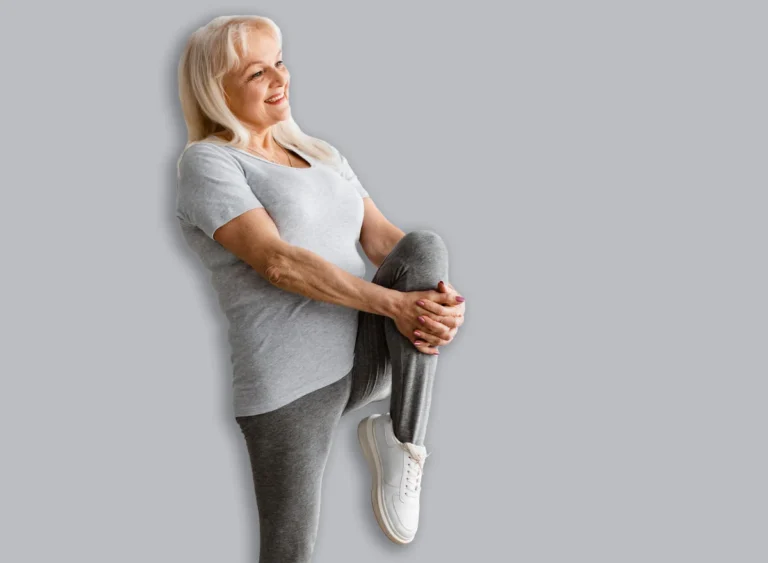
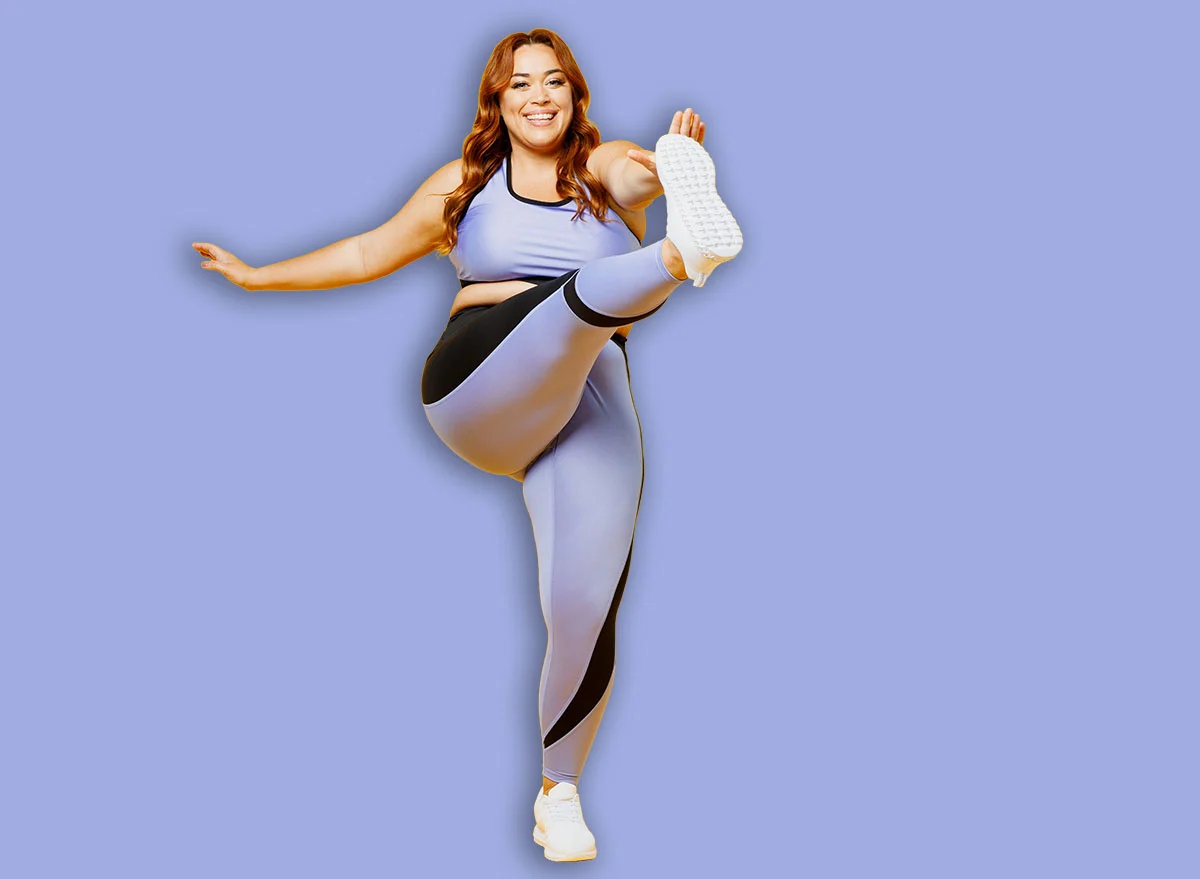
4. The Standing Forward Leg Raise
To target the elusive lower abdominals, the standing leg raise is unparalleled. It removes the stress from the neck and upper spine that often occurs during floor-based leg lifts.
- The Technique: Use a chair or wall for balance. Keep the torso upright and slowly raise one leg in front of you. The key is the descent; lower the leg with extreme control to maximize eccentric loading.
5. The Standing Anti-Rotation Press (Pallof Press)
This is the pinnacle of core stability. By using a cable or a resistance band, you create a force that wants to pull your torso into rotation. Your job is to resist that pull.
- The Technique: Stand perpendicular to the anchor point. Hold the band at your chest. Push your hands straight out and hold for two seconds, fighting the resistance. Return slowly to the chest.
Supporting Data: Why "Loading" Matters
Recent studies in geriatric sports medicine have confirmed that older adults require "progressive overload" to stimulate muscle protein synthesis in the abdominal region. Repetition-heavy, low-intensity workouts (like 50 crunches) fail to trigger the growth signals necessary for muscle hypertrophy. To see a visible six-pack after 60, the abdominal muscles must be challenged with weights that cause "mechanical tension"—essentially, a load that brings the muscle to near-failure within a 10-to-15-rep range.
Official Perspectives from the Fitness Industry
Leading personal trainers like Tyler Read, BSc, CPT, emphasize that the goal for the over-60 demographic is not merely aesthetic—it is preventative. "The core is the bridge between the upper and lower body," says Read. "If that bridge is weak, everything else fails." By shifting the focus to standing, functional movements, trainers are seeing a significant reduction in chronic back pain reports among their aging clients, alongside the sought-after improvement in abdominal definition.
Implications for Long-Term Health
The implications of adopting a standing core routine extend far beyond the gym. A strong core improves gait, reduces the risk of falls—a major concern for seniors—and enhances the ability to perform activities of daily living (ADLs) with ease. By replacing the archaic crunch with these five movements, you are not just building a stronger midsection; you are investing in a more capable, resilient, and independent future.
Ultimately, the "six-pack after 60" is not a myth; it is a result of smart training, consistent nutrition, and a commitment to movements that respect the structural needs of an aging spine. Put the floor mats away and stand up for your health.