









In the relentless battle against oncology’s most aggressive forms, researchers have long sought to understand the "engine" that powers tumor survival. A groundbreaking study recently published in the journal Science Advances has revealed a profound paradox: the very mechanisms that allow cancer cells to proliferate at breakneck speeds are simultaneously tearing their own genetic blueprints apart.
Led by PhD student Osama Hidmi and Professor Rami Aqeilan at the Hebrew University of Jerusalem, the research team has identified a critical link between "super-enhancers"—the genetic control panels that ramp up tumor growth—and the accumulation of severe DNA damage. This discovery suggests that cancer’s primary survival strategy may be its greatest structural weakness, offering a potential roadmap for the next generation of targeted cancer therapies.
The Mechanics of Malignancy: When Growth Becomes Stress
To understand the implications of this study, one must first recognize the physiological demands of a cancer cell. Unlike healthy cells, which operate under strict regulatory feedback loops, cancer cells exist in a state of perpetual activation. They force genes responsible for division and survival to operate at maximum capacity, effectively "redlining" their cellular machinery to ensure the tumor continues to expand.
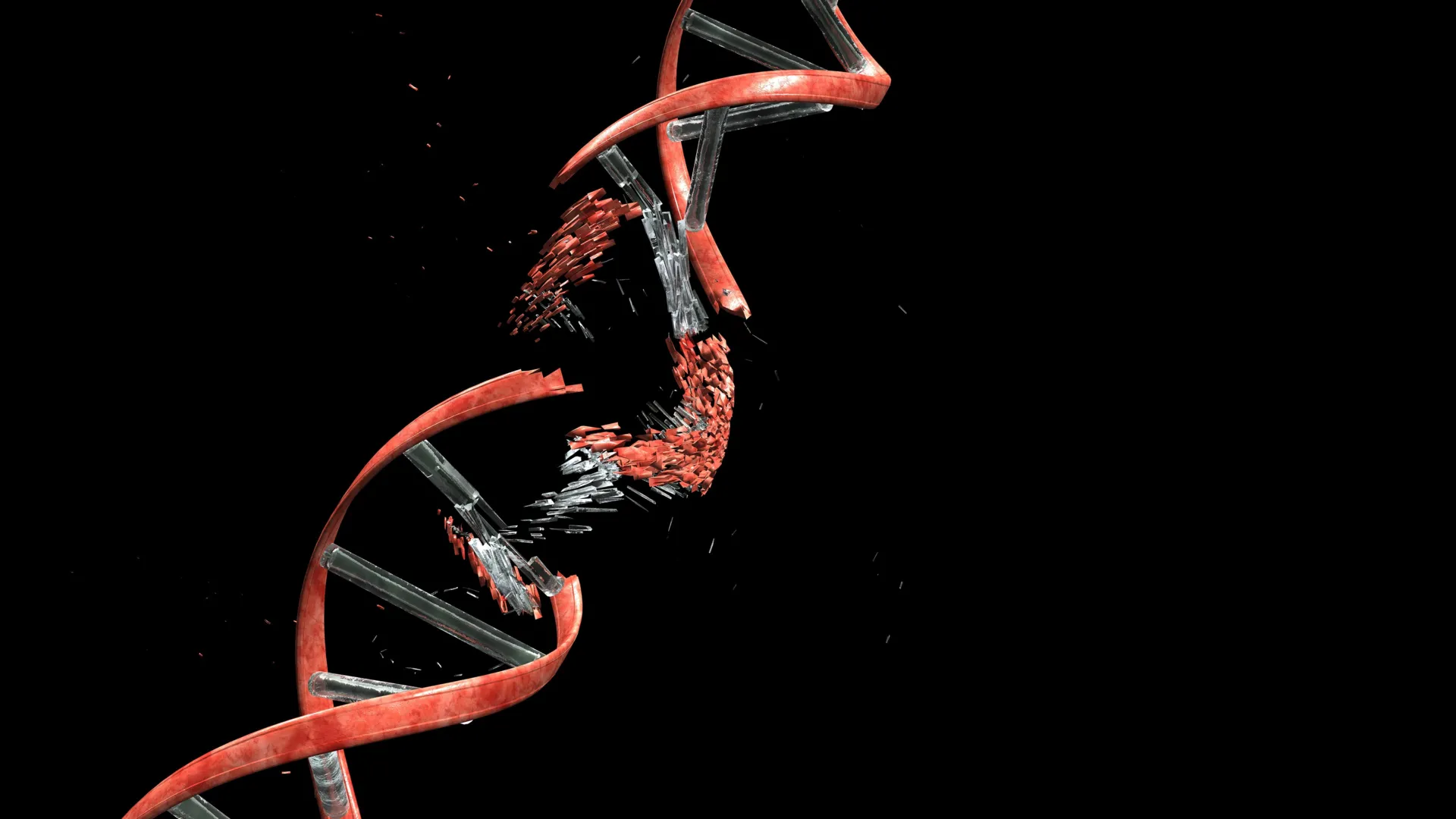
The study highlights that this intense gene expression is not merely a metabolic burden; it is a physical assault on the cell’s genome. As the transcriptional machinery—the enzymes that read and copy DNA—navigates these highly active regions, the sheer volume of traffic creates physical friction and structural stress. Over time, this stress manifests as double-strand breaks (DSBs), the most catastrophic form of DNA damage where both strands of the double helix are severed.
Chronology of the Discovery
The path to this realization involved a meticulous multi-stage investigation that spanned several years of genomic mapping and molecular analysis.
- Initial Hypothesis: The team began by questioning whether the spatial organization of the cancer genome might correlate with areas of high instability. They hypothesized that the "super-enhancers"—clusters of regulatory elements that drive high-level expression of oncogenes—might be creating "hotspots" of genomic damage.
- Genome Mapping: Utilizing state-of-the-art sequencing techniques, the researchers created a high-resolution map of double-strand breaks across the entire cancer genome. By overlaying this map with data on super-enhancer activity, they observed a striking spatial overlap. The breaks were not occurring randomly; they were clustered specifically within the domains controlled by these powerful enhancers.
- The Repair Cycle Analysis: The researchers tracked the cellular response to these breaks. By monitoring specific proteins that act as "molecular sirens" at the site of damage, they confirmed that cancer cells were constantly attempting to stitch their DNA back together.
- Validation: Through controlled experiments, the team demonstrated that when they suppressed the super-enhancer activity, the rate of DNA breakage decreased, confirming a direct causal link between the intensity of gene expression and the structural integrity of the DNA.
Supporting Data: The Cost of Rapid Adaptation
The data gathered by the Hebrew University team provides a compelling narrative of "error-prone survival." While cancer cells are highly efficient at repairing DNA breaks—a necessary skill to avoid apoptosis (programmed cell death)—the repair process is rarely perfect.
Each time a double-strand break is repaired, the cell risks introducing minor sequence errors. When this cycle repeats thousands of times within the super-enhancer regions, it creates a "mutation factory." These localized mutations are not random; they are concentrated in the very regions that govern the cell’s growth.
This leads to a process of "accelerated evolution." As mutations accumulate, the tumor cell may acquire new traits, such as resistance to chemotherapy, the ability to invade surrounding tissues (metastasis), or the capacity to evade the immune system. The research suggests that the genetic instability often observed in cancer is not just a byproduct of malignancy; it is a fundamental, self-inflicted consequence of the tumor’s drive to grow.
Official Responses and Scientific Perspective
Professor Rami Aqeilan, who oversaw the research, emphasizes the significance of this "catch-22" for cancer biology. "Cancer cells rely on super-enhancers to keep growth genes running at high speed," Aqeilan stated. "What we found is that this same high-output activity can put real strain on the DNA, creating break hotspots that the cell has to repair again and again. That cycle may help tumors survive in the short term, but it also increases the risk of mutations that can fuel cancer’s evolution."
Osama Hidmi, the lead author, points to the potential for clinical translation. "Because cancer cells depend on these high-stress DNA regions to keep growing, they may also be more vulnerable there," Hidmi noted. "This opens the door to treatments that target the very processes tumors rely on to survive."
The scientific community has received the findings with significant interest. Independent experts in genomics have noted that this study bridges the gap between transcriptional biology (how genes are read) and genome stability (how DNA is maintained). By highlighting that super-enhancers act as both "accelerators" and "stressors," the research provides a new lens through which to view the heterogeneity of tumor cells.
Implications for Future Cancer Therapeutics
The identification of these "break hotspots" changes the landscape for potential therapeutic interventions. If cancer cells are uniquely dependent on the constant repair of DNA in these hyper-active regions, they may be uniquely susceptible to treatments that disrupt this specific repair pathway.
1. Targeted Repair Inhibition
Current chemotherapy often causes DNA damage, but it is notoriously indiscriminate, damaging healthy cells alongside cancer cells. By focusing on the specific repair proteins that address super-enhancer-induced breaks, researchers might develop therapies that selectively target tumor cells, forcing them to succumb to the weight of their own genetic instability.
2. Transcriptional Interference
If super-enhancers are the "engine" causing the damage, slowing down that engine could be an effective strategy. New classes of drugs, such as transcriptional inhibitors, are currently being investigated for their ability to temper the runaway gene expression driven by these control panels. By reducing the physical strain on the DNA, these drugs might prevent the tumor from evolving while simultaneously making it less aggressive.
3. Exploiting "Synthetic Lethality"
The concept of synthetic lethality—where two non-lethal genetic events combine to kill a cell—could be key. If a tumor already has a weakened DNA repair system, forcing it to maintain high-output growth via super-enhancers could push it over the edge into total genomic collapse. Doctors could potentially screen patients for specific genomic profiles that suggest a high reliance on these super-enhancer repair pathways, allowing for highly personalized treatment plans.
The Broader Context: Redefining Genetic Instability
For decades, researchers viewed genomic instability as a chaotic, random process—the "noise" of a dying cell. This study suggests a more orderly, albeit destructive, process. It posits that the "chaos" of cancer is actually a systematic, if desperate, effort by the cell to maintain high-speed growth at the expense of its own stability.
This paradigm shift invites a new way of thinking about how cancer evolves. Rather than seeing a tumor as a static entity that slowly accumulates random mutations, we must see it as a dynamic system in a constant state of "high-stakes maintenance." Every repair is a chance for a new, more aggressive mutation to arise, but every repair also represents a point of dependency.
Conclusion: Turning a Strength Into a Weakness
The findings from the Hebrew University of Jerusalem are more than just a discovery about how DNA breaks; they represent a fundamental insight into the nature of cancer’s aggression. By forcing its growth genes to work at extreme levels, the cancer cell essentially creates its own "Achilles’ heel."
As scientists continue to map these regions of stress and identify the proteins that keep these high-growth regions stable, the hope is that we can transition from simply trying to kill cancer cells to dismantling their survival strategies from the inside out. By turning the tumor’s drive for rapid growth against itself, modern medicine may finally find a way to stall the evolution of the world’s most persistent diseases. The "self-inflicted" nature of cancer’s DNA damage is not just a biological curiosity—it is a promising frontier for the future of oncology.