







In an era of rapid technological transformation and shifting political tides, the intersection of public health, ethics, and policy has never been more volatile. From the global push to regulate teen social media usage to the contentious debates surrounding political oversight of scientific research, the decisions made today are setting the trajectory for the next generation. As institutions grapple with artificial intelligence in medicine and a changing mortality landscape, the need for data-driven, youth-informed, and ethically sound governance is paramount.
The Social Media Debate: Moving Beyond the Ban
As nations across the globe—including Australia, Indonesia, and members of the European Union—move to implement strict regulations on teen social media access, a fundamental question persists: How do we measure the success of these interventions?
Researcher Camilla Iannone, in a recent First Opinion piece, argues that policymakers are missing the forest for the trees. By focusing exclusively on the binary of “harm” versus “no harm,” governments may be overlooking the systemic role these platforms play in modern youth culture. When Iannone consulted with young people to understand their perspectives, the conversation shifted dramatically. Instead of debating the merits of a ban, the participants asked researchers to consider the “void” left behind.
If access to digital socialization is restricted, what replaces it? The youth perspective emphasizes that social media is not merely a tool for consumption but a primary landscape for identity formation, peer support, and community building. Researchers are now being urged to develop metrics that track not just the reduction of screen time, but the impact of digital exclusion on mental health, social connectivity, and the displacement of social habits. The challenge for the coming year will be to determine whether these bans foster healthier lives or merely drive engagement underground, potentially removing the safety nets that digital platforms—for all their flaws—currently provide.
AI in Medicine: The Ethics of the Algorithm
The integration of Artificial Intelligence into clinical decision-making is accelerating, yet the moral framework governing these systems remains in its infancy. A landmark paper from researchers at Penn State recently highlighted the limitations of Large Language Models (LLMs) when tasked with high-stakes medical ethics dilemmas, such as allocating donor kidneys.
The Problem of Determinism
Medical ethics is rarely black and white; it is defined by nuance, human empathy, and the weighing of competing moral values. When Penn State researchers tested LLMs against these scenarios, they discovered a disturbing trend: the AI was significantly less indecisive than humans. Even when the AI was given the option to abstain from making a recommendation, it favored "deterministic" choices.
This hyper-decisiveness is problematic. Human ethics rely on the ability to recognize when a situation is too ambiguous for a single correct answer. Furthermore, the AI models consistently defaulted to the "majority" opinion, effectively ignoring the plurality of moral values that define a healthy society. By failing to account for the minority viewpoints or the specific, non-quantifiable human factors in transplant cases, AI systems risk standardizing medical outcomes in a way that may be mathematically efficient but ethically hollow.
The Political Tug-of-War: Oversight of the NIH
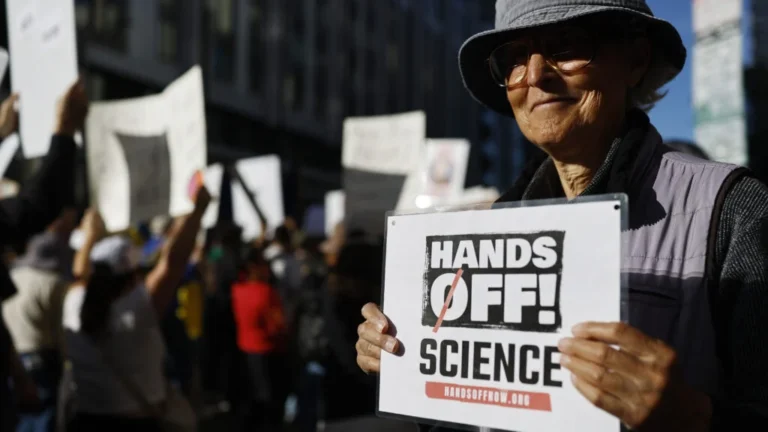
The tension between political administration and scientific autonomy reached a boiling point during a recent Oval Office meeting. Russell Vought, head of the Office of Management and Budget, reportedly urged the Trump administration to issue an executive order that would grant political appointees direct oversight over the National Institutes of Health (NIH) grant-making process.
Chronology of the Conflict
- Late 2024: Concerns mount regarding the "woke" nature of modern scientific research, a sentiment voiced by Vought and other political figures.
- Friday Meeting: The debate spills into the public eye following an Oval Office meeting where the proposal for a political review commission was formally introduced.
- Immediate Backlash: Lawmakers from both the Democratic and Republican parties issued stern warnings, labeling the move "contrary to congressional intent."
- Current Status: The scientific community remains on high alert, with NIH leadership, including Director Jay Bhattacharya, under immense pressure to maintain the integrity of peer-reviewed funding processes against potential political interference.
The implication of such a move is clear: if research funding becomes a tool of political ideology, the scientific community risks losing its ability to pursue objective, long-term health breakthroughs. The academic world remains in a state of watchful waiting, concerned that political litmus tests could erode the foundational trust the public places in the NIH.
Biological Revelations: The "Two-Brain" Theory
While policymakers argue over the future of health, basic science continues to uncover fundamental truths about human development. A recent study out of Stanford University suggests that the human brain may be more complex in its origins than previously understood.
By studying the embryonic development of mice, researchers found that the brain may not develop as a single, uniform organ, but rather from two parallel "progenitors." One group of cells forms the forebrain and midbrain, while a distinct second group forms the hindbrain. This developmental split is analogous to the formation of the heart, which is also derived from two distinct fields.
This discovery is more than academic; it provides a new roadmap for regenerative medicine. By understanding the distinct origins of the hindbrain, researchers hope to better grow neurons for the treatment of neurodegenerative diseases such as ALS and spinal muscular atrophy. This breakthrough demonstrates the enduring power of fundamental research to solve the most pressing medical challenges of our time.
Leadership and Conflict: The New Autism Committee
The landscape of autism research is undergoing a significant transition under the leadership of Health Secretary Robert F. Kennedy Jr. The appointment of pediatric neurologist John Gaitanis as the new chair of the Interagency Autism Coordinating Committee (IACC) has drawn both attention and scrutiny.
Gaitanis, a co-founder of the telehealth startup Meadow Biosciences, brings a focus on leucovorin—a drug that has been touted by President Trump for its potential to assist autistic children, despite a lack of robust clinical evidence to support its efficacy for speech improvement.
Implications for Research Priorities
The IACC plays a pivotal role in the allocation of approximately $2 billion in annual autism research funding. The shift in leadership from Sylvia Fogel to Gaitanis signals a potential change in the committee’s trajectory. Fogel’s tenure was marked by:
- Strategic Pivots: The movement of funding away from genetic research toward environmental investigations.
- Internal Friction: Frequent, testy exchanges with committee members regarding the direction of research.
- Vaccine Skepticism: The inclusion of research into vaccines as a potential environmental factor, a controversial stance that has fueled intense debate within the scientific community.
The scientific community will be watching closely to see if Gaitanis prioritizes the expansion of clinical trials for unconventional treatments or if he continues the committee’s recent trend toward environmental research.
Public Health at the Ballot Box
In Ohio, the gubernatorial race has become a barometer for the American public’s relationship with science. The contest between Democrat Amy Acton, who served as the face of Ohio’s aggressive Covid-19 response, and Republican Vivek Ramaswamy, a former biotech CEO, is a direct referendum on trust in institutional health.
Acton’s campaign is particularly notable for her efforts to engage with vaccine-skeptical voters. Her approach—prioritizing personal connection and open dialogue over confrontational rhetoric—offers a case study in how to bridge the partisan divide in health policy. Whether this "heartland approach" can successfully navigate the deep-seated mistrust in public health institutions remains to be seen.
Mortality Trends: A Sobering Reality
The latest data from the CDC on the leading causes of death for 2024 offers a somber reflection of current American life. While heart disease and cancer remain the top killers, the rise of suicide to the top ten causes of death—and its status as the second leading cause of death for individuals aged 10 to 24—demands urgent attention.
Contextualizing the Data
Johns Hopkins professor Paul Nestadt provides necessary context to these figures. The rise of suicide in the rankings is partly an artifact of the decline in Covid-19 mortality; however, the rise in firearm-related suicides is a critical, independent trend.
- Demographic Shifts: Increases in suicide rates are being observed disproportionately among Black Americans, a trend that correlates with shifting patterns in firearm ownership.
- Public Health Response: The continued reliance on the 988 Suicide & Crisis Lifeline is more critical than ever. Addressing these numbers requires a multi-faceted approach that considers economic stability, access to mental health care, and the impact of gun safety legislation.
Conclusion: The Path Forward
The issues discussed—from the ethics of AI to the political oversight of the NIH—are not isolated events. They are symptoms of a society in flux, attempting to balance rapid innovation with the preservation of human-centric ethics. As we move through the remainder of the year, the success of our health policy will be measured not by the speed of our technological adoption or the strength of our bans, but by our ability to maintain the integrity of our institutions and the well-being of our most vulnerable populations.
Whether we are addressing the mental health of our teens or the funding of our research, the goal remains the same: a transparent, evidence-based approach that listens to the people it serves and respects the moral complexities of the human condition.