









As we cross the threshold of 55, the definition of "fitness" undergoes a necessary evolution. The objective is no longer merely to build muscle mass or chase aesthetic goals; it is to cultivate functional independence, maintain structural integrity, and ensure the body remains a reliable vessel for the adventures of later life. While machines offer a controlled, safe environment for hypertrophy, they often fail to prepare the body for the chaotic, three-dimensional demands of the real world.
To thrive after 55, we must prioritize standing exercises that demand total-body coordination, weight-shifting capacity, and the ability to manage resistance in open space. If you can master the dumbbell lateral lunge, the dumbbell push press, and the suitcase carry, you are not just exercising; you are building a biological insurance policy against the physical decline often associated with aging.
The Philosophy of Functional Movement After 55
When we talk about "moving well" in our mid-50s and beyond, we are talking about proprioception, balance, and kinetic efficiency. Traditional gym machines isolate muscles by locking the body into a fixed plane of motion. While effective for localized strength, these movements rarely translate to the functional demands of everyday life—like catching yourself when you trip, carrying heavy groceries, or hoisting a suitcase into an overhead bin.
The exercises highlighted here require your feet to remain firmly anchored to the floor while your core and extremities work in harmony to manage external loads. This is the hallmark of "athletic aging." By challenging your body to control weight through space rather than through a machine’s track, you stimulate the nervous system to maintain the coordination and agility that typically wane with a sedentary lifestyle.
The Core Trio: A Functional Breakdown
1. The Dumbbell Lateral Lunge: Mastering the Frontal Plane
Most daily movement occurs in the sagittal plane (forward and backward). However, agility and injury prevention are largely determined by our ability to navigate the frontal plane (side-to-side).
The lateral lunge is a premier diagnostic tool for hip health. It demands that one hip accept the full load of the body while the other leg remains extended. This requires significant adductor strength and hip mobility. If you find yourself unable to hit depth without your torso collapsing or your heels lifting, you have identified a mobility bottleneck that, if left unaddressed, contributes to the stiffness and hesitancy common in aging adults.
- The Mechanics: Step wide to the side, keeping the trailing leg straight. Drive your hips back as if sitting into a chair on your side. Keep the weight of your body firmly in the heel of the working leg.
- Mastery Standard: Eight controlled repetitions per side with a weight that challenges your stability. The torso should remain relatively upright, and the foot must remain flat throughout the duration of the rep.
2. The Dumbbell Push Press: Forging Power and Coordination
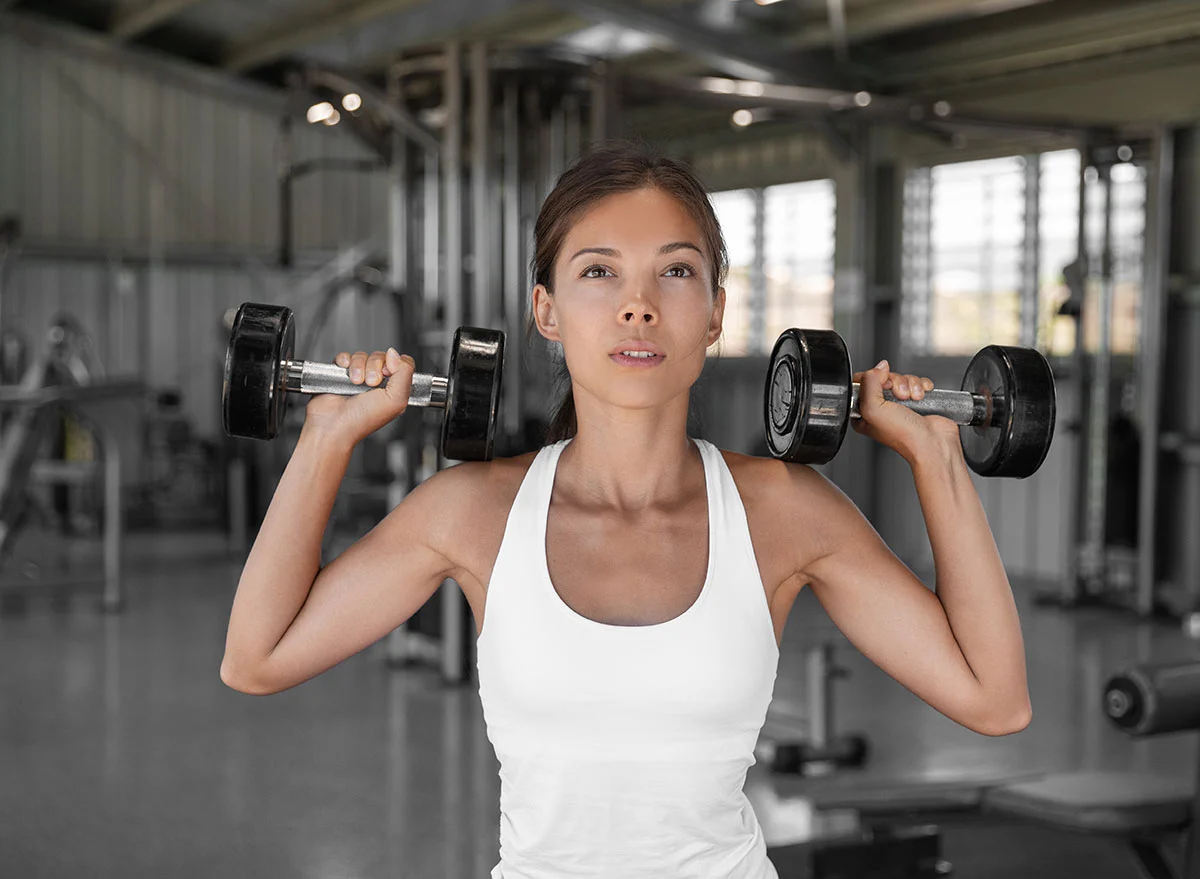
As we age, we tend to lose fast-twitch muscle fibers, which are responsible for power. The push press is the perfect antidote. It forces the lower body to generate force, which is then transferred through the core and into an overhead press.

This move is a testament to total-body synergy. It requires a precise "dip" and a violent, controlled "drive." If you can perform this move smoothly, you are signaling that your strength still possesses the velocity required for functional tasks.
- The Mechanics: Hold dumbbells at shoulder height. Perform a shallow dip—not a full squat—and use the upward explosion of your legs to help drive the weights overhead. Lock the elbows at the top and finish with the body in a straight line.
- Mastery Standard: Eight clean, consecutive reps. The movement should feel fluid, not fragmented. If the dip turns into a squat, or the weight drifts forward, the load is too heavy.
3. The Suitcase Carry: The Ultimate Trunk Stabilizer
The suitcase carry is deceptively simple. By walking with a heavy dumbbell in one hand, you create an asymmetrical load that constantly pulls your spine toward the side of the weight. Your core must engage intensely to maintain an upright, symmetrical posture.
This exercise mimics the reality of carrying a heavy bag or a child, and it is a masterclass in grip strength and anti-lateral flexion. A strong core in this context is not about "abs"—it’s about the structural integrity of your spine while under duress.
- The Mechanics: Stand tall, shoulders square. Hold one heavy dumbbell at your side. Walk with a steady, normal stride. Do not lean away from the weight.
- Mastery Standard: Carry a challenging load for 30 to 45 seconds per side. If your stride shortens or your shoulder hikes, you have reached the limit of your current stability.
Chronology of Progression: How to Reach Mastery
You should not approach these moves as a "max-effort" competition. Instead, view them as a long-term project. The following chronology is recommended for those looking to integrate these into a sustainable routine:
- Phase 1: The Stability Baseline (Weeks 1–4). Begin with bodyweight-only lateral lunges and light, manageable dumbbells for the press and carry. Focus entirely on form. Use a mirror or film yourself to ensure your posture is sound.
- Phase 2: The Load Integration (Weeks 5–8). Once the movement patterns feel "natural," introduce moderate weight. For the push press, ensure the leg drive is consistent. For the suitcase carry, begin to increase the weight in 5-pound increments.
- Phase 3: The Mastery Standard (Week 9 and beyond). At this stage, you are working toward the specific rep and duration goals listed above. If you hit a plateau, treat it as a data point: does your grip fail on the carry? Does your hip feel tight on the lunge? Tailor your accessory work accordingly.
Supporting Data and Clinical Implications
The importance of these movements is supported by a growing body of research in geriatric kinesiology. Studies published in journals such as the Journal of Aging and Physical Activity have consistently shown that power—the ability to move weight quickly—is a better predictor of functional independence in the elderly than raw strength alone.
Furthermore, the integration of multi-joint, standing exercises has been shown to improve bone mineral density more effectively than fixed-path machines. By loading the skeleton through dynamic, weight-bearing movements, you are signaling to your body that it needs to maintain bone density to support your daily activities.
From a neurological perspective, these exercises demand "executive function." Unlike a leg extension machine where you can "zone out," the suitcase carry and lateral lunge require constant neural feedback to manage balance and center of gravity. This cognitive-motor engagement is a vital component of neuroplasticity, keeping the brain as sharp as the body.
Expert Perspective: Why This Matters
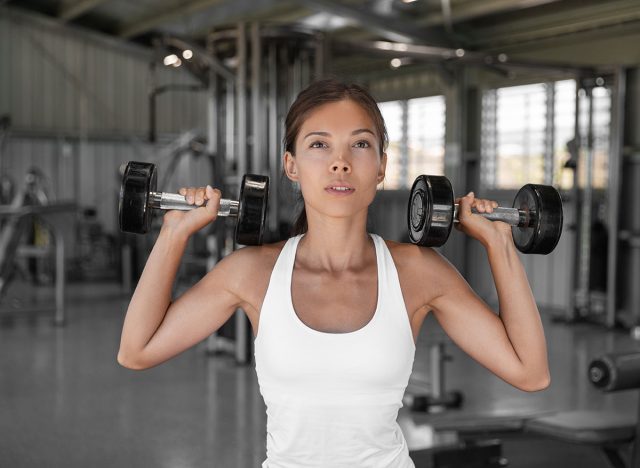
Jarrod Nobbe, a specialist in sports performance and functional training, emphasizes that these exercises are about "utility." He notes that for those over 55, the primary goal of the gym should be to make the "outside world" easier to navigate.
"When we talk about the suitcase carry or the lateral lunge, we aren’t training for a stage," Nobbe explains. "We are training for life. When you reach 60, 70, or 80, the ability to carry a bag through an airport, to step over an obstacle, or to lift a heavy box off a shelf without straining your lower back is what defines your quality of life. If you can perform these three movements with proficiency, you have a solid foundation that prevents the ‘frailty cycle’—the dangerous downward spiral where a lack of strength leads to a lack of movement, which leads to further weakness."
Implications for Your Training Routine
If one of these movements feels particularly difficult, it is not a sign that you should avoid it—it is a sign that it should become the centerpiece of your current program.
- Struggling with the lateral lunge? Focus on mobility work for your ankles and hips. Tight ankles are often the hidden culprit behind a poor lunge.
- Struggling with the push press? Focus on thoracic spine mobility. A stiff upper back will prevent you from getting the weights into the proper overhead position.
- Struggling with the suitcase carry? Focus on forearm and grip conditioning. Your grip is often the "weak link" that keeps you from loading your core effectively.
Conclusion: A New Standard for Aging
The goal of these three exercises is not to transform you into a professional athlete; it is to ensure that you retain the physical agency to lead a full, vibrant, and independent life. By mastering the lateral lunge, the push press, and the suitcase carry, you are opting out of the traditional narrative of physical decline.
You are instead choosing a path of continued capability. Every rep you complete with proper form is a deposit into your future. As you refine these movements, remember that the standard is not perfection—it is consistency, control, and the willingness to continue challenging your body to move in the way it was designed to. Stay on your feet, keep the load manageable, and let your movement quality be the ultimate metric of your success.