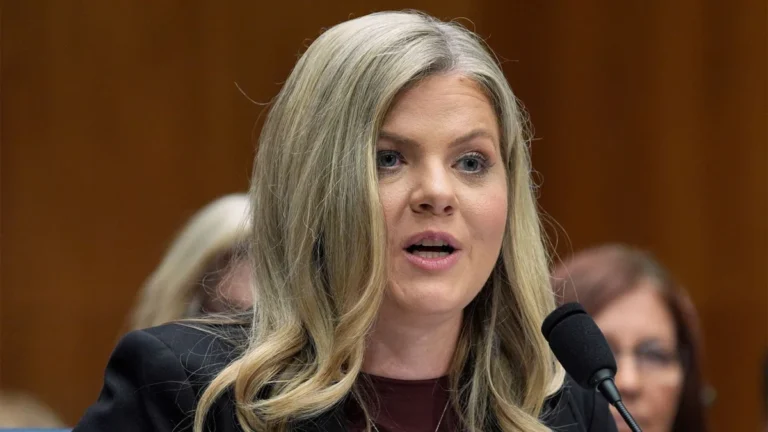









WASHINGTON — In a high-stakes confirmation hearing that stretched over two grueling hours, Heidi Overton, President Trump’s nominee to helm the Food and Drug Administration (FDA), faced a gauntlet of pointed inquiries from a divided Senate. As the committee weighs whether to advance her nomination to the full chamber, Overton—a preventive medicine physician with deep roots in rural New Mexico and a track record of service in both Trump administrations—deployed a strategy of careful ambiguity.
The hearing, which touched on the most volatile intersection points of public health and partisan politics, saw Overton repeatedly deflect direct questions regarding her personal stances on childhood vaccinations, the regulatory status of mifepristone, and the agency’s future approach to Chinese supply chain dependencies. Instead, she anchored her responses in the existing legal and administrative frameworks of the FDA, leaving both allies and detractors wondering where her true policy priorities lie.
Main Facts: The Nominee’s Strategy of Non-Committal
Heidi Overton enters the nomination process as a familiar face to the Trump inner circle, having served in the White House during both of the former president’s terms. Her background in preventive medicine in rural, underserved regions of New Mexico is frequently cited by the administration as proof of her commitment to patient access. However, her performance before the Senate Health, Education, Labor, and Pensions Committee underscored a nominee determined to avoid the pitfalls of ideological signaling.
Throughout the session, Overton’s primary tactic was a return to the status quo. When pressed on whether she would seek to re-evaluate the safety profile of childhood vaccines—a subject of intense scrutiny from the administration’s health secretary, Robert F. Kennedy Jr.—Overton maintained that the agency’s existing guidance remains the "gold standard." She consistently refused to commit to specific policy shifts, instead emphasizing that any future changes would be predicated on "rigorous, peer-reviewed scientific data."
This refusal to commit left senators visibly frustrated. "You’ve done a pretty good job of avoiding answering questions so far," remarked Sen. Chris Murphy (D-Conn.), capturing the sentiment of a committee that was looking for a clearer vision of her future leadership.
Chronology of the Confirmation Process
The path to this hearing was paved by months of political maneuvering within the administration.
- Initial Nomination: Following the inauguration, the White House signaled a desire for a "disruptor" at the FDA, eventually landing on Overton to balance the need for administrative experience with the president’s desire for systemic change.
- The Pre-Hearing Phase: In the weeks leading up to the hearing, Overton met with key committee members, focusing on her expertise in public health access. Critics, however, pointed to her previous White House tenure as evidence that she would be a "rubber stamp" for political interference in scientific decision-making.
- The Hearing Day: The session opened with opening statements that highlighted the deep ideological chasm within the committee. The questioning began with high-level queries about the FDA’s organizational health, before quickly pivoting to the "hot-button" issues of the day.
- The Post-Hearing Standoff: Following the two-hour exchange, the committee has entered a period of deliberation, with several undecided members indicating they require further written responses from the nominee before casting their votes.
Supporting Data: The FDA’s Expanding Regulatory Burden
To understand why the Overton hearing was so contentious, one must look at the data points defining the current regulatory landscape. The FDA is currently overseeing an unprecedented influx of new drug applications while simultaneously managing the fallout from a post-pandemic world where public trust in health agencies has reached historic lows.
According to agency data, the number of novel drug approvals has trended upward over the last decade, yet the backlog for generic drug reviews remains a persistent bottleneck. Overton’s challenge, should she be confirmed, is to streamline these processes without compromising safety—a balance that is becoming increasingly difficult as the agency faces pressure from the White House to "cut red tape."
Furthermore, the issue of international supply chains remains a critical vulnerability. With a significant percentage of active pharmaceutical ingredients (APIs) sourced from China, the FDA is under mounting pressure from Congress to diversify manufacturing. Overton’s testimony on this front was notably technical; she promised a "comprehensive review" of supply chain security but stopped short of endorsing the protectionist trade policies championed by some of her supporters in the Senate.
Official Responses and Political Implications
The reaction to the hearing has been polarized, reflecting the broader fragmentation of the American political landscape.
The Administration’s Perspective
Allies of President Trump and Robert F. Kennedy Jr. have characterized Overton’s testimony as "disciplined." They argue that her focus on existing law is a sign of respect for the institutional integrity of the FDA. A spokesperson for the Department of Health and Human Services noted that the nominee "demonstrated a clear grasp of the legal limitations of the FDA Commissioner," suggesting that her refusal to commit to radical changes was a defense against the "political traps" laid by Democratic interrogators.

The Congressional Response
Democrats on the committee, led by Murphy and others, expressed deep concern that Overton’s vagueness is a shroud for a pre-planned agenda to undermine the agency’s independence. "The American public deserves to know if this agency will follow the science or the whims of a political administration," one Democratic staffer said off the record.
Republicans were largely supportive, though some noted that they, too, would have preferred clearer answers on the future of drug approvals related to reproductive health. The tension suggests that the upcoming vote will be tight, with the deciding factor likely being the degree of trust individual senators place in the nominee’s personal integrity versus their loyalty to party lines.
Implications: A Watershed Moment for Public Health
The confirmation of an FDA Commissioner has rarely been as consequential as this moment. The FDA occupies a unique space in American life: it is the arbiter of what we eat, the medicines we take, and the medical devices that sustain us.
If Overton is confirmed, she will inherit an agency that is effectively at war with itself. On one side are career scientists who prize the traditional, slow, and methodical peer-review process. On the other side are political appointees tasked with fulfilling campaign promises to "shake up" the status quo.
Her performance at the hearing suggests that she intends to be a bridge between these two worlds. However, the political environment is increasingly hostile to such moderate positioning. By refusing to take hardline stances, she has managed to avoid an immediate disqualifying gaffe, but she has also failed to build a coalition of enthusiastic supporters.
The Regulatory Future
The primary implication of this hearing is that the FDA is entering a period of extreme institutional volatility. If Overton moves to alter the approval process for mifepristone, she will face immediate legal challenges from pro-choice advocacy groups. If she maintains the current guidelines, she risks the wrath of the White House.
Furthermore, her approach to vaccines will be closely watched by international health bodies. A shift away from current consensus would not only affect domestic health outcomes but could also signal a retreat from the global scientific community, potentially isolating the U.S. in terms of medical research and standards.
As the Senate committee prepares for its final vote, the message is clear: the era of "quiet" FDA leadership is over. The agency is now firmly at the center of the American culture war, and Heidi Overton is tasked with the impossible job of keeping the peace while the world watches.
Conclusion
The two-hour hearing of Heidi Overton did not provide the answers the public was looking for, but it did provide a clear roadmap of the battles to come. Whether she is confirmed or not, the FDA’s role as an independent arbiter of health policy is under the most significant pressure it has faced in decades.
The Senate must now decide if Overton’s tactical silence is a virtue of professional restraint or a liability that suggests an inability to stand up to political pressure. As the deliberations continue, the scientific community, the pharmaceutical industry, and the American public remain in a state of suspended animation, waiting to see which version of the FDA will emerge from the current political firestorm.
The nomination of Heidi Overton is not merely about a personnel decision; it is a referendum on the future of American public health. With the eyes of the nation turned toward the Senate floor, the stakes could not be higher.