






By Jackie Keating, LCSW
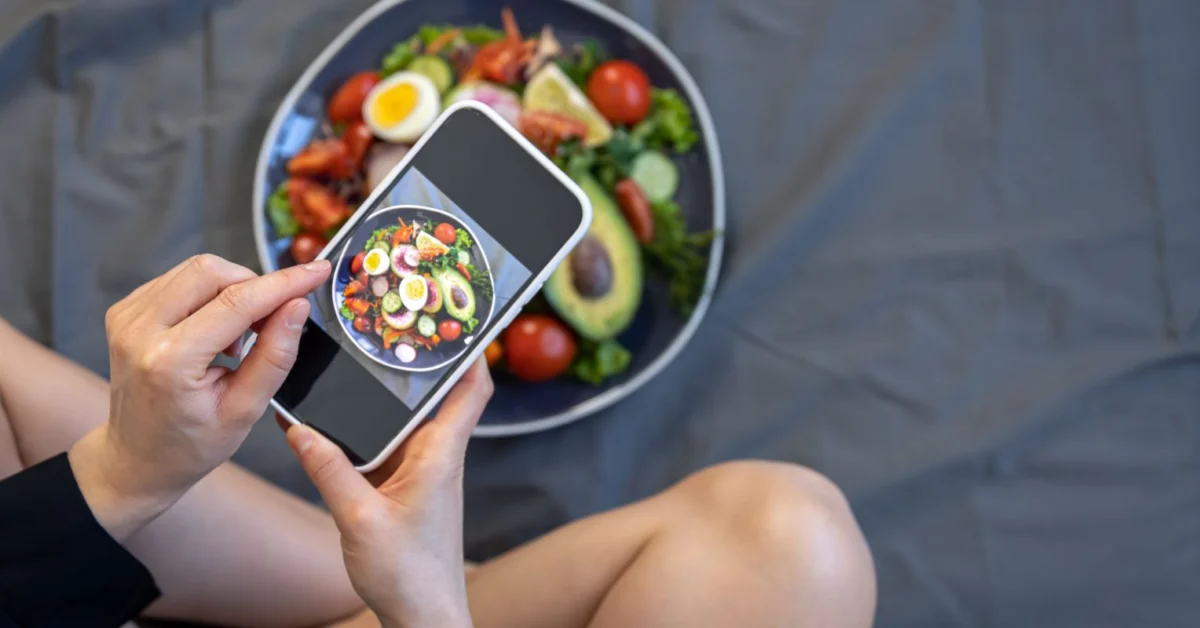
It is Sunday night, and the cycle begins anew. You are lying in bed, the blue light of your smartphone illuminating the dark room as you scroll through social media, searching for a moment of quiet escapism. Instead, you are met with a curated barrage of "what I eat in a day" videos. Influencers showcase meticulously arranged, low-calorie, carb-free meals, projecting an image of effortless perfection.
Minutes later, the content shifts: a different influencer offers a "relatable" take on a chaotic night out, while another creator jokes about needing wine to survive the stresses of motherhood. Sandwiched between these posts are targeted advertisements for fitness programs promising to "fix your life in three simple steps." By the time Monday morning arrives, the messaging has permeated your real-world interactions. A coworker mentions a new restrictive diet, a friend texts about "getting summer-ready," and high-profile celebrities announce their latest plant-based protocols. The drumbeat of diet culture is relentless, and it is louder than ever.
The Anatomy of Modern Diet Culture
Social media serves as a double-edged sword. While it offers unprecedented opportunities for connection and community, it simultaneously functions as a high-speed delivery system for unrealistic beauty ideals and toxic diet culture. At its core, diet culture lures consumers with the siren song of health and happiness, yet it frequently delivers a byproduct of shame, guilt, and deep-seated anxiety.
The wellness industry, currently a gargantuan economic force, was valued at $160 billion in 2024. According to projections by Finklea (2025), this figure is expected to balloon to $360 billion by 2034. This staggering growth is fueled by a digital ecosystem where creators monetize insecurity. By demonizing specific food groups, promoting extreme fitness trends, and engaging in fat-shaming, influencers create a perceived binary: follow the plan, or be left behind. The subtext is clear: if you adopt their habits, you will achieve their body and, by extension, their perceived happiness.
However, beneath the filtered photos and aesthetic meal-prep videos lie darker realities—extreme restriction, cycles of fasting, and chronic psychological distress. Data from The REACH Institute (2025) indicates that nearly half of teens aged 13 to 17 report that social media exposure makes them feel worse about themselves. Perhaps more concerning is the correlation between screen time and pathology: individuals spending more than three hours a day on social media are twice as likely to develop eating disorders (EDs) compared to those with more limited digital exposure.
Chronology of a Crisis: From Scroll to Symptom
The trajectory from casual social media use to the development of an eating disorder or substance use disorder (SUD) is often subtle, occurring in identifiable phases:
- The Comparison Phase: The user begins by seeking inspiration or entertainment but gradually benchmarks their own life, body, and habits against a curated digital standard.
- The Integration Phase: Diet culture messaging moves from the screen to the subconscious. The user begins to adopt "simple" fixes—eliminating carbs, intermittent fasting, or over-exercising—to mitigate the anxiety triggered by the content they consume.
- The Coping Phase: As the pressures of performance and the physical effects of restriction mount, the user begins to seek relief. This is often where substances, such as alcohol or stimulants, are introduced to manage stress, suppress appetite, or numb the emotional pain of the struggle.
- The Comorbidity Phase: The behaviors become entrenched. The user is no longer "dieting" or "socializing"; they are trapped in a cycle of co-occurring disorders where the ED and the SUD feed off one another.
Supporting Data: The Intersection of ED and SUD
While eating disorders and substance use disorders may appear distinct—one focused on control and the other often associated with lack thereof—they share a profound psychological foundation. Both are, at their core, coping mechanisms used to navigate overwhelming stress, emotional pain, and the pressures of modern life.
According to the National Eating Disorders Association (NEDA, 2023), 50% of people suffering from eating disorders also struggle with the misuse of alcohol or drugs. Research by Xi and Galaj (2025) confirms an interdependent relationship between the two, where the presence of one disorder significantly elevates the risk of developing the other.
The digital landscape exacerbates this by normalizing both. TikTok and Instagram, for example, have been criticized for glamorizing extreme dieting while simultaneously framing alcohol and drug use as standard "stress-relief" tools (Holland & Tiggemann, 2023). This dual-normalization creates a dangerous "slip-stream" where a user can slide from one harmful behavior to the next without acknowledging that a crisis is occurring.
The Lethality of Co-Occurring Disorders
The consequences of these trends are not merely psychological; they are often fatal. Anorexia nervosa currently holds the highest mortality rate of any mental illness. When this is compounded by substance use, the physiological and psychological toll is devastating.
Recent studies highlight the severity of these co-occurring conditions:
- Mortality Risk: The presence of co-occurring alcohol or hard drug use nearly quadruples the mortality risk for individuals with an ED (Mellentin et al., 2022).
- Psychiatric Comorbidity: Patients with eating disorders show significantly higher rates of suicide attempts, mood disorders, and anxiety disorders (SAMHSA, 2025).
- The Treatment Gap: Despite the biological and behavioral overlap, the modern medical system often treats these issues as siloed entities. Patients are frequently forced to navigate fragmented care, bouncing between ED clinics and SUD treatment centers. This "whack-a-mole" approach to recovery prevents the systemic, integrated care required to address the root causes of the patient’s suffering.
Implications: A Call for Integrative Care
The current landscape demands a shift in both clinical practice and cultural awareness. For recovery to be effective, it must be integrative. Professionals must acknowledge that for many, the ED and the SUD are manifestations of the same struggle to cope with an environment that profits from their inadequacy.
Clinical Implications
Treatment centers must move toward a unified model of care. Addressing only the disordered eating while ignoring the underlying substance misuse—or vice versa—is a recipe for relapse. Clinical strategies must prioritize:
- Trauma-Informed Care: Recognizing that both EDs and SUDs often stem from unresolved trauma and emotional dysregulation.
- Cultural Competency: Therapists must be trained to recognize how social media influences specific demographics and provide patients with the tools to deconstruct the "influencer" narrative.
- Holistic Intervention: Incorporating nutritional therapy, psychotherapy, and medical oversight that views the patient as a whole rather than a collection of symptoms.
Societal Implications
Beyond the clinical setting, there is an urgent need for media literacy. We must challenge the digital narratives that equate thinness with health and substances with wellness. As the wellness market expands toward its $360 billion goal, the public must become more discerning consumers.
If we are to mitigate the impact of diet culture, we must demand transparency from platforms. The normalization of "dangerous" diet trends on platforms like TikTok requires stricter moderation and a public health campaign aimed at educating youth on the difference between health and the aestheticization of starvation.
Ultimately, reclaiming health in the digital age requires us to untangle the web of profit-driven messaging that keeps us in a state of perpetual insecurity. True well-being is not a three-step program, nor is it found in an influencer’s meal plan. It is a state of equilibrium unique to each individual—a state that can only be reached when we prioritize human complexity over algorithmic trends.
References
- Dane, A., & Bhatia, K. (2023). The social media diet: A scoping review to investigate the association between social media, body image and eating disorders amongst young people. PLOS Global Public Health.
- Finklea, K. (2025). The wrong influence: The link between diet culture and eating disorder. HopeHealth.
- Gordon, K. H., et al. (2023). Co-occurring substance use and eating disorders. Psychiatric Times.
- Hambleton, A., et al. (2022). Psychiatric and medical comorbidities of eating disorders. Journal of Eating Disorders.
- Holland, G., & Tiggemann, M. (2023). Social media and body image: A systematic review. PLOS Global Public Health.
- Mellentin, A. I., et al. (2022). The impact of alcohol and other substance use disorders on mortality in patients with eating disorders. The American Journal of Psychiatry.
- National Eating Disorders Association (2023). Statistics & research on eating disorders.
- Pierce, S., Joy, J. M., & Wiss, D. A. (2025). Abstinence-based treatment of comorbid eating disorders. Frontiers in Psychiatry.
- Substance Abuse and Mental Health Services Administration (2025). Breaking the silence: What everyone should know about eating disorders.
- The REACH Institute (2025). How social media is impacting teens.
- Xi, Z.-X., & Galaj, E. (2025). Novel potential pharmacological approaches in treating eating disorders comorbid with substance use disorders. Biomedicine & Pharmacotherapy.