





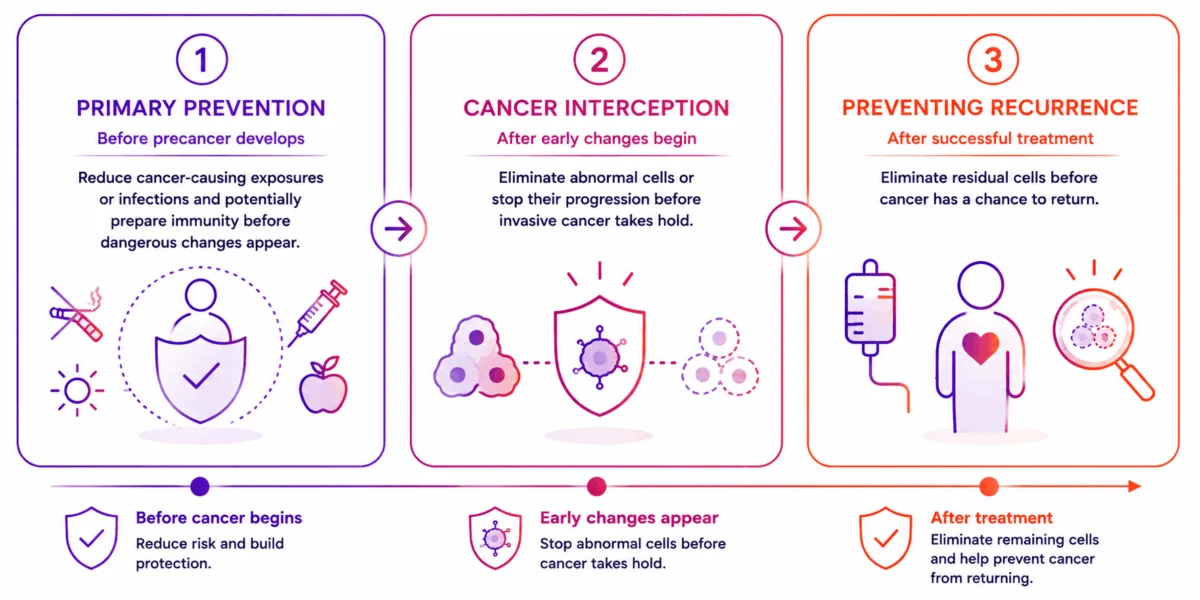
In a landmark shift for the future of oncology, the Cancer Research Institute (CRI) has announced a strategic evolution in its prestigious CLIP (Cancer Research Institute Laboratory-to-Clinic) grant applications. For the first time, the program will exclusively focus on a singular, high-stakes scientific theme: the primary and secondary prevention and interception of cancer. This initiative seeks to galvanize multi-investigator teams to bridge the gap between basic mechanistic discovery and clinical application, fundamentally changing how we approach the disease before it manifests as an invasive, life-threatening tumor.
The Paradigm Shift: Moving Beyond Diagnosis
For decades, the standard oncology model has been reactive: wait for symptoms, detect a mass, and intervene. However, cancer is a process, not a singular event. Long before a tumor becomes visible on an imaging scan, cells undergo a cascade of mutations and remodel their surrounding tissue. In diseases like pancreatic cancer, this "pre-malignant" period can span a decade or more.
Just as modern medicine manages blood pressure and cholesterol to prevent heart attacks years in advance, the new frontier of oncology seeks to manage the "pre-cancerous" state. By leveraging breakthroughs in genomics, immune monitoring, and precancer mapping, researchers are finally bringing this once-invisible window of opportunity into sharp focus. The mission is clear: move the needle from late-stage treatment to early-stage intervention, where the immune system still holds a decisive advantage.
A Chronology of Progress: From Vaccines to Interception
The principle that early intervention saves lives is already well-established in clinical practice. The journey began with the mastery of virus-linked malignancies.

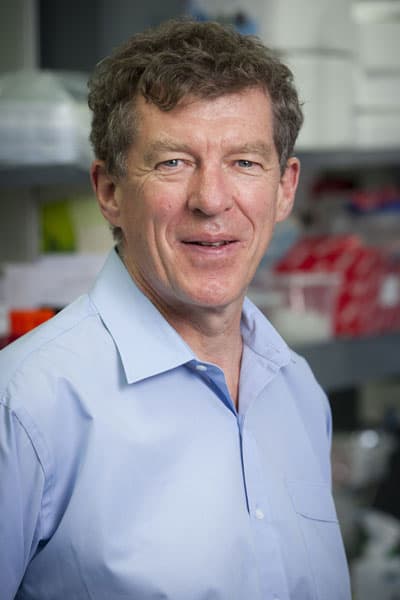
- 1999–Present: The Viral Foundation: CRI’s early support for Dr. Ian H. Frazer was pivotal in the development of virus-like particles, the technological bedrock of the HPV vaccine (Gardasil®). Today, these vaccines have protected millions, effectively eradicating the viral drivers of liver and cervical cancers.
- The Era of Surgical and Pharmaceutical Prophylaxis: Standard practices, such as the removal of colon polyps or the use of daily aspirin for Lynch syndrome, have proven that proactive measures can slash cancer mortality.
- The Current Frontier: The focus is now shifting toward non-viral cancers. Researchers are exploring how to "train" the immune system to recognize the subtle molecular signatures of precancerous cells, effectively teaching the body to police itself.
Supporting Data: The Promise and the Pitfalls
Early clinical trials serve as a testament to both the potential and the complexity of this new field. The data underscores that while the immune system is a powerful tool, it requires precision.
The MUC1 Vaccine Study
In a study targeting MUC1—a protein frequently altered in precancerous colon growths—results were nuanced. While only 25% of participants mounted a strong immune response, those who did experienced a 38% reduction in recurrence compared to the placebo group. Crucially, researchers discovered that non-responders already possessed immune-suppressive cells. This revealed a vital lesson: success depends on both the "target" and the "readiness" of the immune system to engage.
The Nivolumab Mouth Lesion Trial
In another study, the immunotherapy drug nivolumab shrank high-risk mouth lesions in roughly one-third of participants. However, the trial also served as a cautionary tale; some patients who saw their lesions disappear still developed invasive cancer, and others suffered significant immune-related side effects. This highlights the critical requirement for balance: an effective intervention must mitigate future risk without compromising the patient’s current quality of life.
Targeted Success in Pancreatic and Lynch Syndrome Trials
The most encouraging signals come from highly targeted approaches. Because over 90% of pancreatic cancers share mutations in the KRAS gene, a vaccine targeting these specific mutations was tested in 20 high-risk individuals. The result? A 90% immune response rate, with vaccine-induced cells persisting for up to two years. Similarly, in patients with Lynch syndrome, a vaccine targeting 209 shared mutations generated an immune response in 100% of participants. The scientific community is now racing to determine if these responses are sufficient to halt the actual development of cancer.
Official Perspectives: The CRI Strategic Vision
The Cancer Research Institute (CRI) views this pivot not merely as a funding shift, but as a total redesign of the cancer care landscape. According to the institute, the ultimate goal is to move the primary site of clinical care from the chemotherapy suite to the preventative clinic.
"The window before cancer is real," a representative from the organization noted. "By linking fundamental immunology and cancer biology with rigorous clinical trials, we can transform early, microscopic, and ‘pre-clinical’ signals into a blueprint for prevention."
The organization acknowledges that the challenges ahead are systemic. They have identified five key pillars that must be addressed simultaneously:
- Defining the Right Targets: Identifying the unique molecular "red flags" that signal the shift from healthy to precancerous.
- Developing Robust Models: Creating laboratory systems that accurately mirror the human precancerous environment.
- Refining Biomarkers: Establishing reliable ways to measure whether a preventative treatment is actually working before a tumor appears.
- Addressing Immune Suppression: Learning how to "prime" the immune system in patients whose defenses are already being dampened by developing lesions.
- Scaling Clinical Validation: Ensuring that preventative interventions are safe enough for healthy, high-risk individuals.
Implications: The Future of Medicine
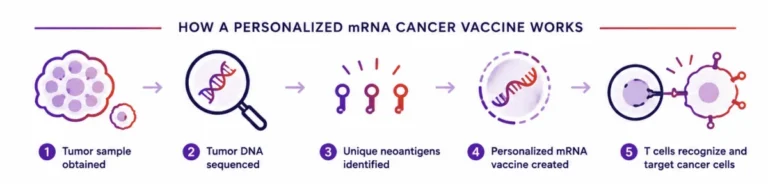
The implications of this shift are profound. As seen in the recent success of personalized mRNA vaccines for melanoma, which—when paired with pembrolizumab—reduced recurrence risk in phase III trials, the industry is proving that immune-based prevention is viable.
For the average patient, this represents a future where a cancer diagnosis is no longer the first time they interact with a specialized oncology team. Instead, high-risk individuals might engage in "immune-monitoring" and "interception therapies" that stop the disease in its tracks, or even before it begins.
This transition requires a massive, coordinated effort. It demands that basic scientists, who understand the minute mechanics of cell mutation, work in lockstep with clinical trialists, who understand the safety and efficacy requirements of treating healthy people. It requires a commitment to "team science," where data is shared across borders and disciplines to solve the puzzle of cancer development.
Conclusion: A New Era of Hope
The move by CRI to dedicate its resources to this theme is a recognition that we are at a tipping point. For years, we have mastered the art of fighting cancer when it is at its most aggressive. Now, we are embarking on the much more difficult, but infinitely more rewarding, task of mastering the art of prevention.
By acting in the windows before a tumor develops—or before it returns—we are not just treating a disease; we are preserving life. As the scientific community turns its gaze toward this frontier, the dream of a world where cancer is a preventable, rather than a terminal, condition becomes increasingly tangible. Through sustained commitment and rigorous, collaborative research, the next decade of oncology promises to be the most transformative in human history.