











For decades, the discourse surrounding climate change has focused on melting ice caps, rising sea levels, and the increasing frequency of daytime heatwaves. However, a quieter, more intimate crisis is unfolding behind closed bedroom doors. As global temperatures climb, the essential human biological process of sleep is being systematically disrupted. A growing body of research suggests that we are entering an era of "climate-induced insomnia," where the environment is no longer providing the cooling relief necessary for the body to rest, recover, and reset.
The Biological Necessity of the Cool Down
To understand why a hot bedroom is more than just a minor inconvenience, one must first understand the physiology of sleep. Sleep is not a passive state of "turning off"; it is a highly active, regulated process that requires a drop in core body temperature to initiate and sustain.
As the body prepares for rest, the internal biological clock triggers a vasodilation process, releasing heat through the extremities. This thermal regulation is essential for entering the deeper, more restorative stages of sleep. When ambient temperatures remain high throughout the night, this heat dissipation process is impeded. The result is a cycle of restlessness, increased nighttime awakenings, and a reduction in the time spent in Rapid Eye Movement (REM) and slow-wave sleep.
When the mercury stays elevated, the body remains in a state of physiological stress, struggling to achieve the thermal equilibrium required for high-quality rest.
Chronology: A Half-Century of Warming Nights
The trend toward warmer nights is not a recent anomaly but a steady, documented progression. Since the early 1970s, the climate-linked loss of sleep has doubled across almost every city studied globally.
- 1970s–1990s: The baseline for "comfortable" nighttime temperatures began to shift. Urbanization, or the "Urban Heat Island" effect—where concrete and asphalt retain heat long after sunset—began to exacerbate regional warming, preventing cities from cooling down as they did in previous decades.
- 2000–2015: As global mean temperatures reached record highs, the correlation between nocturnal warming and sleep complaints began appearing more frequently in clinical sleep studies.
- 2016–2020: Landmark studies, such as the PLOS Medicine report focusing on Boston students, provided empirical evidence that indoor heat not only ruins sleep but directly degrades cognitive function, including memory and reaction time, the following day.
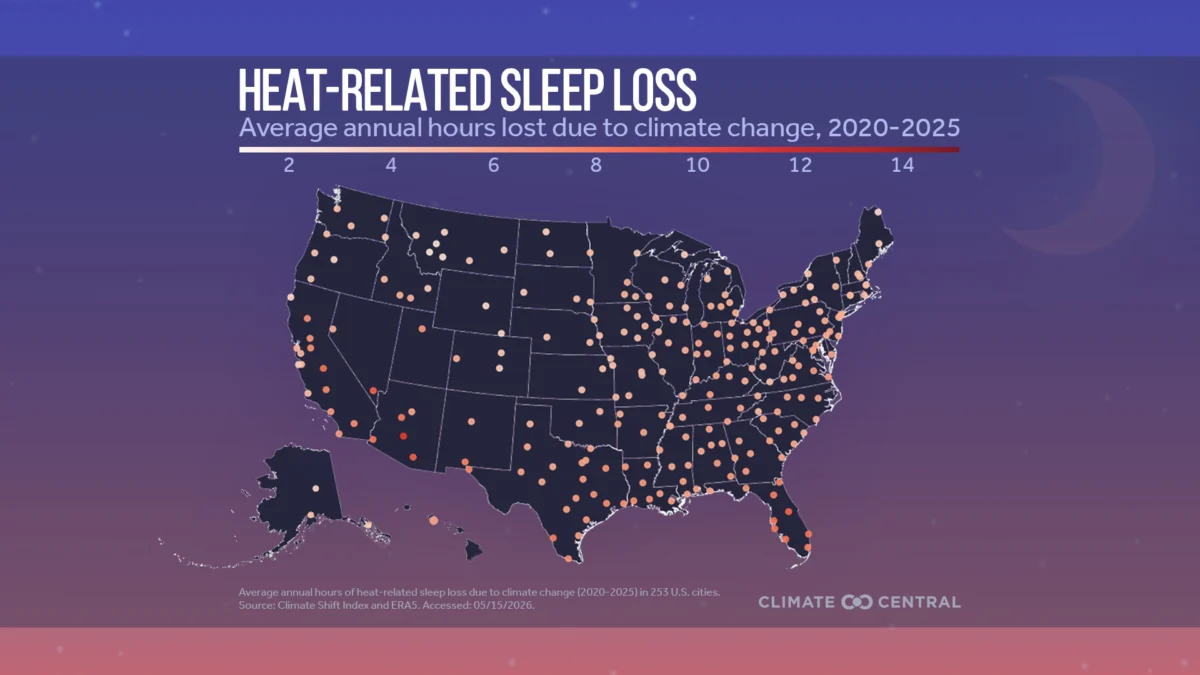
- 2020–2026: A comprehensive analysis by Climate Central revealed a sobering statistic: the average person globally lost nearly 56 hours of sleep per year due to high nighttime temperatures. In the United States alone, the impact hit home in 253 cities, with residents in the Sun Belt—Arizona, California, Florida, and Nevada—facing the brunt of the crisis.
Supporting Data: The Cost of a Hot Night
The link between ambient heat and sleep duration is no longer theoretical; it is quantifiable. According to a global study published in One Earth, which analyzed over 7 million sleep records alongside local weather data, the impact of heat is remarkably consistent across different climates.
Key Metrics of Sleep Loss:
- The 14-Minute Rule: On nights where temperatures exceed 86°F (30°C), individuals lose an average of 14 minutes of sleep. While this may seem negligible, the cumulative effect over a summer season results in significant sleep debt.
- The 77°F Threshold: Once nighttime temperatures rise above 77°F (25°C), the probability of an individual failing to achieve seven hours of sleep increases significantly.
- Geographic Disparities: While heat affects everyone, the burden is disproportionately heavy in already-warm regions, including Southeast Asia, the Middle East, southern India, and West Africa. In these areas, the lack of widespread air conditioning and the intensity of the heat create a public health emergency that remains largely unaddressed.
The Human Experience: Evidence from the Field
Research data is corroborated by real-world sentiment. During the United Kingdom’s extreme heatwave of June 2026, a YouGov poll revealed the extent of the suffering: 65% of adults reported significant difficulty sleeping. Perhaps more concerning, nearly half of those respondents stated they were losing three or more hours of sleep each night. This is not merely "feeling tired"; this is a severe degradation of public health that impacts productivity, mood regulation, and physical safety.
Implications: The Cognitive and Health Toll
The implications of chronic sleep loss due to heat extend far beyond feeling "groggy" the next morning. Sleep is the brain’s waste-management system; it is when neural pathways are pruned and memories are consolidated.
Cognitive Deficits
The PLOS Medicine study on Boston students during the 2016 heatwave serves as a warning for the workforce and student bodies everywhere. Those living in buildings without air conditioning showed measurable decreases in attention spans, processing speed, and working memory. When this is extrapolated to the general population, it suggests that extreme heat could lead to a decline in professional performance, a higher risk of industrial accidents, and a decrease in student learning outcomes.

Vulnerable Populations
While heat does not discriminate, its impacts are not equitable. Those at the highest risk include:
- The Elderly: Physiological responses to heat are often blunted in older adults.
- Low-Income Households: Those who cannot afford air conditioning or the energy costs associated with running it are trapped in the heat.
- Outdoor Workers: Those whose jobs require physical labor during the day have an even higher physiological need for restorative sleep, which is denied to them by the warm nights.
Even for those with air conditioning, the situation is complex. Climate Central notes that while AC is a primary defense, it is not a perfect solution. It relies on a functioning power grid and adds to the "energy paradox"—where the cooling of one room contributes to the overall carbon emissions that drive global warming.
Mitigation Strategies: Reclaiming the Bedroom
While the macro-climate is beyond individual control, experts suggest several evidence-based strategies to optimize the sleep environment:
- Thermal Regulation of the Body: A warm shower or bath before bed can actually help. By raising the body temperature slightly, it triggers a quicker release of heat once you step into a cooler room, mimicking the body’s natural cooling mechanism.
- Environmental Optimization: Keep windows closed and blinds drawn during the day to prevent the "greenhouse effect" inside your home. Open windows only when the outside air temperature drops below the indoor temperature.
- Bedding Choices: Opt for natural, breathable fibers like cotton or bamboo. Avoid synthetic materials that trap heat.
- Strategic Cooling: Use fans to move air, but place them strategically—if possible, place a fan in a window to pull cooler evening air inside rather than just circulating the warm, stagnant air already in the room.
When to Seek Professional Help
It is vital to distinguish between a temporary bout of heat-induced restlessness and a clinical sleep disorder. If poor sleep persists despite your best efforts to cool your environment, or if you find yourself suffering from excessive daytime sleepiness, it is time to consult a medical professional.
Ongoing sleep deprivation can contribute to hypertension, cardiovascular disease, obesity, and mental health struggles. If your sleep is impacting your daily safety or work performance, seek out an AASM-accredited sleep center. A sleep specialist can determine if there are underlying issues being exacerbated by the heat.
The Bottom Line
The warming of our nights is a clear signal that the climate crisis is no longer "out there"—it is inside our homes, under our blankets, and in our heads. We are currently living through a period of adaptation, yet researchers have found little evidence that the human body is naturally evolving to handle these higher nocturnal temperatures.
As we move forward, healthy sleep must be recognized as a vital pillar of public health, alongside nutrition and exercise. Addressing the "sleep gap" requires a dual approach: personal efforts to manage our immediate sleep environments and a global commitment to addressing the rising temperatures that threaten the most fundamental human need for rest. Healthy sleep is not a luxury; it is a prerequisite for a healthy life. We must protect it at all costs.
Medical Review: Dionne Morgan, MBBS, FCCP
For more information on sleep hygiene and health, visit SleepEducation.org.