









The integration of artificial intelligence into the American healthcare system promises a revolution in diagnostic speed, patient outcomes, and administrative efficiency. Yet, as the technology accelerates, a fundamental, largely invisible, and increasingly volatile friction has emerged: a "jurisdictional tug-of-war" between federal regulators and state medical boards.
As the Trump administration pushes to lower barriers for AI developers and expand reimbursement models for digital health, officials are quietly grappling with a legal paradox. When an algorithm begins to perform tasks historically reserved for licensed human physicians—such as prescribing medication or rendering a clinical diagnosis—who holds the power to regulate it? The answer is not clear, and industry experts warn that this ambiguity may be the greatest obstacle to the widespread adoption of life-saving AI tools.
The Core Conflict: Where Medicine Meets Machine
At the heart of the issue is the traditional division of labor in U.S. law. Under the Tenth Amendment, states have long held the primary authority to regulate the "practice of medicine." This power is exercised through state medical boards, which issue licenses to physicians and set the standards of care for their respective jurisdictions.
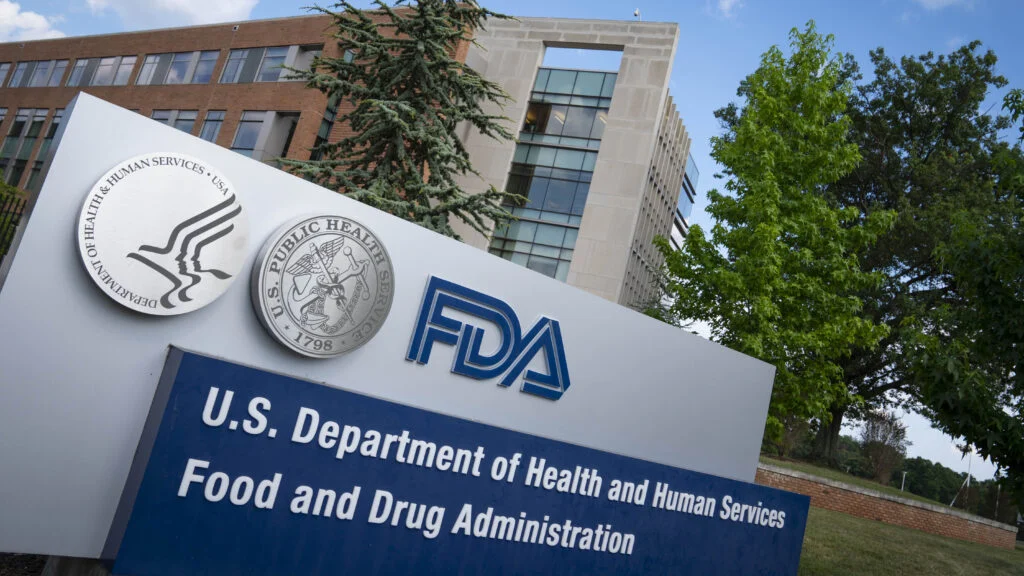
Conversely, the Food and Drug Administration (FDA) is tasked with the regulation of "medical devices." As software—specifically AI—evolves from a passive tool that assists a doctor into an active agent that initiates clinical action, the lines between a "device" and a "practitioner" blur.
"We are entering an era where software is no longer just a scalpel; in some cases, it is becoming the surgeon," said one policy analyst familiar with the ongoing discussions. "When an AI writes a prescription, is that the practice of medicine? If so, does the developer need 50 different state licenses? Or is it a medical device, subject only to FDA oversight? The current legal framework provides no clean answer."
Chronology of the Regulatory Impasse
The path to this regulatory collision course has been paved by years of rapid technological advancement and lagging policy updates.

- 2017-2019: The Rise of Software as a Medical Device (SaMD). The FDA began formalizing its approach to SaMD, recognizing that AI-driven software warranted a different regulatory pathway than physical hardware. However, these guidelines focused primarily on safety and efficacy, not the delegation of clinical authority.
- 2020-2022: The Pandemic Acceleration. The COVID-19 pandemic forced a rapid adoption of telehealth and remote patient monitoring, effectively moving AI tools into the mainstream of clinical care.
- 2023: The Generative AI Explosion. With the arrival of Large Language Models (LLMs) capable of drafting clinical notes and suggesting treatment plans, the question of "who is in charge" moved from theoretical to urgent.
- 2024-Present: The Trump Administration’s Regulatory Push. The current administration has signaled a desire to streamline AI adoption, viewing it as a lever to reduce costs and physician burnout. However, this push has collided with state-level concerns over patient safety and the preservation of traditional medical autonomy.
Supporting Data: The Scale of the Gap
The uncertainty is not merely academic; it has massive economic and clinical implications. According to recent industry reports, the health AI market is projected to reach nearly $200 billion by 2030. Yet, venture capital investment in clinical-decision support tools has plateaued.
Investors cite the "compliance tax" as a major deterrent. If a startup must navigate fifty different state medical boards to ensure their AI-prescribing software is compliant, the cost of entry becomes prohibitive for all but the largest tech giants.
Data from the Federation of State Medical Boards (FSMB) indicates that while individual states are beginning to issue guidance on "telemedicine," there is a distinct lack of uniformity regarding autonomous AI. This lack of harmonization means that a tool legal in California might face significant legal hurdles in Texas, stalling the "plug-and-play" scalability that makes AI attractive to hospital systems.
Official Responses and Stakeholder Concerns
The tension has created an uncomfortable dynamic between Washington and state capitals.
Federal Perspective:
Federal officials, particularly within the Department of Health and Human Services (HHS), argue that a fractured regulatory landscape will leave the U.S. behind in the global AI race. There is a push to assert federal preemption—a legal doctrine that would allow FDA regulations to override state laws in the interest of national consistency. "We need a unified framework," one HHS official stated on condition of anonymity. "If every state treats AI differently, we are effectively stifling innovation at the border of every state line."
State Perspective:
State medical boards are naturally protective of their mandates. They argue that federal authorities, while experts in manufacturing and product safety, are not equipped to oversee the day-to-day practice of medicine. "The FDA can tell you if a device is safe, but they cannot tell you if it is being used appropriately in the context of a specific patient’s history," says a spokesperson for a regional medical board. "That is the role of a licensed physician. If we allow AI to bypass that, we are stripping away the last layer of human accountability."

Industry Perspective:
Major health-tech firms are calling for a "third way." Many are lobbying for a national registry or a certification program that would satisfy both state and federal requirements simultaneously. They fear that without a "regulatory safe harbor," they will be trapped in a cycle of litigation from state regulators while simultaneously answering to federal investigators.
Implications: The High Cost of Inaction
The failure to resolve these jurisdictional conflicts has several immediate, negative implications for the healthcare system:
- Stagnation of Innovation: Small-to-medium-sized developers, the engine of AI innovation, are shifting their focus away from clinical-decision support tools toward purely administrative or "back-office" AI, where regulatory hurdles are lower.
- Increased Liability for Hospitals: Healthcare providers are hesitant to implement AI tools that lack a clear regulatory "stamp of approval" from both state and federal authorities. They fear that if an AI makes a mistake, they will be caught in the middle of a lawsuit between a state board and a federal agency.
- Patient Safety Risks: Perhaps most concerning is the potential for a "gray market" of AI tools. If formal, regulated paths remain blocked, hospitals may turn to unvetted or improperly calibrated software, increasing the risk of algorithmic bias and clinical errors.
- Inequitable Access: As AI tools struggle to gain approval across all 50 states, the deployment of these technologies will likely be concentrated in states with more favorable or permissive regulations, further widening the health equity gap between different regions of the country.
Looking Ahead: The Path to Resolution
For the U.S. to fully realize the potential of AI in medicine, a "Grand Compromise" is required. This would likely involve a formal memorandum of understanding (MOU) between federal agencies like the FDA and the National Association of Boards of Pharmacy/Medical Boards.
Such an agreement would need to clearly define the boundary between "AI as a tool" (where the human clinician remains fully liable) and "AI as a clinician" (where a new, federal-state hybrid regulatory body might oversee safety).
Until such a framework is established, the healthcare sector remains in a state of suspended animation. The technology exists, the demand is clear, and the potential to save lives is immense. But as long as the legal map of the United States remains a patchwork of competing jurisdictions, the AI-powered future of medicine will remain firmly locked behind a wall of bureaucratic uncertainty.
The question is no longer whether AI can change medicine, but whether our 20th-century regulatory architecture is capable of governing 21st-century intelligence. If the current trajectory continues, the answer may be a resounding "no."