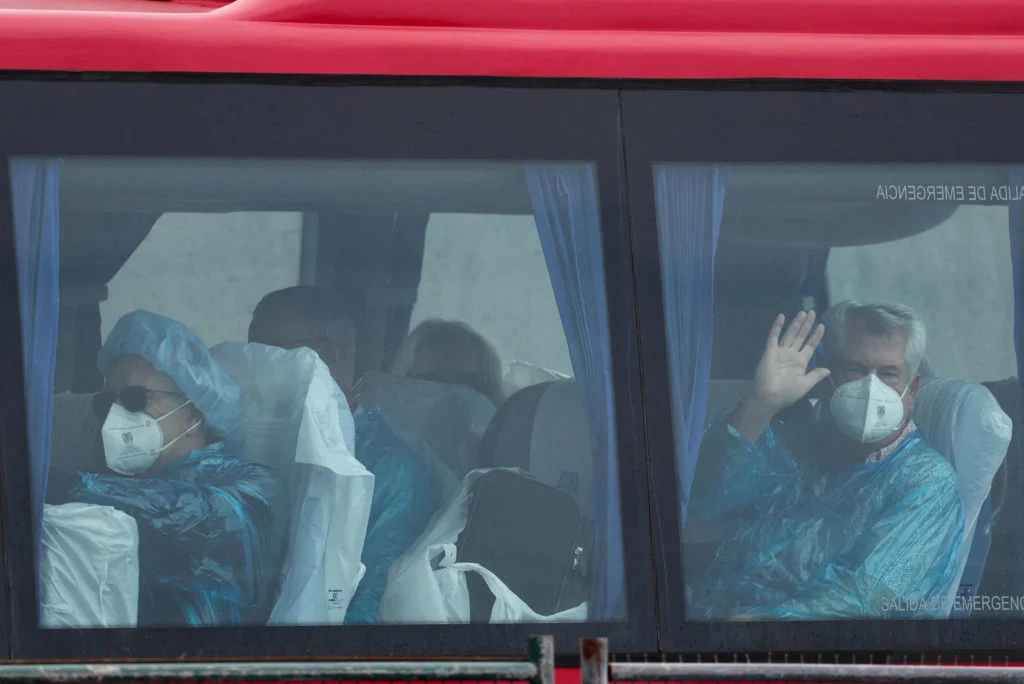
TENERIFE, Canary Islands — An unprecedented international medical and logistical operation is currently unfolding at the port of Granadilla in Tenerife, where the cruise vessel MV Hondius has docked to offload passengers following a high-stakes health crisis. The ship, which has become the epicenter of a rare and concerning hantavirus outbreak, is now the focus of a coordinated effort by more than 20 nations to repatriate citizens while containing the potential spread of a virus known for its lethal potential.
As of Sunday, the first wave of passengers has successfully disembarked, marking the beginning of a complex, multi-day evacuation process. Despite the severity of the situation, health officials are emphasizing a message of calm, noting that while the virus is dangerous, it does not pose a systemic threat to the general public.
The Current Situation: A Logistical Race Against Time
The MV Hondius reached the Spanish archipelago early Sunday morning, escorted into port under strict quarantine protocols. The scene at the Granadilla port was striking: port workers and medical personnel, dressed in full hazmat suits and respirators, oversaw the transfer of passengers directly from the ship to waiting aircraft.
In a stark reminder of the infection control measures in place, passengers were required to leave behind their personal luggage, permitted to carry only essential items such as documentation, mobile devices, and chargers. Video footage captured on the tarmac revealed a sobering process: passengers were sprayed down with disinfectant before boarding their respective national aircraft, a visual testament to the caution being exercised by global health authorities.
The first group of evacuees—Spanish nationals—arrived in Madrid on Sunday afternoon and were immediately transferred to a military hospital for observation. Shortly thereafter, a French repatriation flight touched down in Paris, where passengers were whisked away by emergency services for immediate medical assessment.
Chronology of the Crisis
The crisis aboard the MV Hondius has developed rapidly over the past several weeks. While the exact point of transmission remains under investigation, the vessel had been carrying over 140 individuals of diverse nationalities when the alarm was raised.
- Initial Detection: Following reports of illness among passengers, health authorities identified the presence of the Andes strain of hantavirus. Unlike more common strains, the Andes virus is recognized by epidemiologists as having the rare potential for human-to-human transmission.
- The Toll: The outbreak has already resulted in three confirmed fatalities. Additionally, five passengers who had previously disembarked the ship have been confirmed as infected.
- The Arrival: The ship arrived in Tenerife, Spain, on Sunday morning. The Spanish government, working in tandem with the World Health Organization (WHO), established a secure, isolated zone at the port to facilitate the evacuations.
- The Global Response: Throughout Sunday and into Monday, a procession of specialized aircraft from Canada, the Netherlands, Germany, Belgium, Greece, the United States, and other nations have scheduled arrivals to collect their citizens.
Understanding the Virus: What Science Says
Hantaviruses are typically transmitted to humans through the inhalation of aerosolized particles from the urine, droppings, or saliva of infected rodents. However, the specific strain involved in this outbreak, the Andes virus, requires heightened vigilance.
"We are dealing with a pathogen that necessitates strict adherence to quarantine protocols," said one medical expert involved in the oversight. While the virus can cause severe respiratory and renal failure, the window for symptom manifestation is significant, ranging from one to eight weeks post-exposure. This long incubation period is the primary reason why countries are opting for extended quarantine periods and daily health monitoring.
Dr. Maria van Kerkhove, the WHO’s lead epidemiologist, confirmed that despite the gravity of the situation, none of the 140+ individuals currently on board the Hondius have exhibited symptoms. However, this lack of symptoms does not preclude the possibility of infection, necessitating the rigorous isolation procedures now being implemented by home countries.
Official Responses and Public Reassurance
The international community has reacted with a mix of decisive action and measured rhetoric. WHO Director-General Tedros Adhanom Ghebreyesus has been vocal in his attempts to prevent public panic.
"We have been repeating the same answer many times," Tedros stated during a press briefing. "This is not another COVID-19. The risk to the general public is low. People should not be scared, and they should not panic."
This sentiment is echoed by national governments. France, for instance, has mandated a 72-hour hospital observation period for its returning citizens, followed by a 45-day home quarantine. The United States has designated specialized medical centers in Nebraska—a state known for its high-containment infectious disease facilities—to host returning Americans. Meanwhile, the United Kingdom has committed to immediate hospitalization for all returning passengers and crew for observation.
In a show of regional cooperation, Australia is coordinating an evacuation flight scheduled for Monday, which will not only collect its own citizens but will also assist in the repatriation of nationals from New Zealand and various Asian nations.
Implications for Global Health Surveillance
The incident has brought to light the vulnerabilities of international maritime travel in the face of zoonotic diseases. The MV Hondius is set to continue its journey to Rotterdam, Netherlands, after the evacuations conclude. Once it arrives, the ship will undergo a comprehensive deep-cleaning and disinfection process to neutralize any remaining viral residue.
Beyond the ship, the reach of this outbreak has been felt in remote corners of the globe. In an extraordinary display of logistical capability, British Army medics recently parachuted into the remote South Atlantic territory of Tristan da Cunha. One of the island’s 221 residents, who had traveled on the Hondius last month, presented with symptoms of the virus. The deployment of paratroopers and medical supplies to one of the world’s most isolated inhabited locations underscores the complexity of managing a contagion that can travel across borders and continents in a matter of days.
The Role of International Cooperation
The successful management of this crisis rests on the unprecedented level of cooperation between the Spanish government, the WHO, and the various flag-state and home-state authorities. The decision to allow the ship to dock in Tenerife was lauded by many, including the Vatican, as a necessary humanitarian gesture.
However, the event serves as a stark reminder of the necessity for robust global health surveillance. The fact that a passenger could disembark and travel to a remote territory like Tristan da Cunha before being identified as a suspected case highlights the challenges of tracking contacts in a highly mobile world.
Looking Forward: Monitoring and Containment
As the final passengers prepare to leave the Hondius, the focus will shift from evacuation to long-term monitoring. The WHO has provided clear guidelines, recommending that home countries implement active, daily health checks.
"We are leaving this up to the countries themselves to develop their own policies," said Dr. Van Kerkhove. "But our recommendations are very clear. This is a cautionary approach to ensure we do not provide any opportunity for this virus to spread."
For the passengers, the relief of returning to their home countries is tempered by the reality of the coming weeks or months in quarantine. For the cruise industry, the incident will undoubtedly lead to a rigorous re-evaluation of sanitation standards and rodent-control protocols on long-haul expeditions.
While the MV Hondius will eventually be disinfected and returned to service, the memory of this ordeal will linger. It stands as a powerful case study in how modern nations can, through transparency and coordinated action, manage a biological threat without succumbing to the paralysis of fear. As the last flights depart Tenerife, the global health community remains on high alert, watching the data closely to ensure that the "low risk" assessment remains accurate.