By Investigative Desk
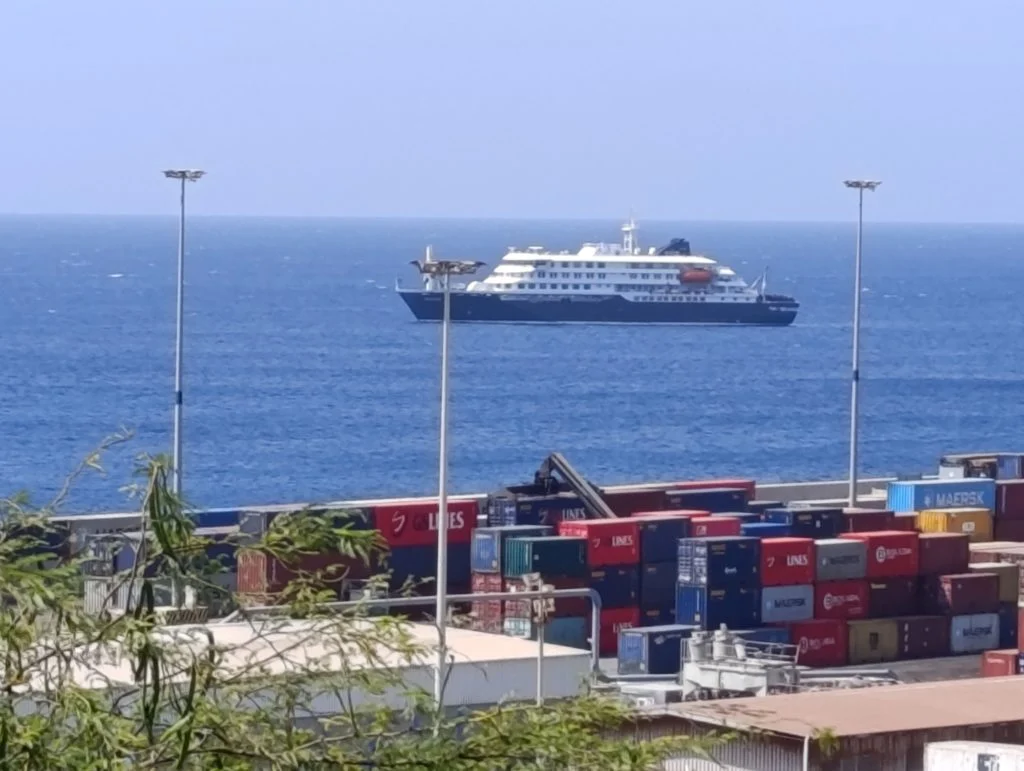
A maritime tragedy has unfolded off the coast of West Africa, where a cruise ship remains under strict quarantine following a deadly outbreak of hantavirus. The situation has prompted an urgent investigation by the World Health Organization (WHO) and local health authorities, as experts grapple with the alarming possibility of human-to-human transmission—a rare phenomenon for this specific viral family.
With three confirmed fatalities and nearly 150 passengers and crew members currently confined to the vessel, the incident has sent shockwaves through the global public health community. While officials maintain that the general risk to the public remains low, the unusual circumstances of this outbreak have raised critical questions about viral mutation, maritime health protocols, and the potential for rare pathogens to surface in confined, high-density environments.
The Core Facts: A Deadly Encounter
The vessel, which departed from Ushuaia, Argentina, on April 1, was traversing a route that included Antarctica before heading northward along the African coastline. The journey, intended as a scenic expedition, took a dark turn as passengers began falling ill with symptoms consistent with severe respiratory distress.
To date, the WHO has identified seven cases linked to the outbreak. Of these, two have been confirmed through laboratory testing as hantavirus, while five others remain classified as suspected cases. Tragically, three individuals have already lost their lives. One additional patient, currently receiving specialized care in a South African intensive care unit, remains in critical but stable condition.
The remaining 150 passengers and crew members have been placed under mandatory quarantine aboard the ship. This containment strategy is designed to prevent the potential spread of the virus while international health teams conduct rigorous testing and contact tracing.
Chronology of the Outbreak
The timeline of the crisis highlights the rapid progression of the illness once it takes hold within a closed population:
- April 1: The cruise ship departs from Ushuaia, Argentina, marking the beginning of an expedition cruise.
- Mid-April: As the ship navigates toward the African coast, the first reports of unexplained fever and respiratory distress emerge among passengers.
- Late April: The severity of the symptoms leads to a realization that a significant medical event is unfolding. Medical teams aboard the ship coordinate with land-based authorities.
- Early May: The death toll reaches three. Laboratory samples confirm the presence of hantavirus in patients.
- Present Day: The vessel remains anchored off the coast of West Africa under strict quarantine. The WHO and South African health authorities are leading a multi-agency investigation to isolate the source and contain the spread.
Understanding Hantavirus: The Science of the Pathogen
To understand why this outbreak has triggered such an intense global response, one must first understand the nature of hantavirus. Dr. Céline Gounder, an infectious disease specialist and editor-at-large for public health at KFF Health News, explains that hantavirus is not a single entity, but a vast family of viruses typically carried by rodents.
How Transmission Usually Occurs
Under normal circumstances, hantavirus is a zoonotic disease. Humans typically contract it through environmental exposure. When a person breathes in dust contaminated by the droppings, urine, or saliva of infected mice or rats, the virus enters the system. This often occurs in settings where a person disturbs an area that has been closed off—such as cleaning out a shed, sweeping a basement, or entering a building that has been dormant for a period.
Clinical Presentation
In the United States, the most dangerous manifestation is known as Hantavirus Cardiopulmonary Syndrome (HCPS). As the name suggests, it targets the cardiovascular and pulmonary systems.
- Early Symptoms: Fever, headache, and muscle aches.
- Progression: The virus can rapidly descend into severe breathing difficulties and shock.
- Mortality: Depending on the specific strain, the case-fatality rate ranges between 12% and 45%.
Despite these alarming statistics, the virus is historically rare. In the U.S., there have been fewer than 900 recorded cases over the last 30 years. Globally, there are an estimated 200,000 to 300,000 infections annually, though the vast majority of these cases in Europe and Asia are of a milder form that does not typically result in the severe pulmonary distress seen in the Americas.
The Human-to-Human Mystery
The most concerning aspect of the current situation is the suspicion of human-to-human transmission. Generally, hantavirus is not considered a transmissible pathogen between people. However, Dr. Gounder notes a critical exception: the Andes virus.
Found in Argentina and Chile, the Andes virus is unique in that it has been documented to spread through close personal contact. Evidence of this dates back to the late 1990s. While researchers are still investigating whether the strain aboard the cruise ship is indeed a variation of the Andes virus or a different mutation, the potential for person-to-person spread changes the tactical approach to containment entirely.
"It is quite rare, but with this particular form of hantavirus, it is possible," Dr. Gounder explains. However, she offers a vital caveat to prevent public panic: "It still requires very close, prolonged contact. It is very different from viruses that can become pandemics, like COVID-19 or influenza, which are transmitted much more easily through the airborne respiratory route."
Official Responses and Public Health Implications
The WHO, in conjunction with South African health officials, is currently managing the crisis. Their focus is twofold: providing life-saving support for those already infected and ensuring the virus does not leave the ship.
The Challenge of Containment
Quarantining a cruise ship is a logistically complex task. Unlike land-based facilities, a ship is a closed ecosystem with shared ventilation and high-density living quarters. If the virus is indeed spreading through human contact—or, in a worst-case scenario, through more efficient respiratory means—the environment of a cruise ship could act as an incubator.
Lack of Medical Countermeasures
A significant hurdle in managing this outbreak is the lack of specific tools. There is currently no FDA-approved vaccine for hantavirus, nor is there a specific antiviral cure. Treatment is largely supportive, focusing on managing respiratory function and stabilizing the patient’s cardiovascular system until the body can clear the virus. This underscores why the ICU admission in South Africa is so critical; specialized care is often the only thing standing between a patient and a fatal outcome.
Looking Forward: Lessons for Global Travel
The cruise ship incident serves as a stark reminder of the vulnerability of international travel to emerging infectious diseases. While maritime health protocols have improved significantly in the wake of the COVID-19 pandemic, the appearance of a rare, high-fatality virus like hantavirus tests the limits of these systems.
Surveillance and Future Readiness
Public health experts are calling for better environmental surveillance on ships, particularly those that embark from areas where rodent-borne diseases are endemic. As climate change shifts the habitats of wildlife, including the rodents that carry these viruses, the risk of human contact may increase.
The Bottom Line
For now, the situation remains fluid. The WHO’s assessment that the risk to the general public remains low is grounded in the fact that hantavirus transmission, even in these unusual cases, lacks the efficiency of major respiratory pandemics. However, the tragedy of the three deaths serves as a somber reminder of the power of rare, neglected pathogens.
As the investigation continues, the world watches the coast of West Africa, waiting for clarity on how a disease of the wilderness managed to find its way onto the high seas, and whether this incident marks an isolated tragedy or the beginning of a broader challenge for global health security.