











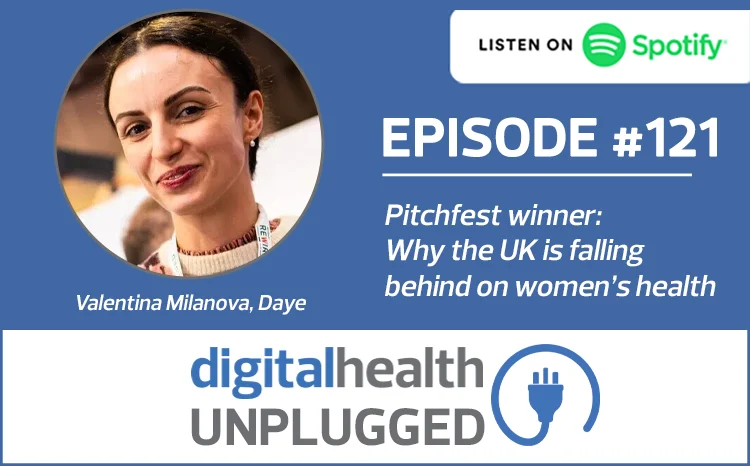
The landscape of women’s health in the United Kingdom is undergoing a period of intense scrutiny. While high-profile victories—such as the crowning of Daye as the winner of the Rewired Pitchfest 2026—have brought the "femtech" sector into the spotlight, the victory has served as much as a call to action as a celebration. Valentina Milanova, the founder and chief executive of Daye, has been vocal about the persistent systemic failures that continue to hinder progress. Despite a growing awareness of the "gender health gap," Milanova warns that the UK remains "falling behind" in critical areas of care, research, and capital investment.
In the latest installment of the Digital Health Unplugged podcast, editor Tammy Lovell sat down with Milanova to dissect the state of the industry, the hurdles facing innovators, and the urgent need for a fundamental shift in how we approach women’s health.
The Core Disparity: Why Progress Stagnates
The conversation between Milanova and Lovell centered on a sobering reality: despite medical advancements in other sectors, women’s health is still plagued by archaic practices, funding deficits, and a pervasive culture of stigma.
The Legacy of Exclusion
One of the most profound issues highlighted in the discussion is the historical exclusion of women from clinical trials. For decades, until the 1990s, medical research predominantly utilized male subjects, creating a data vacuum that persists today. This "male-default" approach to medicine means that many symptoms, drug responses, and disease manifestations unique to women are either poorly understood or entirely misdiagnosed.
"We are dealing with a structural legacy that viewed the female body as an outlier or a complication rather than a baseline," Milanova noted. This history is not merely academic; it translates into a modern reality where women face significantly longer wait times for diagnoses for conditions like endometriosis, polycystic ovary syndrome (PCOS), and various autoimmune disorders.
The Funding Conundrum
Investment in femtech has historically lagged behind other health-tech sectors. While the launch of the £1.5m Femtech Fund under the government’s Women’s Health Strategy is a step in the right direction, industry leaders argue that it is a drop in the ocean compared to the scale of the challenge. The "funding gap" isn’t just about venture capital; it is about the prioritization of research budgets and the willingness of public health bodies to integrate new, disruptive technologies into standard care pathways.
Innovation as a Catalyst: The Case of Daye
At the heart of Daye’s mission—and a central talking point of the podcast—is the diagnostic tampon. This innovation is more than just a product; it is a systemic intervention designed to alleviate pressure on the NHS while democratizing access to preventative care.
Rethinking Cervical Cancer Screening
Cervical cancer is one of the most preventable diseases, yet screening participation remains a challenge due to discomfort, accessibility issues, and the logistical burden of attending clinical appointments. Daye’s at-home HPV testing kit, which utilizes a specially designed tampon, offers a discreet, patient-led alternative to traditional smear tests.
By moving the point of collection from the clinic to the home, Daye aims to:
- Increase Participation: Lower the barrier to entry for individuals who find clinical environments intimidating or inconvenient.
- Ease NHS Pressure: Reduce the demand on primary care services, allowing clinicians to focus on patients who require follow-up care rather than routine screening.
- Improve Early Detection: Facilitate more frequent and consistent screening intervals.
A Chronology of the Gender Health Gap
To understand why the UK is currently struggling, one must look at the timeline of events that have shaped the current regulatory and cultural landscape:
- Pre-1990s: Systematic exclusion of women from clinical trials leads to a lack of gender-specific health data.
- 2010s: The rise of "Femtech" as a distinct industry segment, driven by digital-first startups looking to solve women’s health issues through technology.
- 2022: The UK government announces the Women’s Health Strategy, acknowledging the existence of the gender health gap.
- 2024: Boots.com begins stocking diagnostic tampons, signaling a shift toward retail-based diagnostic healthcare.
- 2026 (April): Launch of the £1.5m Femtech Fund, aimed at stimulating innovation under the Women’s Health Strategy.
- 2026 (May): Daye wins the Rewired Pitchfest, highlighting the sector’s growing appetite for disruption, while simultaneously sparking debate on the pace of systemic change.
Supporting Data: The Scale of the Challenge
The "falling behind" narrative cited by Milanova is supported by a growing body of evidence regarding the socioeconomic cost of neglecting women’s health.
- Diagnosis Delays: Studies indicate that it can take an average of seven to eight years for a woman to receive a diagnosis for endometriosis.
- Economic Impact: The gender health gap is estimated to cost the global economy billions in lost productivity, as women are more likely to exit the workforce due to unmanaged chronic conditions.
- Preventable Outcomes: With advancements in HPV testing, cervical cancer should theoretically be a disease of the past. However, inconsistent uptake of screening programs means that mortality rates remain higher than they need to be.
Official Responses and Strategic Shifts
The UK government has made public commitments to address these issues, but the disconnect between policy and implementation remains a point of contention. The Women’s Health Strategy is an ambitious document, but stakeholders like Milanova argue that the government’s pace is out of sync with the needs of the patient population.
"We have the tools," Milanova asserts. "The technology exists today to prevent cervical cancer, to monitor hormonal health, and to provide data-driven insights into reproductive health. What we lack is the infrastructure and the political courage to integrate these tools into the NHS at scale."
The government, for its part, maintains that it is fostering an environment where innovation can thrive, citing the Femtech Fund as proof of intent. Yet, for startups, the path to procurement within the NHS remains notoriously difficult. Navigating the regulatory hurdles for new medical devices can take years, potentially stalling the very innovations that are meant to save the system money.
Implications for the Future
The implications of failing to bridge the gap are severe. If the UK does not accelerate its efforts to support women’s health, it risks a dual crisis: a deteriorating quality of life for millions of women and an increasingly burdened, inefficient healthcare system.
A Call for Structural Reform
What needs to change? According to the insights shared on Digital Health Unplugged, the solution requires a three-pronged approach:
- Standardized Data Collection: Mandating that all future clinical trials include sex-disaggregated data to ensure outcomes are applicable to the entire population.
- Procurement Reform: Streamlining the process for innovative health-tech products to enter the NHS, moving away from a risk-averse model that favors the status quo.
- Cultural Awareness: Addressing the bias in medical training to ensure that clinicians are better equipped to identify and treat conditions that have historically been overlooked or minimized.
The Role of Advocacy
The victory at Rewired Pitchfest 2026 acts as a beacon, but it is not a destination. It highlights that there is a vibrant, hungry market for women’s health solutions. The challenge now lies in translating that commercial interest into widespread clinical adoption.
As Milanova points out, the UK has the potential to lead the world in women’s health. It possesses a world-class research infrastructure and a centralized health system that—in theory—is perfectly suited for large-scale public health interventions. However, potential is not performance. The path forward requires moving beyond "spotlight" moments and into the gritty, unglamorous work of policy reform, sustained investment, and the unwavering prioritization of patient-centered care.
For those interested in the full conversation, the transcript provides a deeper look into the specific barriers Daye and similar companies face in the UK market. As the sector moves toward the end of 2026, the question remains: will the government and the NHS rise to the occasion, or will the "gender health gap" continue to be a persistent failure of the modern age?
For more information on this topic, you can listen to the full episode of Digital Health Unplugged on Spotify, Apple Podcasts, or the Digital Health YouTube channel. To read the full transcript of the discussion, please visit the Digital Health website.