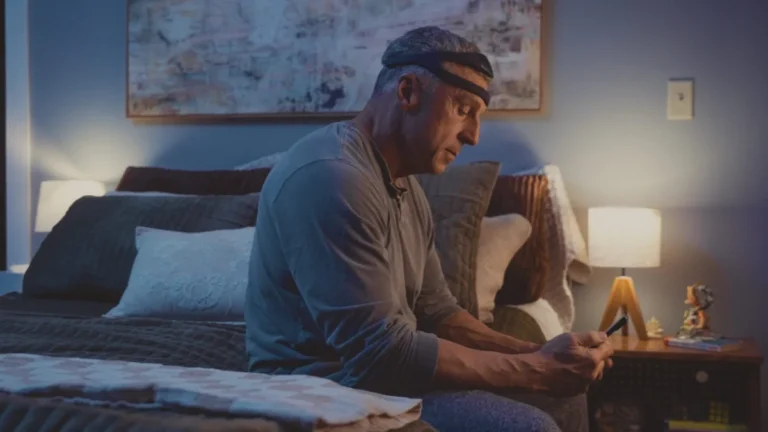
For decades, the diagnosis of REM sleep behavior disorder (RBD) has occupied an unsettling "no-man’s land" in clinical neurology. Characterized by vivid, often violent dream enactment, RBD is a condition where the normal muscle paralysis of REM sleep is absent, allowing patients to physically act out their subconscious narratives. While the immediate risks—such as self-injury or harm to a bed partner—are significant, the true clinical weight of the condition lies in what it portends for the future.
Research consistently demonstrates that a high percentage of patients with idiopathic RBD will eventually "phenoconvert" to a synucleinopathy—a class of progressive neurodegenerative disorders including Parkinson’s disease, dementia with Lewy bodies (DLB), and multiple system atrophy. For years, however, clinicians were left to play a waiting game, managing symptoms while anticipating a decline they could not objectively measure.
That landscape is undergoing a paradigm shift. The introduction of the Syn-One Test, a minimally invasive skin biopsy that detects phosphorylated alpha-synuclein in peripheral nerves, is providing sleep specialists with the first objective, biological window into the underlying pathology of these disorders, often years before motor symptoms manifest.
The Chronology of a Diagnostic Breakthrough
The journey toward this diagnostic milestone began with the understanding that neurodegeneration is not an acute event, but a slow, decades-long accumulation of misfolded proteins.
The Early Days: Clinical Observation
Historically, the diagnosis of RBD was entirely clinical, based on sleep study results and patient history. Physicians could identify the symptoms of a disorder but lacked a biomarker to identify the cause. The prevailing wisdom was that patients with RBD were at high risk for future neurodegeneration, but the "when" and "how" remained elusive.
The Rise of the Synuclein Hypothesis
As researchers identified alpha-synuclein as the primary culprit in synucleinopathies, the search for a peripheral biomarker intensified. Because these proteins accumulate in the nervous system long before the onset of tremors or cognitive decline, scientists looked for ways to sample tissues outside the brain. The discovery that these misfolded proteins deposit in the cutaneous nerve fibers of the skin provided the breakthrough needed to bypass the need for invasive procedures like spinal taps or brain biopsies.
Validation and Clinical Integration
With the validation of the Syn-One Test, the medical community moved from hypothesis to practice. Over the last several years, clinical data has shifted from small pilot studies to robust multicenter trials, confirming that skin biopsies can serve as a reliable, objective surrogate for the central nervous system pathology characteristic of Parkinson’s and related diseases.
Supporting Data: Measuring the "Seeds" of Neurodegeneration
The clinical efficacy of the skin biopsy approach rests on its high specificity and sensitivity. Data presented at the 2026 International Conference on Alzheimer’s and Parkinson’s Diseases solidified the test’s role in the diagnostic pathway.
The Syn-Sleep and Syn-Q Studies
Research continues to demonstrate that the presence of phosphorylated alpha-synuclein is a potent indicator of disease state:
- The Syn-Sleep Study: This investigation into the RBD population found that skin biopsies successfully detected the misfolded protein in 74% of patients.
- The Syn-Q Study: Focusing on patients already diagnosed with Parkinson’s and prodromal RBD, the study found a 93% positivity rate.
These findings suggest that not only is the test a diagnostic tool, but the density of the protein deposits may eventually serve as a gauge for disease progression, offering a quantitative way to measure the "seeds" of neurodegeneration long before the patient exhibits the classic clinical triad of tremor, rigidity, and bradykinesia.
Official Perspectives: The Medical Community Weighs In
Leading voices in neurology and sleep medicine have been quick to embrace this new tool, though they offer a tempered perspective on how it should be utilized.
The Role of Sleep Specialists
According to Todd Levine, MD, founder and chief medical officer of CND Life Sciences, sleep specialists are now the third-largest group ordering these biopsies, trailing only movement disorder specialists and cognitive neurologists. "The goal is to understand whether a patient’s REM behavior disorder is the beginning of a synuclein disorder or is perhaps due to something else," Levine explains.
The Biological Context
Michele Tagliati, MD, professor and vice chair of neurology at Cedars-Sinai Medical Center, emphasizes that the biopsy does not equate to a diagnosis of Parkinson’s disease itself. "There seems to be a phase in which you have the seeds of the disorder, but not the neurological dysfunction or degeneration we have associated historically with Parkinson’s," Tagliati notes.
He warns against premature treatment: "RBD is not associated with dopaminergic deficiency. Giving patients dopamine will not really do much at this stage." Instead, Tagliati views the test as a vital prognostic tool that will eventually become a standard of care for segregating patients for clinical trials.
Practical Implementation
The procedure is remarkably simple for a diagnostic tool of such magnitude. Performed in about 15 to 30 minutes, the biopsy involves taking samples "smaller than the head of a pencil eraser," according to Michael Howell, MD, of the University of Minnesota. The process is minimally invasive, requiring no sutures and leaving only a small scab that heals rapidly. At many institutions, advanced practice providers are now performing these biopsies, allowing for seamless integration into busy clinical workflows.
Clinical and Personal Implications
The ability to confirm a diagnosis before motor symptoms appear presents both a profound opportunity and a complex psychological challenge for patients.
Empowering Lifestyle Interventions
For clinicians like Dr. Howell, the test is a powerful educational tool. When a patient receives a positive result, it serves as a "call to action" for lifestyle modifications. Physicians can pivot from passive monitoring to active management, emphasizing rigorous exercise regimens, optimized sleep hygiene, and nutritional strategies that may help slow the process of neurodegeneration.
Navigating the "Right to Know"
The psychological implications are significant. While some patients find comfort in knowing the nature of their risk, allowing them to make informed decisions about their careers and retirement, others prefer the uncertainty. Dr. Howell emphasizes that patient autonomy is paramount: "It really is up to the patient. We have to gauge their readiness to receive this information."
The Future of Clinical Trials
Perhaps the most significant implication is for research. By identifying patients who are in the "prodromal" phase—those who have the pathology but not the full-blown clinical symptoms—researchers can finally test disease-modifying therapies at a point where the brain has not yet suffered widespread damage. This is the "holy grail" of neurology: intervening before the damage becomes irreversible.
A New Era of Collaboration
As the medical community moves forward, the role of the sleep specialist is becoming increasingly central to the field of neurodegenerative medicine. Because sleep disturbances are often the first outward sign of systemic neurological decline, sleep physicians act as the "gatekeepers" of early detection.
Dr. Tagliati encourages this proactive approach: "Don’t hesitate to send these patients to a movement specialist. In our field, RBD is now a clear-cut diagnosis that we put at the very beginning of the neurodegeneration spectrum. These patients deserve immediate attention and should be considered for clinical trials."
With the elimination of administrative barriers—such as the recent New York State CLEP approval and the inclusion of existing CPT codes—the Syn-One Test is becoming a standard feature of modern practice. The test is currently accessible across all 50 states, and with financial assistance programs in place, the barrier to entry for patients is lower than ever.
As we look to the future, the integration of skin biopsy technology into sleep medicine promises to shorten the timeline between the first nightmare and the first effective treatment. By bridging the gap between sleep disorders and systemic neurology, we are moving closer to a future where "neurodegeneration" is no longer a slow-moving, invisible tragedy, but a manageable condition that can be tracked, targeted, and eventually, halted.