










Executive Summary
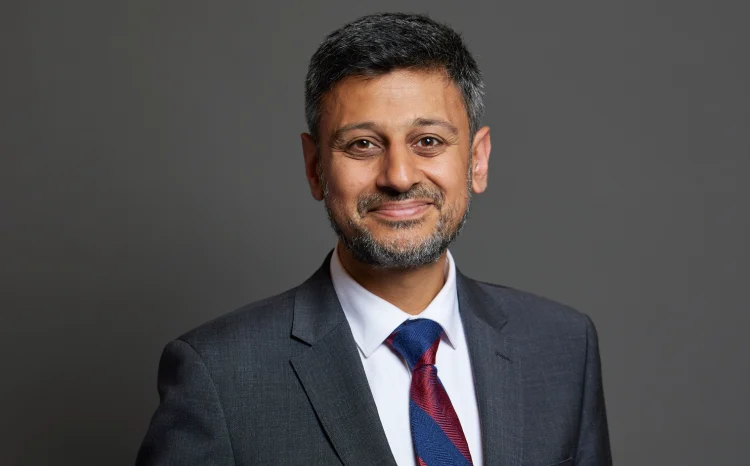
In a development that has sent shockwaves through Westminster and the halls of the Department of Health and Social Care (DHSC), Dr. Zubir Ahmed, the Parliamentary Under-Secretary of State for Health Innovation and Safety, has resigned his ministerial post. The resignation, submitted on 12 May 2026, marks a significant rupture within the Labour government, as Dr. Ahmed—a former NHS surgeon—publicly withdrew his support for Prime Minister Keir Starmer.
Citing a "lack of values-driven leadership" at the heart of the administration and pointing to the catastrophic results of the 2026 Scottish Parliament elections, Dr. Ahmed has called for the Prime Minister to step down. His departure leaves a void in the government’s digital health agenda, particularly regarding the controversial NHS Federated Data Platform (FDP) contract, and has triggered an immediate cabinet reshuffle, with Preet Kaur Gill appointed as his successor.
Chronology of a Ministerial Exit
The Rise and Fall of Dr. Zubir Ahmed
Dr. Zubir Ahmed’s tenure in government was relatively brief but marked by a high-stakes portfolio. Elected as the MP for Glasgow South West in July 2024, Ahmed was seen as a rising star, bringing two decades of frontline clinical experience to the health department. He was appointed to the ministerial role of Parliamentary Under-Secretary of State for Health Innovation and Safety on 6 September 2025.
Throughout his eight-month tenure, Ahmed was tasked with navigating the complex intersection of healthcare policy and digital infrastructure. However, the political landscape shifted dramatically in the spring of 2026. The Scottish Parliament elections, held in early May 2026, resulted in a poor showing for Scottish Labour, a defeat that Dr. Ahmed explicitly attributed to the Prime Minister’s perceived unpopularity.
On 12 May 2026, after a period of mounting internal tension, Dr. Ahmed formally submitted his resignation letter to 10 Downing Street. By the following morning, the government had already announced that Preet Kaur Gill—Britain’s first female Sikh MP and a veteran legislator—would assume the portfolio.
The Resignation Letter: A Clinical Assessment of Leadership
The language used in Dr. Ahmed’s resignation letter was notably devoid of the standard, polite platitudes usually found in ministerial departures. Instead, it read as a forensic diagnosis of a failing administration.
The Values-Driven Critique
Dr. Ahmed wrote that while it was the "honour of his life" to serve in government, he felt that the "magnitude of individual achievements and progress" in his department were being "dwarfed and undermined by a lack of values-driven leadership at the centre."
His criticism was twofold: it was both a critique of the Prime Minister’s personal brand and a strategic assessment of Labour’s electoral fortunes. According to Ahmed, the feedback from the doorstep during the Scottish election campaign was unambiguous. "It is clear from recent days that the public across the UK has now irretrievably lost confidence in you as prime minister," he stated.
The "Midwife" of SNP Dominance
Perhaps most damaging was his assessment of how the central government’s performance had affected the Scottish political landscape. Dr. Ahmed argued that the "noise" and perceived incompetence emanating from London had inadvertently bolstered the Scottish National Party (SNP).
"The noise created at the centre of the government you lead, inadvertently became the midwife for the delivery of an incompetent fifth term SNP government," he wrote, warning that this outcome would "inflict more division and decay" on his constituents in Glasgow South West. For a Labour MP to label the return of an SNP government as "intolerable" and "avoidable" represents a profound indictment of the Prime Minister’s campaign strategy and national messaging.
An Appeal for Transition
Concluding his letter, Dr. Ahmed invoked the principles of his surgical career—precision, clarity, and candour. He framed his resignation not as an act of petulance, but as a moral imperative. "I now ask you for the sake of that urgency and that national duty, to step aside and set a timetable for an expedient and orderly transition to new leadership that commands the confidence of our country."
Implications for Health Technology and Data Policy
Dr. Ahmed’s resignation is particularly significant for the government’s digital health strategy. Only last month, he had been the public face of the government’s scrutiny regarding the NHS Federated Data Platform (FDP) contract with Palantir.
The Palantir Conundrum
The FDP project, intended to consolidate health data across the NHS to improve operational efficiency, has been a lightning rod for privacy concerns and procurement criticism. During a session with the Health and Social Care Select Committee in April 2026, Dr. Ahmed took a notably cautious tone, signaling that the government was open to exploring alternatives to Palantir once the contract’s break clauses became active.
His departure leaves this policy in a state of uncertainty. Industry observers and digital health advocates are now questioning whether the government will maintain his skeptical, procurement-focused approach or revert to a more entrenched position regarding the Palantir partnership. With Preet Kaur Gill now at the helm, the department faces the immediate challenge of signaling continuity while managing the fallout of a high-profile resignation.
Official Responses and Political Reaction
The reaction from the government has been characterized by a strict "no comment" policy. Digital Health News reached out to the Department of Health and Social Care for a formal statement regarding the departure of such a high-profile minister. A spokesperson confirmed the resignation but stated that no further public comments would be forthcoming, a move interpreted by many as an attempt to contain the narrative surrounding the resignation.
The Appointment of Preet Kaur Gill
The swift appointment of Preet Kaur Gill is a clear attempt by Downing Street to stabilize the ministry. Gill, who has served as the MP for Birmingham Edgbaston since 2017, brings significant parliamentary experience to the role. Her appointment is seen as an effort to bring a steady hand to the department during a period of acute political turbulence.
However, political analysts note that replacing a critic of the Prime Minister with a loyalist may not silence the broader concerns raised by Ahmed. If other cabinet members share his assessment of the government’s "lack of values-driven leadership," the resignation could be the first of a series of tremors that threaten the stability of the Starmer administration.
Strategic Implications: A Government at a Crossroads
The resignation of Dr. Zubir Ahmed is not merely a personnel change; it is a symptom of a deeper malaise within the Labour Party’s current governance structure. The following implications are now front-and-center in the national debate:
1. The Crisis of Confidence
The central theme of Dr. Ahmed’s letter—the loss of public confidence—is a recurring trope in political history, but its delivery from a former surgeon adds a layer of objective gravity. By framing the Prime Minister’s position as "wholly untenable," Ahmed has provided a blueprint for other backbenchers and ministers who may be harboring similar grievances.
2. The Scottish Conundrum
The 2026 Scottish Parliament election results represent a major strategic failure for the Labour Party. If, as Ahmed claims, the Prime Minister’s personal brand was the primary factor preventing voters from supporting Scottish Labour, the party leadership faces an existential dilemma: how to distance the national party from the leader without triggering a full-scale leadership contest.
3. The Digital Health Vacuum
With the FDP contract and other major digital infrastructure projects currently in the pipeline, the transition of the ministerial portfolio creates a period of administrative stasis. The healthcare sector requires clear, consistent guidance on data security, patient privacy, and vendor procurement. Dr. Ahmed’s departure risks delaying critical decisions that the NHS, struggling with wait times and resource allocation, cannot afford to stall.
4. The Principle of "Precision and Candour"
Dr. Ahmed’s insistence on the principles of "precision, clarity, and candour" serves as a benchmark by which the remaining cabinet will now be judged. If the government fails to address the concerns raised regarding its leadership style, it may find itself increasingly isolated from the very professionals—doctors, nurses, and innovators—whose support it requires to reform the NHS.
Conclusion
The resignation of Dr. Zubir Ahmed is a pivotal moment in the 2026 parliamentary calendar. It combines the personal conviction of a medical professional with the strategic frustration of a regional MP who believes the national government has lost its way.
As the government moves forward under the shadow of this public rebuke, the focus will remain on whether Prime Minister Keir Starmer can address the "lack of values-driven leadership" identified by his former minister or if the resignation serves as a harbinger of further instability. For the constituents of Glasgow South West and the broader NHS workforce, the coming weeks will be critical in determining whether the government can regain its footing or if the "irretrievable" loss of confidence identified by Dr. Ahmed will continue to dictate the political narrative in the United Kingdom.