









By Kari McBride
The Presidential Fitness Test remains a quintessential American high school rite of passage—a crucible of sweat, insecurity, and the persistent, echoing advice of physical education instructors. For many, it was a momentary challenge. For others, it served as a brutal introduction to the concept of physical limitations.
"It’s just one mile. If you pace yourself, you can improve your time."
Those words, spoken by a PE teacher on a gloomy Oregon morning decades ago, still resonate today. Yet, the interpretation of "pacing" has shifted dramatically from a strategy for athletic performance to a vital survival mechanism for those navigating the complexities of chronic illness. What was once a track-and-field directive has evolved into a life-saving philosophy for managing energy, pain, and the relentless demands of modern adulthood.
The Chronology of Exhaustion: From Track to Living Room
In my freshman year, the one-mile run was an exercise in performative endurance. The start was always marked by a burst of adrenaline; I needed to prove my capability, to mask the underlying fear that I wouldn’t make the cut. As I turned the curve down Carman Drive, the bravado would inevitably evaporate. My stamina would vanish, replaced by a desperate speed-walk. By the time I reached the Kruse Way loop, the physical toll was absolute. Every step felt like dragging lead weights, my body drained of all vitality. Worse yet, there was no reprieve; the run was immediately followed by a lecture in Human Biology—a cruel irony for a teenager whose own biology felt like it was failing her.
Fast-forward twenty years, and the reality remains unchanged: I am not a runner. I cannot run a mile, even with the most meticulous pacing strategy. However, the stakes have evolved. Pacing is no longer about shaving seconds off a clock; it is about the sustainable management of a finite energy budget.
The cycle of overexertion often begins with a collision of events. Recently, a single week brought together Teacher Appreciation Week, a school choir concert, and my daughter’s birthday. My heart, ever eager to participate in the fullness of life, committed to everything before my brain had the chance to register the cost.
"Yes, of course I’ll do it," I said, a refrain that has become the precursor to many a personal crash.
The False Economy of Adrenaline
The human body is remarkably adept at masking its own decline—until it isn’t. When I committed to that jam-packed week, I was operating on a dangerous combination of caffeine and the "adrenaline high" of social obligation.
The initial phase of this "crash cycle" was deceptively productive. Decorations were hung, gifts were meticulously crafted, and choir songs were practiced until they were muscle memory. For a few glorious days, it seemed as though I had finally beaten the odds. I was defying the limitations that chronic illness usually imposes.
However, the laws of physiology are rarely suspended for long. The collapse began in stages:
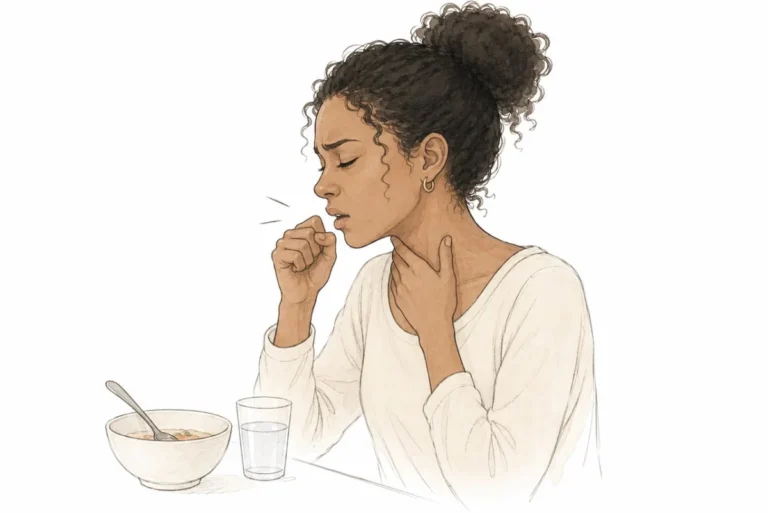
- The Subtle Warning: A persistent, annoying tickle in the back of my throat, which I dismissed as seasonal allergies.
- The Physical Manifestation: An ache that radiated from my feet, traveling up my legs and settling into a deep, knotted tension in my back.
- The Cognitive Wall: A wave of profound, brain-numbing exhaustion—a state of fatigue that sleep cannot touch.
By the time the weekend arrived, the house was a testament to my overexertion. Dishes piled in the sink, laundry remained in chaotic heaps, and my body forced a hard reset. For 76 hours, I was essentially housebound, trapped in a cycle of recovery where even the simplest tasks felt insurmountable. The "finish line" of my week was not a sense of accomplishment, but a desperate need to reclaim a baseline of functionality.
Supporting Data: The Science of Spoon Theory and Energy Conservation
While my experience is personal, it is supported by a growing body of research into "Pacing Therapy" and "Energy Envelope" management, often associated with conditions like Chronic Fatigue Syndrome (ME/CFS), Fibromyalgia, and Long COVID.
Pacing is defined in clinical circles as the process of balancing activity and rest to prevent post-exertional malaise (PEM)—the exact phenomenon I experienced. According to the Journal of Chronic Fatigue Syndrome, individuals living with energy-limiting chronic conditions possess a restricted "energy envelope." When a person exceeds this threshold, the body enters a state of systemic inflammation and neurological exhaustion that requires a disproportionate amount of time to rectify.
Unlike the high school mile, where the goal was to push until the end, pacing for chronic illness requires the exact opposite: stopping before the tank is empty. It is a counterintuitive practice that feels, to the ambitious mind, like failure. But in reality, it is the only way to ensure long-term, consistent output.
Professional Perspectives on Energy Management
Dr. Elena Rossi, a specialist in autoimmune wellness, notes that the "push-crash" cycle is the most common pitfall for her patients.
"We live in a culture that rewards the ‘power through’ mentality," Dr. Rossi explains. "Patients often struggle with the guilt of saying ‘no,’ fearing that if they don’t do it all, they aren’t doing enough. However, the data is clear: consistency is more valuable than intensity. By pacing, you are not ‘doing less’; you are actually ensuring that you don’t ‘do nothing’ for days at a time."
This perspective shifts the narrative from one of limitation to one of sustainability. It is the difference between sprinting for a minute and collapsing, and walking at a steady pace for the duration of the journey.
The Implications: A New Definition of Success
What are the implications for a life lived under the shadow of chronic pain? It means redefining what "success" looks like.
If I view my life through the lens of my high school PE teacher, I am a failure because I didn’t finish the mile at a sprint. If I view my life through the lens of sustainable pacing, I am a success because I managed to balance the needs of my family while protecting my health.
The implications are threefold:
- Cognitive Reframing: We must decouple our self-worth from our level of output. A productive day is not defined by how many chores are finished, but by how well we managed our resources.
- Environmental Adaptation: This involves creating an environment where pacing is supported—such as automating tasks, delegating responsibilities, and normalizing the use of rest as a tool rather than a symptom of laziness.
- Proactive Planning: Instead of reacting to the "tickle in the throat," I must learn to observe the early signals of the body and pivot before the threshold is crossed.
Conclusion: The Note to Self
As I look back on that gloomy Oregon street, I no longer feel the frustration of my younger self. I feel a sense of compassion. That girl running on Carman Drive didn’t have the tools to understand why she was tired; she only knew the shame of not keeping up.
Today, I have the note I wrote to myself: "Just pace yourself."
It is no longer a command to run faster or work harder. It is a gentle reminder that life is not a sprint, and that for those of us living with chronic illness, the most radical thing we can do is slow down. We may not always reach the finish line on the schedule society expects, but by pacing ourselves, we ensure that we have the energy to enjoy the view along the way. The house can wait, the dishes will be there tomorrow, and my health—the most valuable resource I possess—is worth the deliberate, measured pace of a life lived with intention.