









In an era where fitness trackers and high-tech gym equipment dominate the wellness landscape, it is easy to lose sight of the primary objective of exercise: the ability to live a vibrant, independent life. While specialized machines can help build localized muscle, experts argue that they often lack the nuance required for real-world movement. As we cross the threshold of age 60, the metric for "being in shape" shifts from aesthetic goals to functional capacity. If you want to know if your body is truly primed for the years ahead, it is time to step off the machines and test your mettle against four fundamental upper-body movements.
The Foundation: Why Functional Fitness Matters
The modern concept of "functional fitness" is not a fleeting trend; it is a vital strategy for healthy aging. At its core, functional fitness refers to the body’s ability to perform the activities of daily living—carrying groceries, lifting grandchildren, reaching for high shelves, and maintaining balance—with ease and without injury.
Rob Moal, a Certified Personal Trainer with over two decades of experience helping clients shed fat and move pain-free, emphasizes that while gym machines provide a controlled environment, they are inherently limited. "Machines have their place, but they don’t replicate the way the body actually has to work," Moal explains. "They fix the path, they fix the plane, and they remove every variable that matters in real life. For those over 60, that matters more than ever. The goal isn’t just to be strong in the gym; it’s whether that strength transfers outside of it."
Fredrick Hahn, owner of SlowBurn Personal Training Studios, reinforces this perspective. "In the training world, I think of this less as a specific category of exercise and more as the result of maintaining muscular strength, mobility, balance, and coordination over time," says Hahn. "As we age, one of the biggest physical changes we experience is the gradual loss of muscle mass and strength, known as sarcopenia, unless we actively work to preserve it through resistance training. When evaluating whether someone is in good shape after 60, I’m looking at how effectively they can control and use their body in real-world movements."
Chronology of Physical Decline and the Role of Resistance
The human body undergoes significant physiological changes starting in the late 40s and accelerating after 60. Without intentional intervention, bone density decreases, connective tissues become less pliable, and muscle fibers—particularly Type II fast-twitch fibers—begin to atrophy.
Resistance training acts as a "fountain of youth" by counteracting these changes. However, the type of resistance matters. Functional movements, unlike isolated machine movements, require the engagement of the entire kinetic chain. When you perform a pushup, for example, you are not just working your chest; you are stabilizing your core, engaging your glutes, and coordinating your scapular movement. This "total-body integration" is the key to maintaining a "functional reserve"—the extra strength capacity that prevents a minor stumble from becoming a major fall or an inability to complete a daily task.
The Four Pillars of Functional Upper-Body Strength
If you are over 60 and wish to assess your physical longevity, the following four movements are considered the gold standard by top-tier trainers.
1. The Full Pushup: A Dynamic Plank
Most people view the pushup as a simple chest exercise, but fitness experts view it as a litmus test for overall physical integrity. "This is my baseline," says Moal. "Most people don’t think of a pushup as a dynamic plank, but that’s exactly what it is. The whole system has to work—pressing strength, core stability, and scapular control—all moving together as one unit."
For someone over 60, performing five clean, full-range pushups (without the knees touching the ground) suggests that the neuromuscular system is firing correctly. If you cannot perform a full pushup, you may be experiencing a "leak" in your kinetic chain, where the core fails to support the load of the upper body.
2. The Dead Hang: The Longevity Predictor
Grip strength is one of the most rigorously researched biomarkers in clinical medicine. Studies have consistently linked strong grip strength to lower rates of all-cause mortality and improved cardiovascular health. Beyond the grip, the dead hang—simply suspending your body weight from a pull-up bar—is a profound test of shoulder mobility and joint health.
"A dead hang shows me shoulder mobility and joint integrity in a way no machine can replicate," Moal notes. The ability to hang safely indicates that your rotator cuffs, lats, and grip muscles are robust enough to handle the stresses of daily life, such as stabilizing yourself on public transit or pulling yourself up if you ever lose your footing.
3. The Pull-up: The Gold Medal Standard
The pull-up is undeniably the most challenging movement on this list. While it is rare for individuals over 60 to possess the relative strength to perform multiple pull-ups, being able to complete even one to three full, dead-hang pull-ups with perfect control is considered exceptional.
This movement requires a powerful posterior chain, a healthy shoulder girdle, and a significant amount of "functional reserve." Achieving this at 60+ is a strong indicator that you have effectively countered the natural age-related decline in muscle mass and that your body possesses the strength-to-weight ratio of someone much younger.
4. The Waiter’s Walk: Stability in Motion
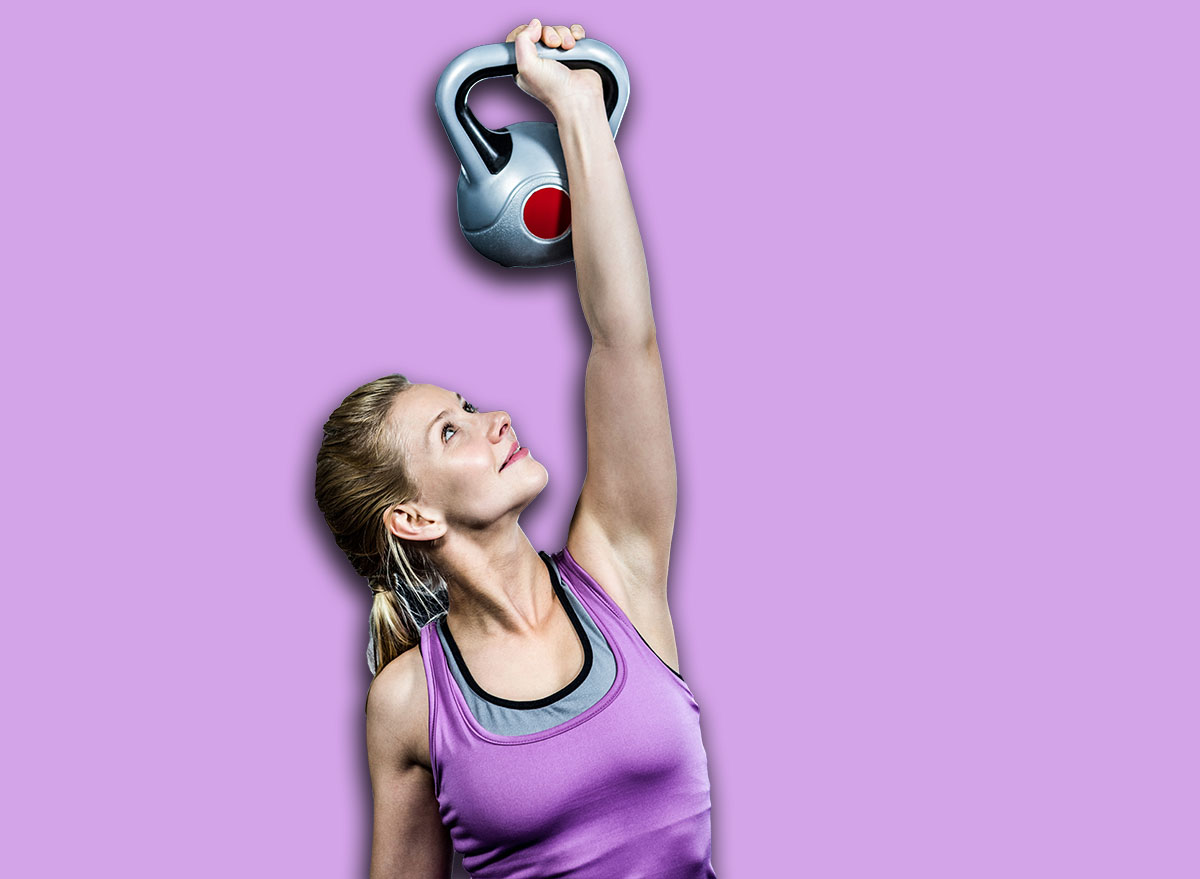
Often overshadowed by its "cousin," the farmer’s carry, the waiter’s walk involves carrying a weight overhead with one arm while walking. This is perhaps the ultimate test of functional coordination. It forces the body to maintain stability under an asymmetrical load.
"Most people have no idea how much is being tested in that one movement," says Moal. "It requires shoulder stability, thoracic mobility, core control, and gait coordination—all at once. The second something breaks down, you know exactly where the weak link is." If you can perform a waiter’s walk with confidence, it signifies that your body can handle the unpredictable loads of everyday life, such as lifting a suitcase into an overhead bin or placing a heavy object on a high shelf.
Official Perspectives and Implications
The consensus among experts is that these movements provide a realistic picture of one’s physical future. While medical checkups are essential for monitoring internal health markers like cholesterol and blood pressure, these physical tests provide a look at your "mechanical health."
The implications of failing these tests are not meant to discourage, but to inform. If you find yourself struggling with a pushup or unable to hang from a bar, it is a clear signal that your training program needs to shift toward more functional, compound movements.
"The goal is to maintain independence," says Hahn. "When we stop doing movements that require us to lift our own weight or carry external loads through space, we lose the neural pathways and muscle fibers that keep us upright and mobile. By practicing these moves, we aren’t just training for a fitness goal; we are training to ensure that at 70, 80, and beyond, we can still participate in the activities we love."
Conclusion: How to Start
If these benchmarks feel out of reach, do not be discouraged. Fitness is a lifelong pursuit, and the human body is remarkably adaptive, even in the later stages of life. Start with regressions—perform incline pushups against a sturdy surface, use resistance bands to assist your pull-ups, and practice the waiter’s walk with a lighter object, such as a water bottle or a small book.
By shifting your focus from "how much can I lift on a machine" to "how well can I move my own body," you are taking the most effective step toward ensuring that your 60s, 70s, and beyond are defined by strength, mobility, and complete autonomy. The body is the only vehicle you have for the duration of your life; treat it with the functional maintenance it deserves.