








For many individuals crossing the 60-year threshold, the prospect of maintaining leg strength can feel like a daunting negotiation with gravity. While traditional exercises like lunges and barbell squats are frequently touted as the "gold standard" for lower-body development, they often present significant barriers for aging populations. Between the requirements for complex balance, refined coordination, and high joint tolerance, these exercises can sometimes do more harm than good if introduced without a proper foundation.
According to Tyler Read, a Certified Personal Trainer (CPT) with over 15 years of experience in the fitness industry, the secret to longevity isn’t found in high-impact movements, but in the intelligent application of "chair-based training." By utilizing a common household object, individuals can bridge the gap between sedentary living and functional independence, ensuring their legs remain strong enough to navigate the world with confidence.
The Core Philosophy: Why Chairs Outperform Traditional Equipment
The primary challenge for those over 60 is not necessarily a lack of willpower, but the risk of injury during the "learning curve" of complex movements. Traditional standing exercises demand significant proprioception—the body’s ability to sense its position in space. When balance falters, the quality of the exercise suffers, and the risk of a fall increases.
"A chair gives you stability without taking the work away from your muscles," Read explains. By removing the fear of falling, the chair allows the nervous system to relax and focus entirely on muscular contraction. This environment is perfect for slowing down the tempo of an exercise, keeping the body in perfect alignment, and ensuring that tension is isolated exactly where it belongs: the quadriceps, glutes, and calves.
Furthermore, consistency is the true engine of physiological change. High-intensity, infrequent workouts often lead to excessive soreness and burnout. Conversely, chair-based exercises are approachable and gentle enough to perform daily. This frequent, low-to-moderate intensity "micro-dosing" of tension is arguably more effective at rebuilding muscle fiber and neurological pathways in older adults than sporadic, high-effort gym sessions.
Chronology of Strength: Building the Routine
To maximize results, one must view these exercises not as a chore, but as a daily practice. Over the course of a four-week "foundation cycle," the goal is to move from simple stability to refined control.
Week 1: Establishing the Connection
Focus solely on the range of motion. Do not worry about speed. The objective is to feel the muscles "firing" during each repetition. If you are doing a sit-to-stand, pay attention to the weight distribution in your heels rather than your toes.
Week 2: Increasing Time Under Tension
Once the movement feels natural, introduce the "pause." By holding the contraction at the peak of the movement—or slowing the descent to a three-second count—you exponentially increase the stimulus on the muscle fibers without adding external weight.
Week 3: Integrating Coordination
Begin to layer in the movements. Start with a seated march, focusing on keeping the core upright. This challenges the hip flexors to work in concert with the abdominal wall, mimicking the stability required for walking across uneven surfaces.
Week 4: Functional Endurance
By the final week, the "hover hold" becomes the benchmark. If you can hold a position just above the chair for 30 to 45 seconds, your muscular endurance has likely reached a point where daily tasks—like standing up from a low sofa or getting out of a car—will feel significantly easier.
Supporting Data: The Physiology of Aging Limbs
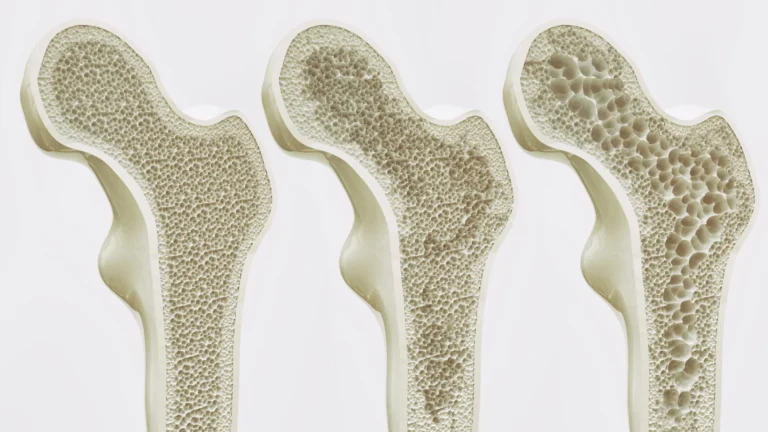
Research in geriatric exercise science consistently highlights the importance of "mechanical loading" for bone density and muscle preservation. After 60, the body begins to experience sarcopenia, the natural age-related loss of muscle mass. However, this process is not inevitable; it is malleable.
- Quadriceps Vitality: The quads are the primary drivers of knee extension. Weakness here is the leading precursor to knee pain and instability. Studies suggest that isolated, controlled extension movements can reduce the inflammatory response in the knee joint by strengthening the surrounding musculature.
- The Power of Slow Eccentrics: The "lowering" phase of an exercise (the eccentric contraction) is vital for muscle growth. By using a chair to slow down the descent during a squat, you force the muscle to lengthen under tension, which is the most effective way to stimulate hypertrophy (growth) in older adults.
- Neurological Pathways: Strength is not just about muscle size; it is about the "mind-muscle connection." Practicing controlled movements helps the brain re-map the signals sent to the legs, improving balance and reaction times, which are critical in fall prevention.
Official Recommendations: How to Execute the 5 Chair Moves
1. Sit-to-Stand With Pause
This is the "king" of functional movements. It mirrors the exact mechanic of sitting in a chair and standing up, reinforcing the independence of daily life.
- The Technique: Sit at the edge of the chair, feet hip-width apart. Lean forward slightly and engage your core. Stand up steadily, pause for one full second at the top, then lower yourself with complete control—do not "drop" into the seat.
2. Seated Leg Extensions With Hold
This targets the rectus femoris and the vastus lateralis, the muscles that keep your knees tracking correctly.
- The Technique: Sit tall with your back supported. Slowly extend one leg until it is straight. Hold this position for three to five seconds, squeezing the quad, then return the foot to the floor. Repeat on the other side.
3. Seated March With Control
This mimics walking mechanics. By lifting the knee while seated, you engage the hip flexors without the instability of standing on one leg.
- The Technique: Sit upright. Lift one knee toward your chest as high as is comfortable, pause, and lower it slowly. Keep your core tight to prevent your torso from swaying.
4. Chair-Supported Calf Raises
Often neglected, the calves act as the "second heart" for circulation and the primary stabilizers for the ankle.
- The Technique: Stand behind the chair, holding the back for balance. Rise onto your toes, pausing at the top of the movement. Slowly lower your heels back to the floor. Focus on the control of the descent.
5. Seated Hover Hold (Chair Squat Hold)
This is the ultimate endurance builder. It teaches the muscles to remain "on" even when the body is not fully standing.
- The Technique: Start in the sit-to-stand position, but stop just an inch or two above the seat. Hold this "hover" position for as long as you can maintain perfect form. Your quads will burn, but that is the sensation of strengthening.
Implications for Long-Term Independence
The implications of adopting a consistent, chair-based strength regimen extend far beyond the living room. For the individual over 60, this is a proactive insurance policy against frailty.
When you prioritize controlled tension over the ego-driven need for heavy weights, you protect your joints, ligaments, and tendons from the wear and tear that leads to chronic pain. Furthermore, the psychological impact of feeling capable and physically secure cannot be overstated. When a person knows they have the strength to stand up reliably, their world expands. They become more willing to travel, more active in their communities, and less reliant on external assistance.
As Tyler Read emphasizes, the goal is not to become a bodybuilder; the goal is to remain an active participant in your own life. "Consistency is the currency of health," he notes. By dedicating just 10 to 15 minutes a day to these five movements, you are not just exercising; you are building the foundation for another decade of vitality.
Ultimately, strength after 60 is about precision. It is about understanding that the most effective tool in your fitness arsenal might not be a high-tech machine, but a simple, sturdy chair—and the willingness to use it every single day.