








The global fight against tuberculosis (TB)—a disease that remains one of the world’s deadliest infectious killers—is undergoing a critical transformation. At the heart of this shift is a fundamental change in how clinical research is conducted. Rather than research being performed on patients, the new paradigm emphasizes research performed with patients. This evolution was on full display at the recent UNITE4TB Annual Meeting, where the Community Advisory Group (CAG) played a pivotal role in ensuring that the future of TB treatment is defined by the lived experiences of those it intends to serve.
Main Facts: A Collaborative Frontier
The UNITE4TB Annual Meeting served as a high-level convergence of global experts, ranging from pharmaceutical researchers and clinical trial investigators to the very individuals who have navigated the grueling reality of TB treatment. The UNITE4TB initiative, a public-private partnership, is dedicated to accelerating the development of new, shorter, and more effective regimens for drug-resistant and drug-sensitive TB.
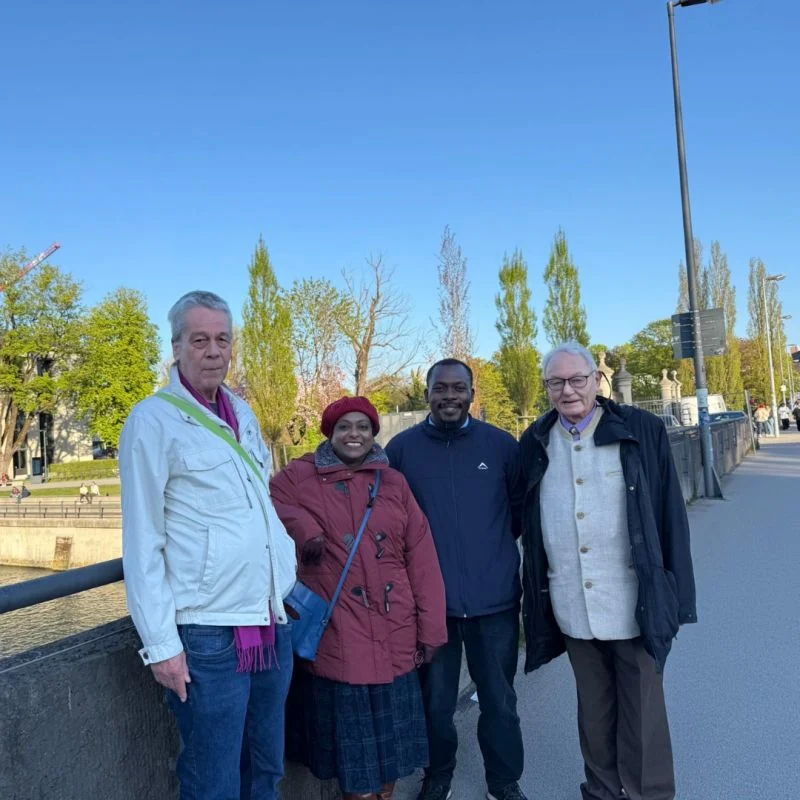
The CAG, represented by members Patrick Agbassi, Stephan Dressler, Blessina Kumar, and Paul Sommerfeld, acted as the primary bridge between the laboratory and the bedside. Their participation underscored a core principle: that scientific innovation, no matter how sophisticated, will fail to achieve public health impact if it does not account for the social, economic, and logistical realities of the people it is meant to treat.
Chronology: The Evolution of Patient-Centric Design
The engagement of the CAG at the UNITE4TB meeting was not an isolated event but rather the culmination of a deliberate strategy to embed patient advocacy into the drug development lifecycle.
- Pre-Meeting Phase: Months of preparatory work saw the CAG members reviewing trial protocols, analyzing feedback from regional community boards, and identifying key barriers to patient recruitment and retention.
- The Opening Sessions: Researchers presented data on current clinical trials, setting the stage for the CAG to provide immediate, ground-level critiques of the proposed methodologies.
- The Mid-Meeting Deliberations: A dedicated session chaired by Paul Sommerfeld focused on "Learning from Experience." Here, the timeline shifted from hypothetical design to the practical realities of trial sites, with investigators and community members sharing successes and failures in trial implementation.
- The Joint Advisory Board Session: This session marked a turning point in the meeting, as scientific, ethical, and community leaders grappled with the historical exclusion of young people from clinical research.
- Closing Strategies: The meeting concluded with a roadmap for the coming year, emphasizing the necessity of a dedicated budget for community engagement and the strengthening of local Community Advisory Boards (CABs) across all international trial sites.
Supporting Data: Why Current Models Need Reform
The necessity for this collaborative approach is rooted in the harsh data of TB treatment. Historically, TB regimens have been notoriously long—sometimes lasting up to two years—and fraught with toxic side effects that often lead to low adherence rates.
Research presented at the meeting highlighted the “burden of care” as a primary driver of treatment failure. When a clinical trial requires daily commutes to a clinic, rigid adherence to inflexible schedules, or complex medication regimens without adequate support, the patient experience suffers. The CAG presented evidence that:
- Retention Rates are significantly higher in sites where community engagement is budgeted as a core operational cost rather than an afterthought.
- Trust Barriers are best dismantled through peer education, where former trial participants serve as mentors for new recruits.
- Adolescent Exclusion has created a "knowledge vacuum," where medical professionals are forced to extrapolate pediatric or adult dosage and efficacy data for teenagers—a population that accounts for a substantial share of new TB infections globally.
Official Responses and The Power of Lived Experience
The inclusion of the CAG was not merely ceremonial. Throughout the meeting, the perspectives of Agbassi, Dressler, Kumar, and Sommerfeld influenced the trajectory of discussions regarding trial delivery.
One of the most significant outcomes was the formal acknowledgement of the need for youth-inclusive research. Blessina Kumar’s advocacy on this front was particularly resonant. She noted that excluding teenagers from trials ignores a vital demographic, arguing that future treatments must reflect the unique life circumstances of young people—specifically the need to balance medication regimens with school attendance, social development, and family life.
Reflecting on the meeting, Kumar stated:
"The UNITE4TB Annual Meeting was successful; we were heard, our views and perspectives respected. The CAG made a strong case for the inclusion of children and adolescents in the trials. The Annual Meeting also provided an opportunity for learning and sharing; we appreciate the opportunity to hear from the trial site Principal Investigators. We look forward to interacting with the local Community Advisory Boards across the trial sites in the next few months."
The sentiment was echoed by trial investigators who admitted that the feedback loop established with the CAG has forced them to reconsider "standard operating procedures." For instance, the transition from rigid clinic-based monitoring to more flexible, patient-friendly communication strategies was identified as a direct result of community-led advocacy.
Implications for the Future of TB Research
The implications of the UNITE4TB meeting extend far beyond the immediate development of a new drug. The shift toward a "co-design" model suggests a new standard for global health research.
1. The Democratization of Clinical Trials
By ensuring that community members are involved from the protocol design phase, researchers are essentially "stress-testing" their trials against the reality of patient life. This reduces the risk of expensive, late-stage trial failures caused by poor recruitment or high dropout rates.
2. Budgetary Reallocation
A major takeaway was the consensus that community engagement requires its own dedicated budget. By treating engagement as an essential scientific component rather than a peripheral outreach activity, UNITE4TB is setting a precedent that other global health initiatives are likely to follow.
3. Ethical Obligation to Vulnerable Groups
The push to include adolescents is a significant ethical milestone. By addressing the barriers to consent and the practical challenges of pediatric and adolescent participation, the consortium is working toward a more equitable health landscape, ensuring that children are no longer an afterthought in the global response to TB.
4. Trust as a Clinical Metric
Perhaps the most profound implication is the elevation of "trust" as a measurable indicator of success. The use of peer educators and the strengthening of local CABs demonstrate that, in the context of TB, the most effective tool in the clinical toolkit is not just a molecule, but the relationship between the patient and the healthcare system.
Conclusion: A New Standard of Care
As the UNITE4TB consortium moves into the next phase of its trials, the influence of the Community Advisory Group will remain a cornerstone of its operations. The meeting served as a powerful reminder that the fight against TB is not solely a technical challenge to be solved in a laboratory; it is a human challenge that requires empathy, collaboration, and a deep respect for the individuals affected by the disease.
By integrating the perspectives of those who have lived the experience of TB, UNITE4TB is not only aiming for shorter and safer treatments—they are aiming for a more humane and effective system of clinical research. As the project continues to evolve, the partnership between scientists and the community will serve as the litmus test for whether we can truly eradicate this disease in our lifetime.
For further information and to stay updated on the latest developments, visit: