










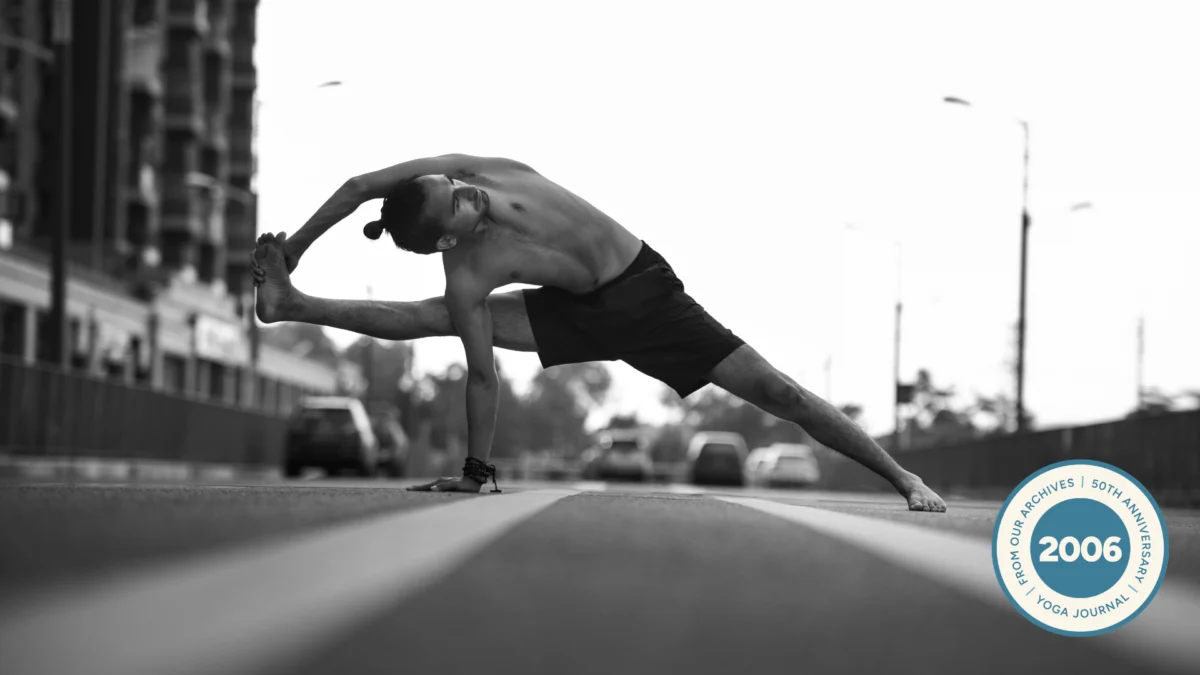
Originally published in the May 2006 issue of Yoga Journal, this archival feature explores the intersection of physical struggle, intuitive movement, and the profound transformation found in the complex asana, Visvamitrasana.
Main Facts: The Intersection of Effort and Flow
Yoga, at its highest expression, is not merely the attainment of a shape; it is the cultivation of a global intelligence that permeates every cell of the body. In the world of advanced asana, few postures encapsulate this shift from fragmented effort to integrated grace as effectively as Visvamitrasana (Visvamitra’s Pose).
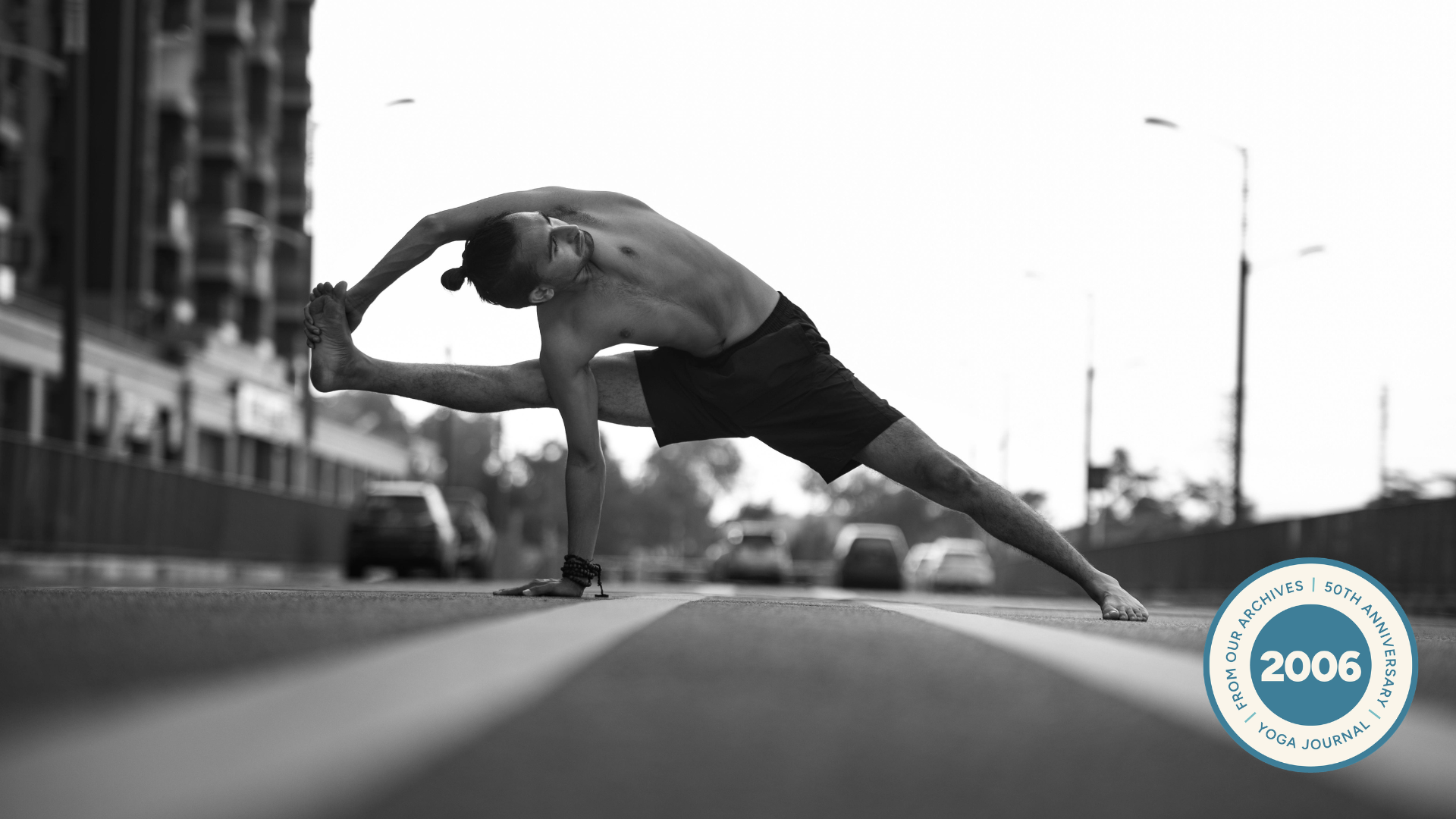
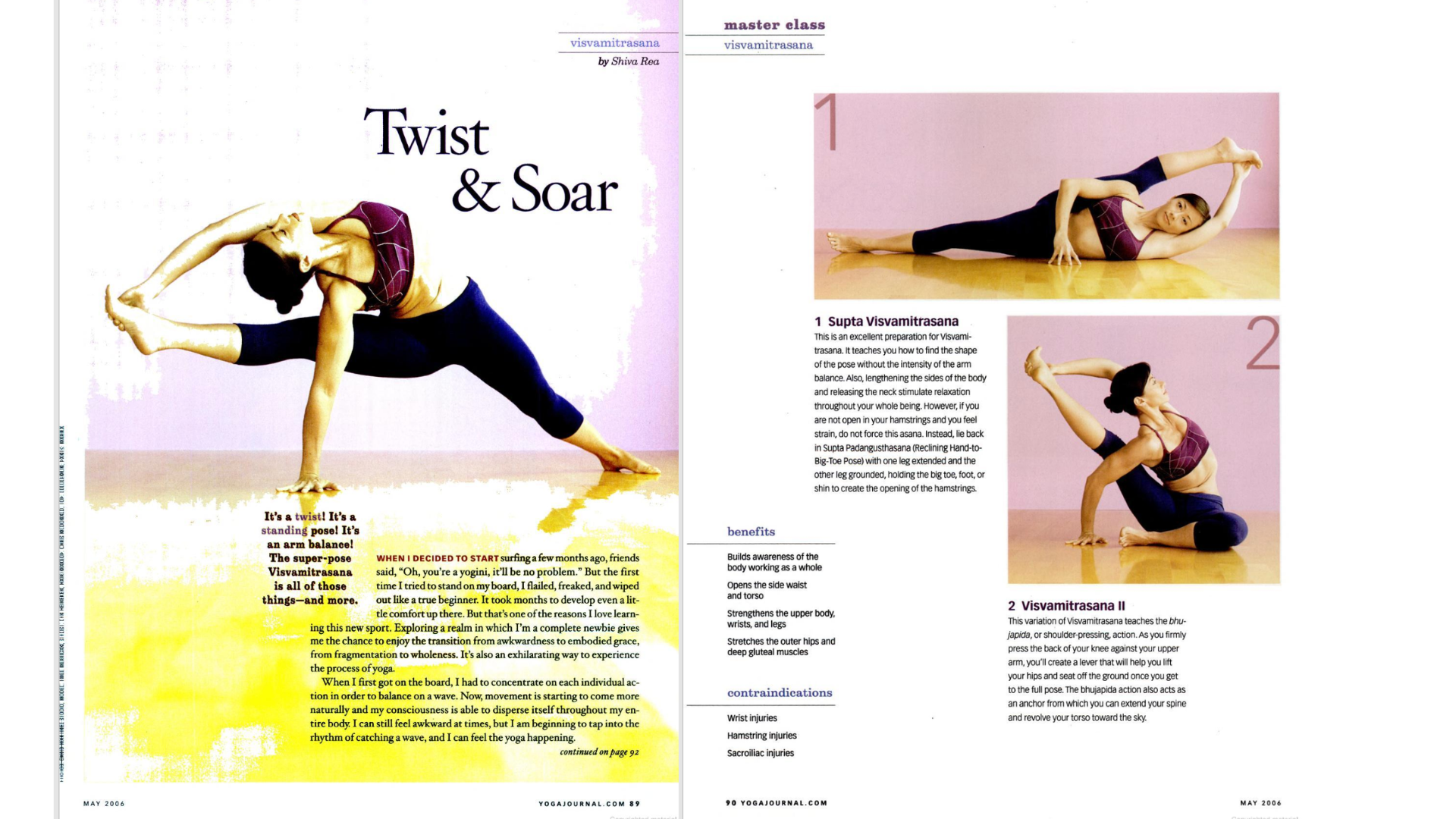
Named after the legendary king who transitioned into a revered sage, this pose is a masterpiece of structural complexity. It functions simultaneously as an arm balance, a deep hip opener, a shoulder release, a hamstring stretch, and a spinal twist. For the practitioner, the challenge lies in the "local to global" transition: moving from a focus on individual, disconnected muscle groups to a state of unified, rhythmic consciousness. Just as a surfer must move past the clumsy, hyper-focused stage of learning to balance on a wave to reach a state of intuitive flow, the yogi must learn to move through the "pretzel-like" mechanics of Visvamitrasana until the asana comes alive as a singular, graceful entity.
Chronology: The Evolution of Practice
The journey toward Visvamitrasana is not one to be rushed. Like the transformation of a butterfly emerging from a cocoon, the pose requires patience, maturation, and a willingness to embrace "the wipeout."
The Preparation Phase (The Foundation)
Visvamitrasana should never be attempted cold. Practitioners must prioritize a thorough warm-up to prepare the hamstrings, hips, shoulders, and intercostal muscles. A comprehensive sequence should include Sun Salutations to generate heat, followed by Trikonasana (Triangle), Parsvakonasana (Side Angle), and Virabhadrasana II (Warrior II). To address the specific demands of the pose, incorporating Malasana (Squat) and Prasarita Padottanasana (Wide-Legged Forward Bend) is essential. Arm-balancing preparation should be bolstered by Tolasana (Scale Pose) and Bhujapidasana (Shoulder-Pressing Pose).
Stage 1: Supta Visvamitrasana (The Reclined Study)
Before fighting gravity, the practitioner must understand the geometry of the pose. By lying on the back, one can explore the shape without the load-bearing stress of an arm balance. By hooking the hand around the foot and rolling onto the side, the practitioner maps the range of motion required in the hips and torso, allowing for a "pre-flight" check of the body’s limitations.
Stage 2: The Lever of Bhujapida
The defining action of the pose is bhujapida—a lever created by pressing the upper thigh against the shoulder and the shoulder against the thigh. This action is the engine of the pose. In the intermediate variation, sitting in Baddha Konasana (Bound Angle Pose) and cradling the leg allows the practitioner to refine this contact point, teaching the spine to remain long while the hip joint undergoes deep rotation.
Stage 3: The Intermediate Launch (Eka Pada Koundinyasana II)
Transitioning into Eka Pada Koundinyasana II serves as the bridge. By engaging the mula bandha (root lock) and focusing on the "four movements" lunge, the practitioner learns to distribute energy evenly through the lower body. This creates the buoyancy required to lift the torso off the wrists, preventing the "Titanic" effect of sinking under one’s own weight.
Supporting Data: The Anatomy of Stress Relief
Beyond its aesthetic complexity, Visvamitrasana serves a therapeutic function. The pose is a potent stress reliever, specifically targeting the intercostal muscles—the small muscles between the ribs that often contract involuntarily under psychological pressure.
When a practitioner moves into the full expression of the side-waist stretch, these muscles are elongated, signaling the nervous system to shift from a "fight or flight" response to a state of parasympathetic relaxation. Furthermore, the requirement to relax the head and neck during the pose helps empty the "thinking mind." By relinquishing the need to micromanage every muscle, the practitioner invites a deeper, more visceral experience of the pose, replacing mental fidgeting with internal rhythm.
Official Perspectives: Cultivating Global Intelligence
In the yogic tradition, Visvamitrasana is seen as a reflection of personal evolution. The "official" philosophy surrounding the pose—as documented in the 2006 archives—emphasizes that the goal is not to force the body into a shape, but to allow the pose to emerge from a foundation of stability.
When asked about the difficulty of the transition, experienced practitioners note that the "struggle" is often a result of over-intellectualizing the individual parts. When you stop "wrestling the alligator" and instead focus on the breath flowing from the base of the spine through the crown of the head, the pose shifts from a physical chore to a "symphony" of movement. This is the definition of global intelligence: the ability to hold the entire body in one’s conscious awareness, rather than being trapped in the local tension of a single joint.
Implications: The State of Yoga
The ultimate implication of mastering a pose like Visvamitrasana extends far beyond the yoga mat. It provides a blueprint for how to handle life’s challenges.
- Patience as a Tool: Just as the butterfly requires days for its wings to dry, the yogi must accept that progress is non-linear. The most profound breakthroughs often occur in solitude, when the practitioner stops "performing" and starts "inhabiting" the space.
- The Integration of Intent and Action: The true state of yoga is realized when the practitioner stops focusing on the individual details that compete for attention and instead experiences the union of intention, action, and grace. When the chest opens to the sky and the breath becomes rhythmic, the physical body ceases to be an obstacle and becomes an instrument.
- The Lesson of the Wipeout: Perhaps the most significant lesson is that failure is part of the process. Whether it is a literal fall while surfing or a "crumpled" exit from an arm balance, the ability to reset, step back into Downward-Facing Dog, and try again with a clear mind is the hallmark of a mature practice.
In conclusion, Visvamitrasana is more than a feat of flexibility. It is a rigorous exercise in self-awareness. By integrating the physical levers of bhujapida with the internal stillness of the breath, the practitioner finds a window through which they can bring fresh prana (life force) into the body, effectively wringing out the old to make room for the new. Whether you are a beginner testing the waters or a seasoned yogi refining your balance, the lesson remains the same: move slowly, respect your limits, and eventually, the pose will come to you.