









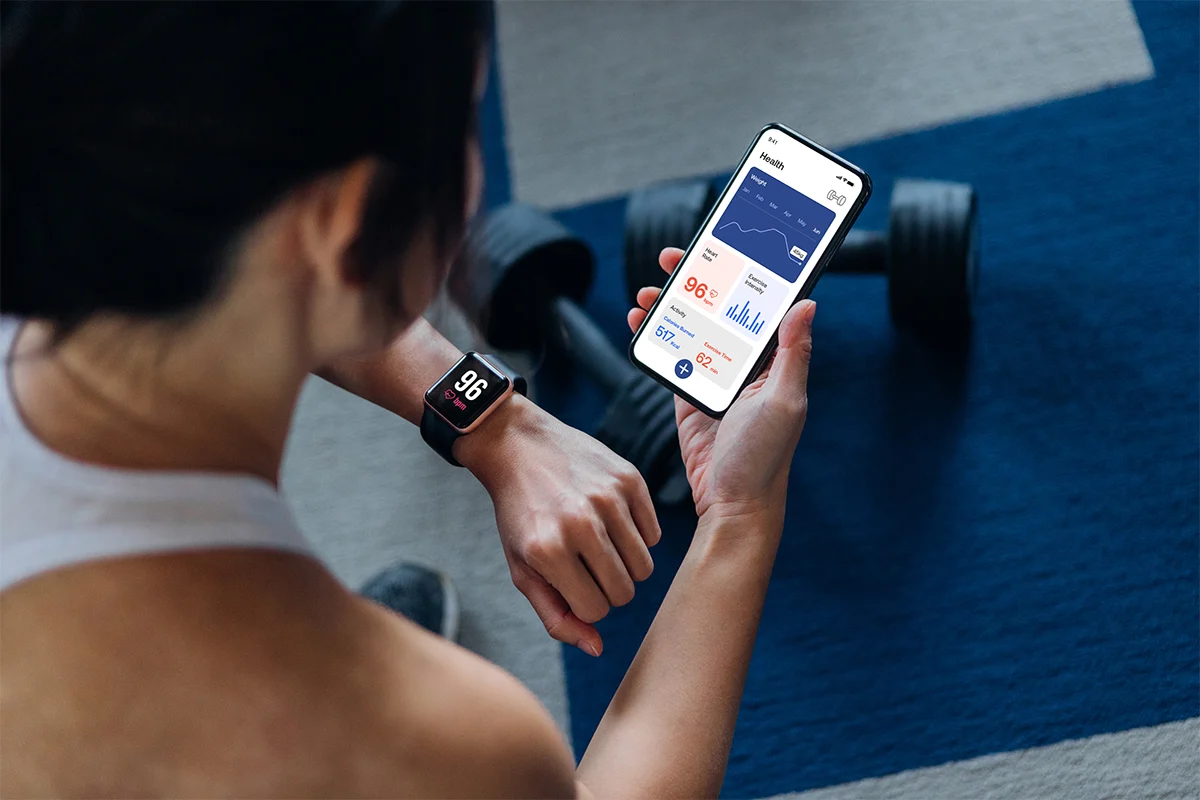
In the modern era of health optimization, the wrist-worn fitness tracker has transitioned from a niche gadget for endurance athletes to a ubiquitous household accessory. Millions of users now wake up, check their "readiness scores," analyze their "sleep architecture," and log their "active calories" with religious fervor. However, as the industry matures, a growing body of clinical research suggests a widening chasm between the data provided by consumer wearables and the objective reality measured by clinical-grade diagnostic equipment.
While these devices are marvels of miniaturized sensor technology, their reliability is far from uniform. For the average user, this discrepancy is often ignored. For fitness professionals, however, it represents a significant challenge: how do we leverage modern technology without falling into the trap of data-driven misinformation?
The Main Facts: The Precision Gap
The core issue facing the wearable industry is the inherent limitation of photoplethysmography (PPG) and accelerometer technology when compared to the gold-standard methods used in hospitals and sleep laboratories.
Calorie Expenditure: The Estimation Dilemma
Consumer trackers estimate calorie burn by combining heart rate data with movement patterns and user-provided biometrics (age, weight, height). The problem is that these algorithms rely on generalized models. A high-intensity interval training (HIIT) session might result in a high heart rate, but the device may struggle to distinguish between metabolic exertion and a simple spike in pulse caused by anxiety or caffeine. Clinical-grade calorimetry, which measures oxygen consumption and carbon dioxide production (indirect calorimetry), consistently demonstrates that wearables can deviate from actual energy expenditure by as much as 20% to 40% depending on the activity type.
Sleep Staging: A Complex Calculation
Perhaps the most touted feature of modern wearables is sleep stage tracking (REM, Light, and Deep sleep). In a clinical sleep lab, staging requires polysomnography (PSG)—an exhaustive process involving electroencephalography (EEG) to monitor brain waves, electrooculography (EOG) for eye movement, and electromyography (EMG) for muscle activity. Wearables, limited to heart rate variability (HRV) and movement, are essentially "guessing" sleep stages based on proxies. While they have become better at distinguishing "asleep" from "awake," their accuracy in mapping the complex architecture of sleep remains speculative.
Chronology: The Evolution of the Consumer Sensor
To understand the current state of the industry, one must look at the rapid, yet unstandardized, trajectory of wearable development.
- 2008–2012: The Step-Counting Era: The early years were defined by simple tri-axial accelerometers. Devices like the early Fitbits were glorified pedometers. Accuracy was poor, but the goal was simple: encourage movement.
- 2013–2016: The Heart Rate Revolution: Manufacturers began integrating optical heart rate sensors (PPG). This shifted the focus from distance to intensity. However, early sensors struggled with motion artifacts—if you moved your arm too quickly, the sensor lost its "lock."
- 2017–2020: The Era of Recovery Metrics: As hardware matured, software took center stage. Companies began introducing proprietary algorithms like "Readiness Scores" and "Sleep Scores." These metrics were designed to provide actionable advice rather than raw numbers.
- 2021–Present: The Medicalization Phase: Current devices are now marketed as "wellness tools" capable of detecting atrial fibrillation (AFib) and blood oxygen saturation (SpO2). While the clinical utility of these specific features has improved through FDA clearances, the "wellness" data—calories and sleep—has remained largely stagnant in terms of fundamental accuracy.
Supporting Data: Understanding the Variability
Research conducted by organizations like the Journal of Applied Physiology and various independent sports science labs consistently points to a "precision hierarchy" in wearable technology.
The Hierarchy of Accuracy
- Heart Rate (Resting): Most modern wearables are highly accurate for resting heart rate. The data here is robust and reliable enough to track long-term cardiovascular health.
- Steps and Distance: Generally reliable for walking and running on flat surfaces, but accuracy drops significantly during non-linear movements, such as yoga, weightlifting, or sports involving lateral agility.
- Heart Rate (High Intensity): As the heart rate climbs toward maximum, PPG sensors often experience "signal noise," leading to inaccuracies during peak performance intervals.
- Sleep Architecture: This remains the most volatile category, with many devices failing to correlate accurately with EEG-based PSG, particularly in individuals with sleep disorders or those who move frequently during the night.
Official Responses and Industry Perspectives
The wearable industry has met these criticisms with a two-pronged response: transparency regarding "directional" intent and continuous software updates.
The "Directional" Argument
Major manufacturers often include disclaimers in their terms of service stating that their products are "not medical devices." Their argument is that they are not designed to provide clinical diagnostic data, but rather "trends." By looking at a seven-day average of sleep or activity, they argue, the user can observe behavioral shifts—such as a decrease in HRV during a period of high stress—which is useful information even if the absolute number is not clinically precise.
The Software-First Approach
Industry leaders are pivoting away from raw sensor data toward machine learning. By feeding massive amounts of population-level data into their algorithms, companies claim they are "training" their devices to be more accurate across different demographics. However, critics argue that these "black box" algorithms make it impossible for independent researchers to verify how these numbers are actually generated, creating a lack of scientific accountability.
Implications for Fitness Professionals and Clients
The most critical challenge arising from this technological boom is the phenomenon of "orthosomnia"—the obsessive quest to achieve perfect sleep scores—and the misapplication of training loads based on flawed recovery metrics.
1. The Trap of Data Dependency
When a client wakes up and sees a "low recovery score" on their watch, it can create a psychological barrier to performance. They may decide to skip a workout based on a device’s estimation, even if their body feels ready to train. This is the "nocebo effect" of wearable data: the device’s prediction becomes a self-fulfilling prophecy.
2. Identifying Patterns vs. Chasing Numbers
For the fitness professional, the mantra must be: Data should inform, not dictate.
- The Weekly View: A single day’s calorie count is meaningless. A trend of rising resting heart rate over three weeks, however, is a valid indicator of overtraining or systemic stress.
- Subjective Feedback: Coaches must prioritize the "Rate of Perceived Exertion" (RPE) and the client’s internal feedback over the wearable’s output. If the watch says the client is "recovered" but they report extreme muscle soreness and fatigue, the professional should trust the human, not the hardware.
3. Contextualization
Data without context is noise. A wearable might show high heart rate variability, but without knowing if the user had a stressful day at work, drank alcohol, or had a poor night’s sleep, the number is stripped of its meaning. Fitness professionals have a responsibility to teach their clients how to interpret these data points as pieces of a larger puzzle, rather than as immutable truths.
Conclusion: The Future of Wearables
We are currently in a "Wild West" phase of digital health. While the hardware is impressive, we have collectively moved faster than our ability to critically analyze the data we are generating.
The path forward requires a shift in consumer expectations. Wearables are, and will likely remain for the foreseeable future, sophisticated trend-tracking tools rather than clinical diagnostic instruments. For the athlete or the health-conscious individual, the goal should be to use these devices to foster a greater connection with their own physiology—learning to recognize how they feel, how they move, and how they recover—rather than outsourcing their health to an algorithm.
As we move forward, the most successful users will be those who treat their fitness tracker like a compass rather than a GPS. A compass provides a general direction and helps you navigate, but it cannot tell you the exact terrain of the path ahead. That, as it always has been, is a job for the human mind. By maintaining a healthy skepticism and prioritizing subjective experience, we can harness the power of wearables to enhance our health journey without becoming slaves to the numbers on the screen.