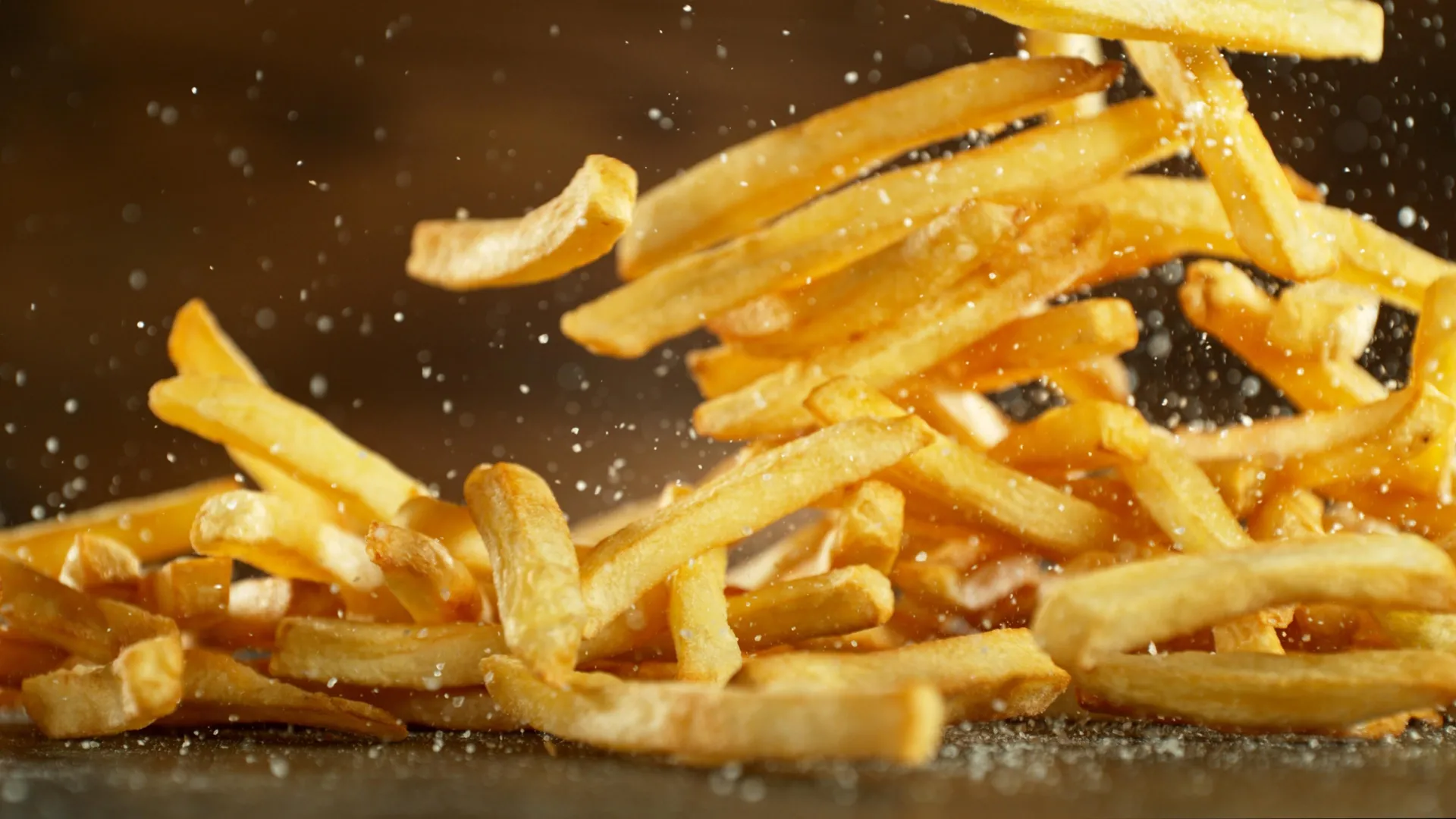
For generations, the French fry has occupied a paradoxical position in the human diet. It is a global culinary staple, beloved for its golden, crispy exterior and rich, savory interior. Yet, it is simultaneously a nutritional villain, often criticized for the significant volume of oil it absorbs during the deep-frying process. This absorption contributes heavily to the caloric density and saturated fat content of the final product, linking the snack to long-term health challenges such as obesity and hypertension.
However, a breakthrough in food engineering may soon bridge the gap between hedonistic cravings and health consciousness. Researchers at the University of Illinois Urbana-Champaign are pioneering a hybrid frying method that utilizes microwave energy to produce a healthier fry without sacrificing the quintessential texture that consumers demand.
Main Facts: The Physics of the Perfect Fry
The core problem with traditional deep-frying is a matter of fluid dynamics. When a potato strip is submerged in hot oil, the high heat causes the moisture within the potato to turn into vapor. As this water evaporates and escapes the potato, it leaves behind a network of tiny pores—effectively a sponge-like structure.
The danger lies in the pressure differential. As the potato cools slightly or as the moisture evaporates, the internal pressure drops, creating a suction effect. This negative pressure acts like a vacuum, pulling the surrounding oil deep into the porous structure of the potato.
Pawan Singh Takhar, a professor of food engineering in the Department of Food Science and Human Nutrition at the U of I, likens the process to drinking through a straw. "If you push air into the straw, you create positive pressure, and liquid is pushed out. But if you suck on the straw, the liquid moves upward. Food materials are essentially made of millions of tiny straws. During traditional frying, negative pressure pulls the oil into the food," Takhar explains.
The research team, including doctoral student Yash Shah, has discovered that microwave energy can fundamentally alter this pressure profile. By heating the potato from the inside out—rather than relying solely on heat transfer from the surface—microwaves ensure that water molecules oscillate and vaporize throughout the entire potato. This continuous generation of vapor maintains a positive internal pressure, effectively "pushing back" against the oil and significantly limiting its absorption.
Chronology: From Lab Bench to Mathematical Model
The path to this discovery involved a rigorous, multi-stage scientific process that combined experimental physics with advanced computational modeling.
Phase 1: Experimental Setup
The journey began with the development of a specialized microwave fryer in collaboration with scientists at Washington State University. This device was engineered to operate at two distinct electromagnetic frequencies: 2.45 gigahertz (the standard frequency of household microwave ovens) and 5.8 gigahertz.
The researchers prepared potatoes by peeling and slicing them into uniform strips, followed by blanching—a critical step that softens the cellular structure and prepares the surface for frying. These strips were then submerged in soybean oil heated to a consistent 180 degrees Celsius.
Phase 2: Real-time Monitoring
During the frying process, the team monitored an exhaustive array of variables: internal pressure, temperature gradients, volume changes, moisture loss, and, ultimately, oil content. By documenting exactly when and how oil migrated into the potato, the researchers identified that approximately 90% of oil uptake occurs when the potato is under negative pressure.
Phase 3: Mathematical Simulation
To broaden the scope of their findings, the team developed complex computer models based on hybrid mixture theory and electromagnetic equations. These models allowed the researchers to simulate frying environments that would be difficult to replicate physically, testing how different frequencies and heating times interacted to influence the final quality of the fry.
Supporting Data: Why Frequencies Matter
The use of gigahertz (GHz) frequencies is central to the project’s success. In electromagnetic terms, the frequency of the waves determines how energy is absorbed by the food matrix.
Data collected by the U of I team showed that microwave-assisted frying led to a significantly faster rate of moisture loss compared to traditional methods. Because the microwave energy penetrates the entire volume of the potato, it facilitates a more uniform drying process.
However, the data also revealed a critical limitation: microwaves alone cannot produce a high-quality fry. Fries cooked exclusively via microwave energy remained soft and lacked the characteristic "crunch" associated with the Maillard reaction—the chemical process that creates the golden-brown crust on fried foods. Consequently, the researchers concluded that the optimal solution is a hybrid system: conventional oil frying provides the texture, while microwave energy handles the interior moisture regulation.
Official Responses: The Philosophy of Healthier Cravings
"Consumers want healthy foods, but at the time of purchase, their cravings often take over," says Professor Takhar. "High oil content adds flavor, but it also contains a lot of energy and calories. My research team studies frying with the aim of obtaining lower fat content without significant differences in taste and texture."
The implications of this research are significant, not just for the home kitchen, but for the multi-billion-dollar global snack food industry. By integrating microwave generators into existing continuous frying lines—a modification that is deemed economically practical due to the availability of microwave technology—manufacturers could produce "healthier" versions of popular snacks without having to overhaul their entire production infrastructure.
The researchers have codified their findings in two recent academic publications:
- The Effect of Conventional and Microwave Frying on the Quality Characteristics of French Fries (published in the Journal of Food Science)
- Predicting the quality changes during microwave frying of food biopolymers (published in Current Research in Food Science)
Implications: The Future of Industrial Food Production
The shift toward hybrid frying technology represents a significant evolution in food processing. For decades, the industry has focused on oil quality, additives, or air-frying technologies, but the latter often fails to replicate the exact organoleptic experience—the "mouthfeel"—of a true deep-fried potato.
Environmental and Economic Impact
Beyond the consumer health benefits, there are potential economic advantages for the food industry. Hybrid frying significantly reduces the total time required for the frying process. In a high-volume manufacturing setting, faster production times translate to higher throughput and lower energy costs per unit. Furthermore, because less oil is absorbed by the fries, the oil in the fryer remains cleaner for longer, potentially reducing the frequency of oil disposal and replacement—a major cost center for industrial fryers.
The Path Forward
The U of I team’s work underscores a growing trend in food science: the marriage of traditional culinary techniques with high-tech electromagnetic engineering. As obesity rates remain a global health concern, the ability to "engineer" healthier versions of traditional comfort foods becomes not just a commercial opportunity, but a public health imperative.
While the current findings are primarily focused on the potato, the researchers believe the principles of pressure-regulated frying could eventually be applied to a wider range of fried items, including breaded meats, vegetable tempura, and other processed snacks.
As the project moves toward potential pilot-scale implementation, the focus will remain on balancing the delicate interplay between moisture, pressure, and heat. For the consumer, the future of the French fry looks increasingly bright—and significantly less greasy—without losing the soul of the dish that has made it a global favorite for centuries.
This research was funded by the USDA National Institute of Food and Agriculture (Awards 2020-67017-31194, ILLU-698-308, and ILLU-698-926).