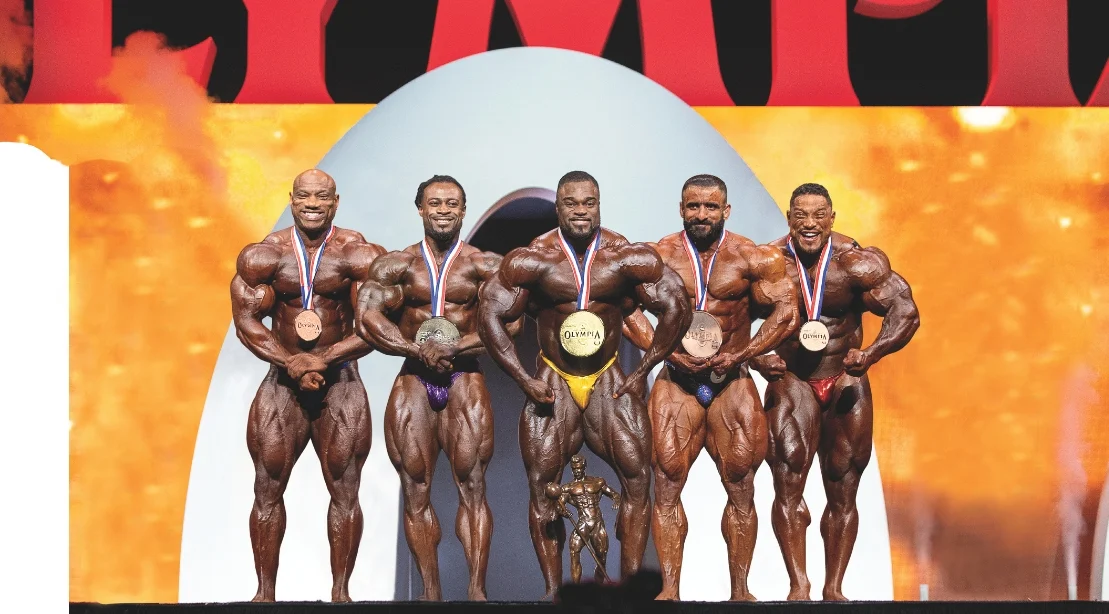
Since its inception in 1965, the Mr. Olympia contest has stood as the pinnacle of human physique development. It is the most elite fraternity in the world of iron, a stage where legends are minted and history is etched into the annals of sport. Throughout its nearly six-decade run, 19 men have ascended to the throne, but for many, the "home" of this transformation remains the Orleans Arena in Las Vegas. From 2005 to 2019, the Orleans served as the epicenter of bodybuilding, hosting 15 consecutive editions—a record that no other venue in the sport’s illustrious history can claim.
As the bodybuilding world turns its eyes toward September 25–26, 2026, the announcement that the Olympia will return to the Orleans Arena has sent a wave of nostalgia and anticipation through the industry. For veterans and newcomers alike, this is not merely a change of venue; it is a homecoming to the theater where the legacies of titans like Ronnie Coleman, Jay Cutler, Dexter Jackson, Phil Heath, and Shawn Rhoden were forged.
A Chronology of the Orleans Era
The relationship between the Olympia and the Orleans Arena began in 2005, marking a period of unparalleled growth for the sport. This was the era of the "King," Ronnie Coleman, who used the arena to secure his eighth and final Sandow trophy, matching Lee Haney’s historic record. It was the stage where Jay Cutler’s tactical brilliance finally overcame the mass monster era, where Dexter "The Blade" Jackson proved that conditioning remains the ultimate equalizer, and where Phil "The Gift" Heath embarked on a seven-year reign of dominance.
However, the venue’s history is not just one of victory; it is one of transition. The 2019 edition, which saw Brandon Curry claim the title, served as the final chapter of that 15-year run. The subsequent years, shaped by global instability, saw the Olympia migrate to Orlando and eventually to other venues in Las Vegas, shifting the landscape of the sport. Now, seven years after the last Sandow was raised in the Orleans, the sport is returning to its most familiar floorboards.
The Unique Legacy of Brandon Curry
For Brandon Curry, the 2026 Olympia represents a profound full-circle moment. Preparing for his 14th career appearance—the highest total of any active Men’s Open competitor—Curry stands in a singular position: he is the only former champion crowned at the Orleans Arena who remains an active, competitive threat in the current lineup.
Curry’s perspective on the Orleans is informed by a lifetime of professional growth. He recalls sitting in the Weider skybox in 2006, witnessing the seismic shift in the sport when Jay Cutler dethroned Ronnie Coleman. Thirteen years later, he was the one standing in the center of that same stage, clutching the Sandow while the iconic Mr. Olympia theme song filled the rafters.
"For me, it was surreal," Curry reflects. "I remember being onstage that night and trying to slow time down so I could take in every moment."

His 2019 victory, while historic, was framed by the absence of several key contenders—including Phil Heath, who was recovering from surgery, and the 2018 champion, Shawn Rhoden, who was sidelined by legal issues. Despite the narrative surrounding those absences, Curry maintains that his title was earned through the grueling reality of professional competition. "I kinda felt it was going to go my way that night," he says. The weight of the trophy and the prestige of the win were, in his view, entirely undiminished by the roster fluctuations of the time.
Supporting Data: The Pandemic Interruption
Curry’s reign, arguably the most unique in modern history, was defined by an unprecedented obstacle: the COVID-19 pandemic. Shortly after his crowning, the global lockdown forced the closure of gyms and the cancellation of tours, effectively handcuffing the champion’s ability to act as the sport’s primary global ambassador.
The logistical fallout was severe. The 2020 Olympia was forced to relocate to Orlando and move from its traditional September slot to December. For an athlete who thrives on the energy of the crowd and the promotional circuit, the isolation was a "bittersweet" hurdle.
"The door shut on all that just as I was getting going with traveling and promoting the sport," Curry admits. "That made everything bittersweet because I was handicapped in the process of carrying the title as a champion should."
Despite these challenges, Curry’s presence provided a steady hand during a period of uncertainty. His reign concluded at the 2020 show, where Mamdouh "Big Ramy" Elssbiay captured his first of two titles, with Curry taking second and Heath taking third. While Curry has yet to reclaim the top spot, his single title remains a pillar of his legacy, serving as a reminder that even in the most restricted times, greatness finds a way to manifest.
Official Responses and Strategic Shifts
The return to the Orleans in 2026 is a strategic masterstroke by the Olympia’s current ownership, led by Jake Wood and President Dan Solomon. By moving the event back to its spiritual home, they are acknowledging the demand for the specific atmosphere that the Orleans provides.
The 2026 edition will be the largest to date, featuring 12 divisions including the expanding Wellness and Fit Model categories. However, the heart of the weekend remains the Men’s Open Prejudging and Finals. According to organizers, the Orleans offers an intimacy and a level of production quality that newer, more sterile venues struggle to replicate.

"There is no other venue that can accommodate the fanfare," says Curry. "The access and the arena is perfect for the show, and there will be plenty of backstage space for the competitors too. It will be interesting to see how the athletes that have never been there will respond to it because they will feel a difference when they take the stage."
Implications: The 2026 Narrative
As the bodybuilding world gears up for 2026, the implications of this return are twofold. First, it honors the history of the sport, creating a bridge between the legends of the past and the new guard of the future. Second, it creates a psychological theater for the athletes. The Orleans is a "fast" stage—it rewards conditioning and crisp posing, and it is known for an electric audience that is closer to the stage than in any other venue.
For a veteran like Curry, the return to the Orleans is an opportunity to prove that the "old guard" still has teeth. While he is not currently the odds-on favorite, he understands the volatile nature of the sport. "Every time I come to the stage, I bring a surprise," Curry notes. "I can still be competitive and dangerous at a high level. I’m looking forward to seeing what I can do."
The 2026 Mr. Olympia will be a litmus test for the industry. It will ask whether the current generation of athletes can withstand the pressure of a venue that has seen the greatest champions of the last 20 years define their careers. It will also serve as a celebration of the sport’s resilience, moving from the darkness of a global pandemic back into the spotlight of the most storied arena in bodybuilding.
As the industry prepares for this momentous weekend, the message is clear: the Olympia is not just a competition; it is a legacy. And in 2026, that legacy returns to where it was built. Whether it serves as a final stand for veterans or a launching pad for new icons, the Orleans Arena will once again become the center of the bodybuilding universe.
For those looking to witness this historic chapter in person, tickets and World Fitness Expo passes are currently available through the official Olympia website at www.mrolympia.com. The stage is set, the history is waiting, and the lights are about to go up once more in Las Vegas.