






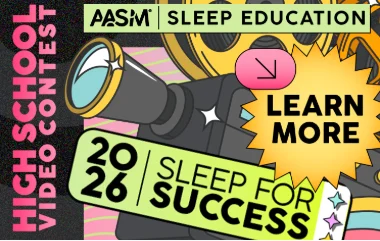
In an era defined by constant digital stimulation, social media pressures, and rigorous academic demands, the American Academy of Sleep Medicine (AASM) is turning to the next generation to advocate for one of the most fundamental pillars of human health: sleep. The organization has officially announced the launch of its 2026 “Sleep for Success” High School Video Contest, a national initiative designed to engage students in a creative exploration of the physiological and psychological necessity of adequate rest.
By inviting high schoolers to capture the essence of healthy sleep through 30- to 90-second films, the AASM hopes to bridge the gap between complex sleep science and the lived reality of the modern American teenager.
Main Facts: The Mission Behind the Lens
The “Sleep for Success” contest is more than just a creative competition; it is a public health awareness campaign aimed at normalizing the concept of sleep hygiene among youth. The AASM has structured the contest to be as accessible as possible, allowing for a wide range of creative interpretations.
The core requirements are straightforward: students must produce an original video between 30 and 90 seconds in length that effectively communicates the importance of prioritizing sleep. The content can be humorous, dramatic, educational, or abstract, provided it addresses the myriad ways in which sleep impacts a teenager’s life.
The contest is open to high school students across the United States. To incentivize participation and recognize the vital role of mentorship, the AASM is offering a $1,000 cash prize to the winning student or team, while the teacher or educator who facilitates the project receives a $100 gift card. All entries must be submitted by the deadline of Tuesday, March 31, at 12:00 p.m. EDT.
Chronology: A History of Advocacy
The AASM’s commitment to youth sleep education has evolved significantly over the last decade. Recognizing that sleep deprivation in adolescents has reached epidemic proportions, the organization transitioned from traditional clinical guidelines to more dynamic, youth-centered outreach programs.
- The Early Awareness Phase: Initial AASM efforts focused on publishing scientific position statements, highlighting the correlation between school start times and student performance.
- The Digital Pivot: Observing that static infographics were failing to resonate with a demographic that consumes information primarily through video platforms, the AASM launched its inaugural video contest several years ago.
- The 2026 Campaign: This year’s contest represents a refinement of previous iterations. The AASM has streamlined the submission process and expanded its criteria to ensure that students from diverse backgrounds—whether they are interested in film production, health sciences, or social media advocacy—can participate on equal footing.
By maintaining this annual cadence, the AASM has created a library of student-generated content that serves as a living archive of how teenagers perceive their own health challenges.
Supporting Data: Why Teens Need the Sleep Conversation
The urgency behind this contest is supported by a wealth of clinical research. The National Sleep Foundation and the AASM agree that teenagers require between 8 and 10 hours of sleep per night to function optimally. However, data consistently suggests that the vast majority of high schoolers fall well short of this target.
The Physiology of the Adolescent Brain
During the teenage years, the circadian rhythm—the body’s internal clock—naturally shifts, making it harder for adolescents to fall asleep early. This "phase delay," when combined with early school start times, creates a state of chronic, biologically induced sleep deprivation.
Cognitive and Emotional Consequences
The implications of this deficiency are severe:
- Academic Performance: Sleep-deprived students struggle with executive function, memory consolidation, and attention span. Research indicates that students who prioritize sleep show higher rates of GPA improvement compared to their sleep-deprived peers.
- Mental Health: There is an established link between chronic sleep loss and increased rates of anxiety, depression, and irritability in teenagers. Sleep acts as an emotional buffer; without it, the adolescent brain is significantly more susceptible to stress.
- Physical Safety: Sleep-deprived teens are at a much higher risk for motor vehicle accidents. The drowsiness associated with sleep debt mimics the impaired reaction times seen in alcohol intoxication.
- Athletic Performance: For student-athletes, sleep is the primary recovery period. A lack of sleep decreases reaction time, physical coordination, and the ability to process complex plays or strategies.
Official Responses and Expert Perspectives
The AASM views this contest as an essential intervention. According to representatives from the organization, the goal is to empower students to become the "experts" in their own lives.
"We often talk at teenagers about sleep, telling them they need to go to bed earlier, but we rarely give them the platform to discuss why that is so difficult or why it is so necessary," a spokesperson for the AASM noted. "By turning the camera over to the students, we aren’t just getting videos; we are getting a window into the challenges of the modern teenage experience."
Educators have also weighed in on the value of the initiative. Many teachers who participate in the contest report that it serves as an excellent "bridge project," connecting health education, media literacy, and creative arts. "When students have to explain the science of sleep to their peers, they are forced to internalize the information themselves," said one high school journalism teacher who has encouraged past participation. "It’s a masterclass in health communication."
Implications: Building a Culture of Rest
The long-term implications of the “Sleep for Success” contest extend far beyond the awarding of a $1,000 prize. By embedding the importance of sleep into the high school curriculum through a creative lens, the AASM is attempting a cultural shift.
Media Literacy and Creative Skill-Building
Participating students are tasked with more than just learning about REM cycles; they are tasked with mastering the art of storytelling. The technical skills involved—scriptwriting, cinematography, sound design, and video editing—are highly transferable. The contest rewards students who can distill complex biological concepts into digestible, compelling visual narratives.
Peer-to-Peer Advocacy
Perhaps the most significant implication of this initiative is the power of peer-to-peer influence. Teenagers are often skeptical of health advice coming from institutions or parents. However, when a peer explains that getting eight hours of sleep improved their focus on the basketball court or reduced their test anxiety, that message carries a unique authority. The winning videos, which will be featured on the AASM’s official platforms, act as a catalyst for these conversations in classrooms and social circles nationwide.
Influencing School Policy
The contest also serves to highlight the broader systemic issues surrounding student health. As these videos are circulated, they frequently ignite local conversations about the efficacy of current school schedules. Administrators and school board members are increasingly recognizing that student performance is directly tied to wellness, and these creative projects provide a visual representation of student needs that is hard to ignore.
How to Get Involved: A Call to Action
For students looking to participate, the process is designed to be as open as possible. The AASM encourages participants to visit the official contest page to review the specific guidelines, submission requirements, and technical specifications.
The AASM emphasizes that there is no "right" way to approach the video. Past winners have utilized animation, documentary-style interviews, original music, and comedic sketches to drive their message home. The primary judging criteria revolve around the clarity of the message, the creativity of the approach, and the accuracy of the sleep-related information presented.
As the March 31 deadline approaches, the AASM is preparing for an influx of entries that promise to be as diverse as the students creating them. In a world that often demands we "hustle" and "grind," the "Sleep for Success" contest serves as a vital reminder that our most productive hours are actually the ones spent in bed. Through this initiative, the next generation of filmmakers and health advocates is poised to reclaim the importance of rest, one frame at a time.
Whether you are a student with a passion for film, an educator looking for an engaging classroom project, or simply someone interested in the intersection of health and technology, the 2026 AASM Video Contest offers a unique opportunity to contribute to a national conversation that is long overdue. Don’t miss your chance to be part of the movement—grab a camera, do your research, and show the world why sleep is the ultimate secret weapon for success.