










By Kari McBride
The milestones of motherhood are often mythologized as a series of grand, cinematic crescendos: the first word, the first day of school, the first steps. I remember my daughter’s first steps with a clarity that defies the passage of time. They were not merely a developmental milestone; they were a hard-won victory. After eighteen grueling months defined by a revolving door of specialist appointments, sterile hospital rooms, and the rhythmic exhaustion of physical therapy sessions, those little feet finally found their strength. Watching her swagger and sway down the hallway, I was overcome by a visceral, tidal wave of joy. It was a moment etched into the architecture of my memory—a snapshot I vowed to hold onto forever.
At the time, well-meaning friends would offer the standard mantra: "Savor this moment; it won’t happen again." Back then, I believed I understood the weight of those words. I thought they meant simply paying attention, recording the memory with a mental camera. I did not yet understand that true savoring is not an act of observation, but an act of survival.
The Evolution of Domestic Life: A New Routine
My daughter is a teenager now, and the landscape of our lives has shifted dramatically. Our home, once defined by the urgency of early childhood development, is now governed by the complex, often invisible requirements of managing chronic pain. Both she and I navigate a reality where the body is not always a reliable vessel, and the "to-do list" is often dictated by pain levels rather than productivity goals.
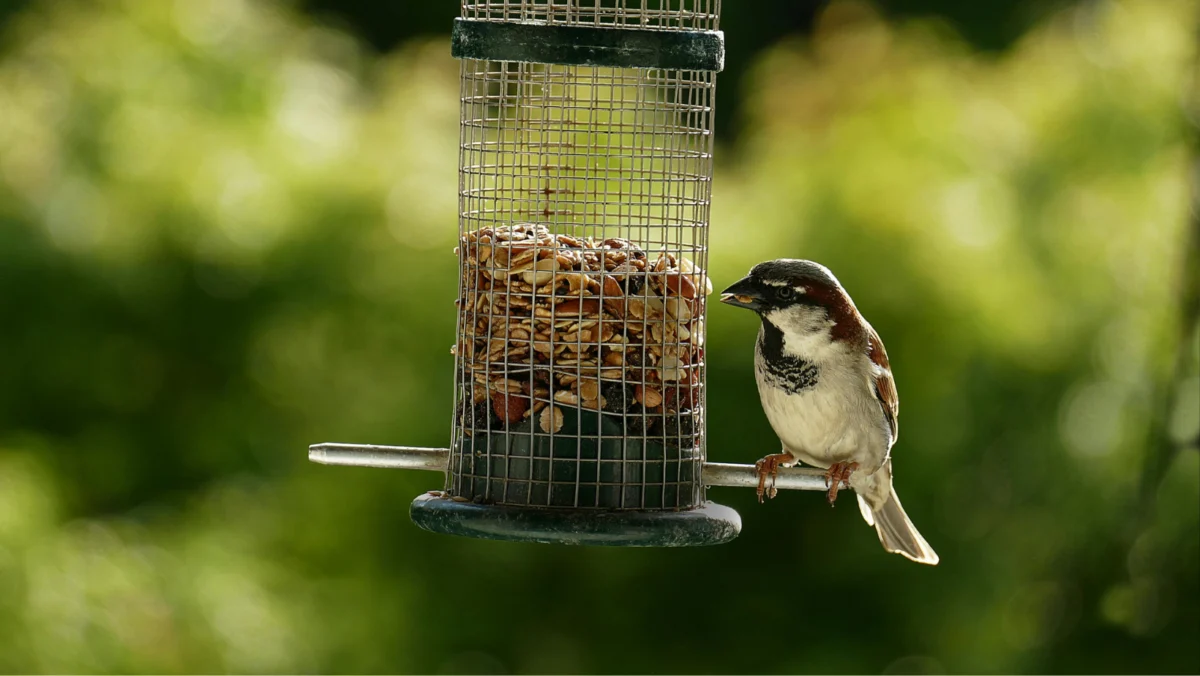
Recently, the domestic rhythm was interrupted by a request that seemed, at first, like a trivial diversion. My daughter insisted that we install bird feeders to attract the local avian population. Following a period of negotiation—the kind that defines the delicate diplomacy of parenting a teenager—I finally relented. We installed bird feeders in both the front and back yards.
I fully expected this project to manifest as just another administrative burden, a source of seed-spilling mess and a tedious chore to add to my already overextended schedule. However, the experience proved to be the inverse of my expectations. It became a sanctuary.
Chronology of a Quiet Practice: Observing the Avian Rhythm
The transformation of my perspective did not happen overnight; it occurred in the quiet, incremental moments of the daily routine.
- The Initial Resistance: Initially, the feeders were a task. I viewed the refilling of the canisters and the cleanup of the hulls as an imposition on my energy reserves, which are frequently depleted by my own chronic pain management.
- The Shift in Observation: Within weeks, the feeders became a lens. I began to notice the distinct behavioral patterns of the neighborhood birds. A mourning dove would land with a soft thud on the grass; a mockingbird would exhibit a rhythmic, inquisitive hop along the perimeter of the feeder.
- The Cognitive Break: I found that the act of watching—not with the intent to analyze, but with the intent to witness—provided a physiological shift. My heart rate would steady. My breathing, often shallow due to discomfort, would deepen.
- The Present Moment: These instances of stillness became the defining anchor of my afternoons. For a few minutes, the constant, low-level hum of pain and the existential uncertainty that characterizes life with a chronic condition began to loosen their grip.
Supporting Data: The Psychology of "Micro-Savoring"
While my experience is deeply personal, it aligns with emerging research in the field of positive psychology and mindfulness-based stress reduction (MBSR). According to studies published in the Journal of Positive Psychology, the practice of "savoring"—the capacity to attend to, appreciate, and enhance the positive experiences in one’s life—is a critical buffer against the psychological toll of chronic illness.
When an individual lives in a state of constant physical discomfort, the brain enters a hyper-vigilant mode. We become conditioned to scan for pain, anticipate flare-ups, and manage symptoms. This state of "pain-brain" narrows our focus, effectively blinding us to the neutral or positive stimuli in our environment.
Dr. Elena Rossi, a clinical psychologist specializing in chronic pain, notes that "the practice of intentional observation—what some call ‘micro-savoring’—is not about ignoring the pain, but about creating a dual-track experience. It is the ability to acknowledge the physical reality while simultaneously engaging with a non-pain-related external stimulus."
The birds at the feeder serve as a "neutral anchor." Because the birds are disinterested in my condition and function entirely outside the scope of my medical history, they offer a rare space where I am not a patient, but a spectator.
Official Perspectives: The Role of Mindfulness in Pain Management
Medical professionals have increasingly integrated mindfulness and "savoring" techniques into comprehensive pain management plans. The objective is not to "cure" the pain, but to alter the patient’s relationship with it.
"Patients with chronic conditions often feel that their identity has been consumed by their diagnosis," says Dr. Marcus Thorne, a pain management specialist at the Metro Wellness Institute. "By practicing moments of intense, intentional focus on something external—like nature, art, or a simple sensory experience—we are essentially exercising the brain’s ability to shift attention. It is a cognitive intervention."
These practices are not a substitute for medication or physical therapy, but they are recognized as vital components of psychological resilience. For patients dealing with systemic, long-term health issues, the "reprieve" offered by these small moments is medically significant because it lowers cortisol levels and reduces the sympathetic nervous system’s "fight or flight" response, which often exacerbates perceived pain.
Implications: Redefining "The Firsts"
We are culturally conditioned to value the "firsts"—the first steps, the first words, the first graduation. But what happens when life is no longer a series of major milestones, but a long, undulating plateau of managing the day-to-day?
The implication of my experience with the bird feeders is a fundamental redefinition of value. I have realized that I am not waiting for a "big" moment to savor; I am learning to curate the "small" ones. These moments are fleeting—the birds fly away, the light shifts, and the reality of the daily pain-management routine draws me back inward.
However, the fact that these moments are brief does not diminish their utility. In many ways, their transience is what makes them valuable. They serve as a reminder that pain is not the entirety of my existence; it is simply the backdrop against which I live.
Moving Forward: The Choice to See
Learning to savor is a deliberate choice. It is a muscle that must be conditioned through repetition. When I watch the mockingbird, I am not trying to fix my life or solve the problems associated with our health challenges. I am simply deciding to stop and see.
Perhaps this is the true meaning of the advice I received years ago. When people told me to "savor the moment" as my daughter took those first steps, they weren’t just telling me to enjoy the milestone. They were offering me a toolkit for the rest of my life.
Life with chronic pain is, by definition, a life of endurance. But endurance without moments of beauty is a heavy, unsustainable burden. By noticing the birds, by breathing through the quiet intervals, and by choosing to focus on the world outside my own physical experience, I am not merely surviving my days—I am reclaiming them.
The birds will continue to come and go. My daughter will continue to grow. And I will continue to stand at the window, not because I am looking for a grand event, but because I have finally learned how to recognize the small, flickering lights of grace that exist even in the most difficult of seasons. Savoring is not about holding onto the past; it is about anchoring oneself in the only time we ever truly possess: the present.