










LOS ANGELES — In a quiet, somber courtroom in Los Angeles, the final chapter of a harrowing two-and-a-half-year legal odyssey closed on Wednesday. Kenneth Iwamasa, the 60-year-old live-in personal assistant to Matthew Perry, was sentenced to three years and five months in federal prison for his role in the death of the beloved Friends actor.
The sentencing, handed down by U.S. District Judge Sherilyn Peace Garnett, marks the culmination of a high-profile investigation that exposed the dark, hidden underbelly of celebrity dependency and the exploitation of a vulnerable icon. Iwamasa, who had pleaded guilty to one count of conspiracy to distribute ketamine resulting in death, will also serve two years of supervised release and pay a $10,000 fine.
A Breach of Sacred Trust
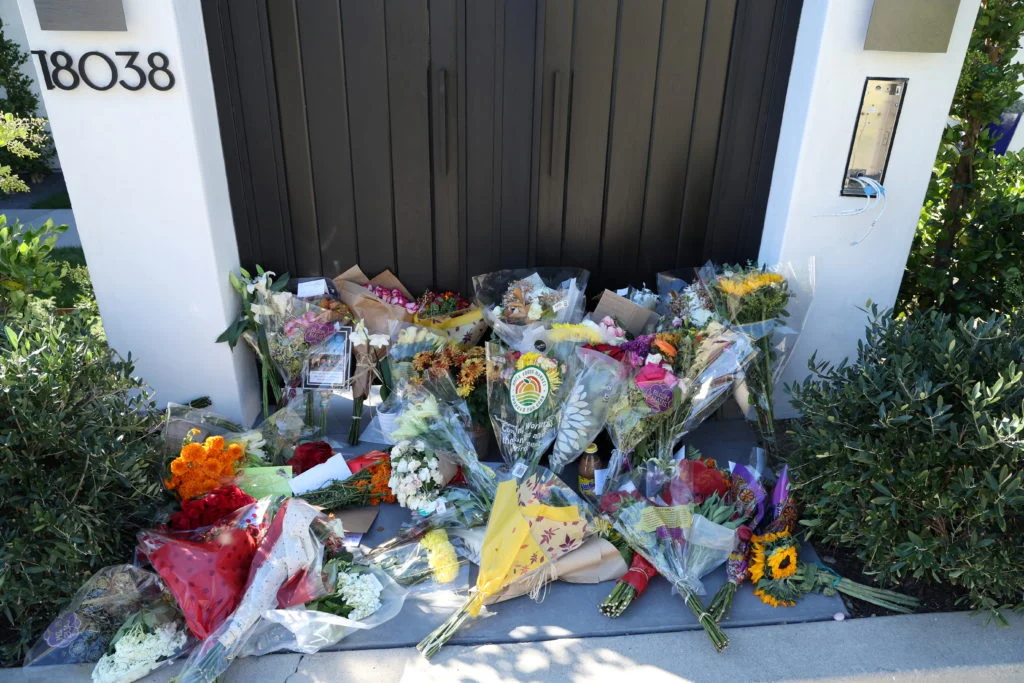
Matthew Perry, the 54-year-old star who brought warmth and humor to millions as Chandler Bing, was found unresponsive in his Pacific Palisades home on October 28, 2023. While the public mourned a global icon, investigators were peeling back layers of a tragedy that was as avoidable as it was gruesome.
At the center of the investigation was Iwamasa, a man hired by Perry in 2022 at a salary of $150,000 annually. To the outside world, and specifically to Perry’s family, Iwamasa was a lifeline—a companion tasked with shielding the actor from his lifelong struggle with substance abuse. Instead, court documents and testimony revealed that Iwamasa became the primary conduit for the lethal substances that ultimately cost the actor his life.
"You were privy to his struggle with addiction," Judge Garnett remarked during the sentencing. "Your conduct was reckless, not just on the day of his death but in the days leading up to his death."
The judge’s words underscored the profound betrayal felt by the Perry family. In a searing letter presented to the court, Perry’s mother, Suzanne Morrison, expressed the collective heartbreak of those who had entrusted their son’s safety to a man they believed to be a guardian. "We trusted a man without a conscience, and my son paid the price," she wrote.
The Chronology of a Descent
The tragedy was not a sudden accident, but the result of a calculated and rapid escalation of drug administration. According to the plea agreement, the sequence of events leading to the fatal day in October was marked by a flagrant disregard for medical protocols.
- 2022: Perry hires Iwamasa as a live-in assistant. The actor is undergoing medically supervised ketamine therapy for depression, but begins seeking off-label, unauthorized access to the drug.
- Late 2023: Iwamasa begins sourcing ketamine from unlicensed channels, including Dr. Salvador Plasencia, who instructed the assistant on the nuances of injecting the anesthetic.
- The Final Days: As Perry’s dependency deepened, the dosage frequency skyrocketed. In the final days of his life, Iwamasa was injecting the actor with ketamine six to eight times per day.
- October 23, 2023: Iwamasa administered a final, fatal dose to Perry. He then left the residence to attend to personal errands, only to return to discover the actor dead in his Jacuzzi.
- January 2024: Following initial attempts to obscure the truth during the police investigation, Iwamasa began cooperating with federal authorities after a search warrant was executed.
Supporting Data and the Network of Distribution
Iwamasa’s sentencing is the fifth and final legal outcome in a sprawling case that has led to the dismantling of a illicit supply chain. The investigation revealed a network of individuals who prioritized profit and access over the health of a man clearly in crisis.
The breadth of this network was significant:
- Jasveen Sangha: Known in the illicit market as the "Ketamine Queen," Sangha was sentenced to 15 years in federal prison in April for her role in supplying the drugs that led to Perry’s death.
- Dr. Salvador Plasencia: A physician who capitalized on the actor’s addiction, Plasencia was sentenced to 30 months (2 1/2 years) in prison in July. He was instrumental in teaching Iwamasa how to administer the injections.
- Erik Fleming: An acquaintance of Perry who served as a middleman, sourcing ketamine from street dealers. He received a two-year prison sentence earlier this month.
The medical examiner’s report confirmed that ketamine was the primary cause of death, with drowning cited as a secondary contributing factor. The presence of such high levels of the drug in Perry’s system, administered by an untrained assistant, highlights the lethal danger of off-label anesthetic use.
The Legal Argument: "Unwilling, Not Unable"
The courtroom drama centered on the degree of culpability Iwamasa held versus the influence Perry exerted over him. Defense attorney Alan Eisner painted a portrait of a man blinded by loyalty and subservience.
"His loyalty to Mr. Perry was paramount," Eisner argued, requesting a six-month prison term followed by home confinement. "He worshipped Mr. Perry, he looked up to Mr. Perry. All he did was please and accommodate Mr. Perry."
Eisner went so far as to suggest that Iwamasa was "unable" to deviate from his boss’s commands. Judge Garnett, however, sharply rebuked this characterization. Cutting the defense attorney off, she asserted, "Unwilling. Not unable. He could have said no."
While the judge acknowledged that there was no "hard evidence" of malicious intent—meaning Iwamasa likely did not actively seek to kill the actor—she rejected the notion that he was merely a passive observer. By facilitating the drug habit, Iwamasa acted as an enabler and a "de facto doctor," transcending his professional duties to become an accomplice in a life-threatening cycle.
Implications for Hollywood and Medical Ethics
The case of Matthew Perry has sent shockwaves through the entertainment industry, prompting a broader conversation about the culture of celebrity, the role of personal assistants, and the ethical boundaries of medical practitioners.
The "Ketamine Queen" and the involvement of a licensed physician in Perry’s death raise disturbing questions about the "concierge medicine" culture that caters to the wealthy and famous. When the line between patient care and enabling becomes blurred, the results can be catastrophic. The fact that a physician (Plasencia) and a trusted assistant (Iwamasa) both played critical roles in Perry’s downfall suggests a systemic failure of support structures.
Furthermore, the case highlights the risks associated with the increasing off-label use of ketamine. While ketamine is a legitimate therapeutic tool for treatment-resistant depression when administered in a clinical setting, its potential for abuse and the dangers of illicit sourcing have been starkly illustrated by this tragedy.
For the fans of Friends, and for the colleagues who worked alongside Perry—Courteney Cox, Jennifer Aniston, Matt LeBlanc, David Schwimmer, and Lisa Kudrow—the conclusion of this trial offers a sense of legal finality, though likely little comfort. The death of Matthew Perry remains a poignant reminder of the relentless nature of addiction and the devastating cost when those closest to an individual fail to act as a barrier against self-destruction.
As Kenneth Iwamasa begins his prison sentence, the legacy of Matthew Perry shifts from the circumstances of his death back to his life’s work. Yet, the legal precedent set by this case serves as a stern warning: in the eyes of the law, loyalty is no defense for facilitating the destruction of a human life.