By Global Health Correspondent
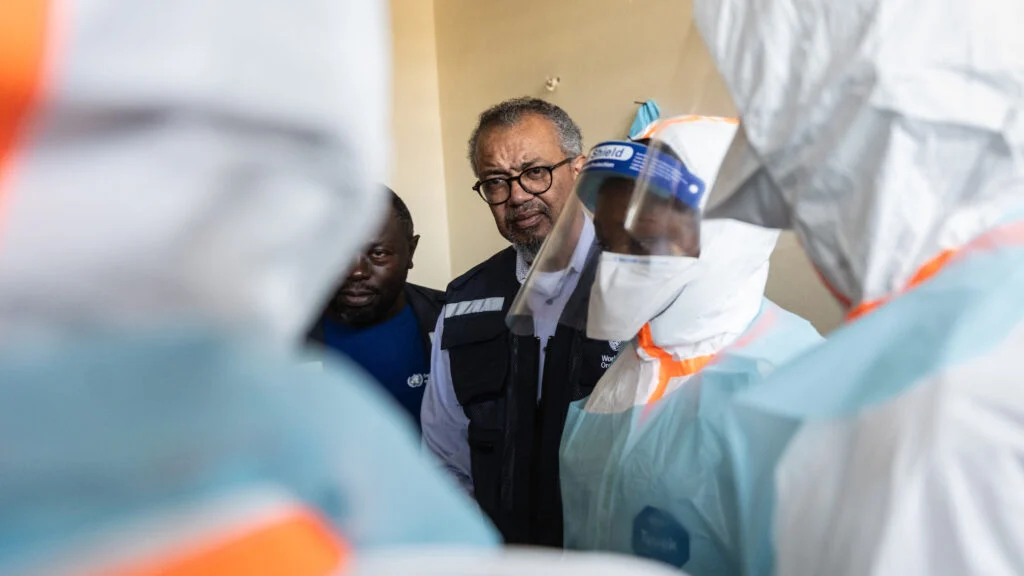
The Democratic Republic of the Congo (DRC) is currently grappling with its third-largest Ebola outbreak on record, a crisis that has transcended the boundaries of a simple medical emergency to become a profound test of international diplomacy and humanitarian ethics. In an exclusive, wide-ranging interview with STAT, World Health Organization (WHO) Director-General Dr. Tedros Adhanom Ghebreyesus expressed deep-seated apprehension regarding the situation in the northeastern DRC and neighboring Uganda. As the virus spreads through volatile, conflict-ridden regions, the WHO finds itself struggling against a tide of deep-seated community mistrust, systemic instability, and a population that views the international response as a self-serving endeavor rather than a genuine effort to save local lives.
Main Facts: A Virus in the Shadow of War
The current outbreak, which was officially declared on May 15 and designated a Public Health Emergency of International Concern (PHEIC) on May 17, has already claimed 141 lives, with at least 708 confirmed cases across the two affected nations. While Uganda has managed to maintain a degree of control due to its political stability and prior experience with the virus, the situation in the DRC is characterized by unchecked transmission.
For Dr. Tedros, the primary hurdle is not the lack of medical technology—such as vaccines or treatments—but the total collapse of the social contract between the health authorities and the affected population. Surveillance efforts, the backbone of any epidemic containment strategy, have failed. As of June 11, only 28.4% of contacts associated with known cases were being successfully followed up by health workers. This figure falls critically short of the threshold required to break the chains of transmission, leaving the virus effectively “ahead” of the global response.
Chronology: From Outbreak to Emergency
The trajectory of this outbreak has been accelerated by the pre-existing conditions of the region.
- May 15: The WHO officially declares the start of the Ebola outbreak in the northeastern DRC and parts of Uganda.
- May 17: Recognizing the potential for rapid international spread, the WHO designates the situation a Public Health Emergency of International Concern (PHEIC), signaling that a coordinated global response is mandatory.
- Mid-June: Despite the deployment of resources, field reports indicate a breakdown in contact tracing, with rates languishing under 30%.
- Late June: Dr. Tedros conducts his second visit to the region, engaging directly with community leaders, local residents, and government officials to assess the failure of the containment strategy.
The urgency of the situation is compounded by the region’s history. The 2018–2020 Ebola outbreak in the same territory left behind a legacy of cynicism. Many locals argue that the international community invested heavily only when the threat to the Global North became apparent, abandoning the region the moment the virus was contained.
Supporting Data: Why the Numbers Don’t Tell the Whole Story
The disconnect between the WHO’s priorities and the reality on the ground is stark. When health officials emphasize the lethality of Ebola, they are met with skepticism by a populace that faces far more frequent causes of death.
Data from the region indicates that for every life lost to Ebola, exponentially more are claimed by:
- Armed Conflict: Chronic instability and the presence of numerous, fragmented militant groups have resulted in significant civilian mortality over the last six months alone.
- Endemic Diseases: Malaria and other preventable conditions continue to kill at a rate that dwarfs the current Ebola mortality count.
- Food Insecurity and Displacement: Hundreds of thousands of residents are currently displaced, lacking consistent access to nutrition, clean water, or basic healthcare services.
This context transforms the Ebola response from a clinical mission into a political minefield. When Dr. Tedros asked community members about their lack of collaboration, the response was blunt: "Ebola is a lesser evil."
Official Responses: A Call for Political Solutions
Dr. Tedros, in his dialogue with the leaders of the DRC and Uganda, including Presidents Félix Tshisekedi and Yoweri Museveni, acknowledged that the medical response is inherently limited by the political environment. "I think it’s a political solution," he stated. "There should be a political solution, otherwise, if conflict continues to rage in the region, then I don’t think surveillance can improve."
The WHO’s role, according to its Director-General, must shift from a top-down directive model to one of active listening. Dr. Tedros emphasized that he is not there to dictate health protocols to a population that feels ignored in every other aspect of their lives. Instead, the WHO is attempting to integrate Ebola containment with broader humanitarian aid, including food security and the strengthening of general health systems, to demonstrate that the international presence provides value beyond the immediate crisis.
However, the reality of the DRC’s security landscape makes this difficult. Dealing with dozens of armed factions, many of which operate in remote, inaccessible areas with no centralized leadership, complicates the delivery of aid. Communication with these groups is erratic, and their cooperation is far from guaranteed.
Implications: The High Cost of Distrust
The failure of surveillance and the rise of conspiracy theories—ranging from the belief that Ebola is a hoax to the idea that it is a tool used by foreign forces to profit—are symptomatic of a deeper malaise. The residents of the conflict-ridden northeastern DRC have reached a grim conclusion: the rest of the world only cares about their region when there is a risk of a pandemic crossing international borders.
The Consequences of Failure
The implications of this breakdown are threefold:
- Epidemiological Risk: As long as contact tracing remains below 50%—far from the 95% required for containment—the virus will continue to circulate. The constant movement of displaced populations makes the containment of the virus a logistical impossibility under current conditions.
- Humanitarian Misalignment: By focusing exclusively on Ebola, the international community risks exacerbating the very conditions that lead to further death. If health resources are diverted from malaria or malnutrition to manage Ebola, the overall mortality rate of the population may actually increase.
- Institutional Erosion: The targeting of WHO staff, including death threats, indicates that the organization’s neutrality is being questioned. This erosion of trust will have long-term consequences for future health interventions in the region.
A New Path Forward?
Dr. Tedros’s recent visit was an exercise in humility. By acknowledging the reality of the people—that they are "sick and tired of chronic war" and that their primary needs are peace and sustenance—he hopes to bridge the divide.
"I’m not here to tell you what to do," he told the community. "I’m here to listen to you, because you live here every single day."
Whether this shift in rhetoric can translate into improved cooperation remains to be seen. The technical tools to stop Ebola exist, but they are useless in a region where the population has concluded that the virus is not their most pressing threat. The international community is now faced with a difficult question: can they effectively manage a health crisis while ignoring the underlying political and humanitarian catastrophe that feeds it?
As Dr. Tedros admitted, the virus is moving faster than the response. Without a comprehensive strategy that addresses the hunger, the violence, and the systemic neglect of the region, the world may find that its narrow focus on "containing the virus" is a recipe for further failure. The situation in the DRC remains, in his own words, a cause for being "really worried."