




In the late summer of 2026, a public health crisis in Pennsylvania spiraled into a bitter partisan confrontation, challenging the way the United States reports, tracks, and discusses infectious disease fatalities. The controversy centers on two "measles-associated deaths" announced by state health officials in August—a designation that triggered a sharp rebuke from federal authorities, skepticism from local coroners, and incendiary accusations of "fabrication" from U.S. Health Secretary Robert F. Kennedy Jr.
The dispute highlights a growing tension between traditional public health reporting methods and an increasingly polarized political landscape, where definitions of "cause of death" have become as contentious as the vaccines intended to prevent the underlying infections.
The Core Conflict: Definitions and Distinctions
At the heart of the disagreement is the nomenclature used by epidemiologists versus the forensic standards used by county coroners. When the Pennsylvania Department of Health reported the two deaths in Lancaster County, they utilized the standard terminology of "measles-associated," a term intended to capture individuals who died while actively infected with the virus, regardless of whether the virus was the primary physiological trigger for death.
However, Dr. Stephen Diamantoni, the Lancaster County Coroner, offered a starkly different narrative. In the case of an infant who died shortly after birth, Diamantoni noted that while the child was infected with measles, the direct cause of death was identified as a ruptured spleen.
"The gap between these two perspectives—the state’s epidemiological surveillance and the coroner’s forensic findings—looked to a reasonable observer like either incompetence or concealment," noted Dr. Amesh Adalja, an infectious disease specialist at the University of Pittsburgh Medical Center. This lack of transparency has allowed misinformation to fill the vacuum, transforming a technical medical dispute into a national political scandal.
Chronology of a Public Health Feud
August 25: The Announcement and Initial Backlash
The Pennsylvania Department of Health, led by Dr. Debra Bogen, confirmed two deaths in Lancaster County. Governor Josh Shapiro held a press conference to express condolences, emphasizing the necessity of vaccination during a record-breaking surge of over 2,900 measles cases nationwide. Shapiro used the moment to criticize the federal administration’s rhetoric, stating he had rejected an offer of federal assistance because he felt the current national leadership was undermining public trust in vaccines.
The CDC initially aligned with the state, posting condolences on social media. However, Lancaster County Commissioner Josh Parsons immediately pushed back on X (formerly Twitter), claiming the coroner’s office had no record of measles as an "immediate cause of death."
August 26: Kennedy Intervenes
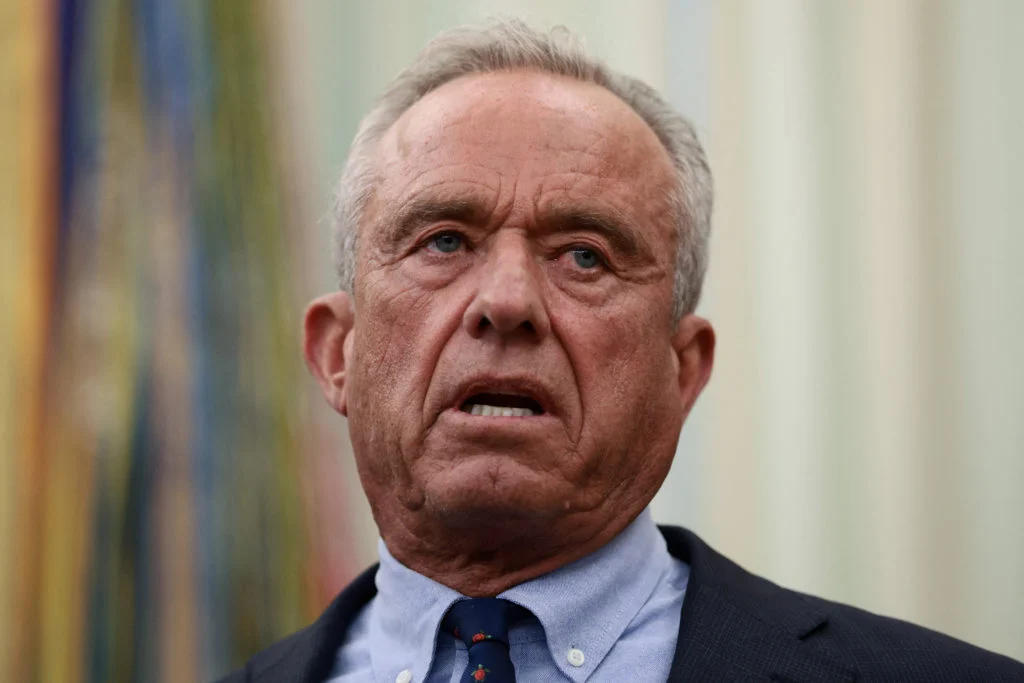
The situation escalated rapidly when Secretary Robert F. Kennedy Jr. questioned the veracity of the reports at an event in Florida. Kennedy suggested the deaths were "fabricated" by the governor’s staff, echoing rhetoric from the COVID-19 era regarding "with versus from" death classifications. By the evening, the Pennsylvania Department of Health issued a clarification, but the damage to public perception was already done.
August 27–30: The Federal Pivot
The CDC, which had initially supported the state’s reporting, shifted its position under pressure. In a move that surprised public health experts, the CDC’s official account publicly thanked Secretary Kennedy for his efforts to "clarify" the situation, signaling a detachment from the state’s findings. By August 30, the CDC officially excluded the Pennsylvania deaths from its national dashboard, pending a review of whether the virus truly contributed to the fatalities.
Supporting Data: The Scope of the Outbreak
The controversy occurs against the backdrop of a significant resurgence of measles, a disease once considered eliminated in the U.S. As of late August 2026, the country had recorded over 2,900 cases, with Pennsylvania accounting for nearly 500 of those. Dr. Paul Offit, an infectious disease expert at the Children’s Hospital of Philadelphia, warns that these numbers are almost certainly an undercount, as many mild cases go unreported and testing is not universal.
The outbreak is particularly concentrated in areas with lower vaccination rates. Lancaster County, which has reported 227 cases, has become the focal point of both the disease surge and the political debate. Experts warn that as children return to school and colder weather drives populations indoors, transmission rates are expected to climb further, potentially straining local healthcare systems that are already bogged down by administrative and political interference.
Official Responses and Institutional Friction
The friction between the Pennsylvania Department of Health and the Lancaster County Coroner reflects a wider breakdown in coordination. While state health departments rely on "measles-associated" reporting to track the velocity of an outbreak, coroners operate under strict legal mandates to identify specific physiological causes of death.
When the Pennsylvania health department stated it was not legally required to report these deaths to the coroner, it attempted to defend its autonomy. However, the optics suggested a lack of cooperation. Critics argue that the department’s failure to share detailed forensic data—even if redacted—allowed conspiracy theorists to claim the state was hiding the truth.
The CDC’s decision to publicly contradict a state health department is unprecedented in recent history. By siding with Kennedy’s skepticism, the federal agency has effectively signaled a shift in how it views state-level epidemiological data, potentially complicating future outbreak responses where state and federal authorities disagree on data integrity.
The Human Impact: Beyond the Politics
Amidst the high-level finger-pointing, the human reality of the outbreak is often obscured. The Atlantic provided a rare window into this reality through an interview with an Amish couple in Lancaster County. Their newborn son passed away after a birth complicated by the mother’s severe, symptomatic case of measles. For the parents and their midwife, the connection between the mother’s illness and the infant’s death was clear.
For the grieving family, the political debate in Harrisburg and Washington, D.C., is a distant, unrecognizable abstraction. They were not concerned with political "playbooks" or reporting terminology; they were living through the tragic intersection of a preventable disease and a vulnerable population.
Implications for Public Health Policy
The 2026 Pennsylvania measles crisis serves as a case study in how the politicization of science can erode institutional trust. The implications are three-fold:
- The Erosion of Surveillance Standards: If states can no longer use "associated" mortality metrics without facing accusations of fraud, tracking outbreaks in real time will become significantly more difficult. Public health relies on broad, inclusive data to detect trends before they become catastrophes.
- The Crisis of Communication: Public health officials are struggling to explain nuanced medical concepts to a public that has been primed to distrust official statistics. When the distinction between "caused by" and "associated with" is used as a weapon, the nuance is lost, and the public is left with a binary, often false, choice.
- The Federal-State Divide: The breakdown in communication between the Pennsylvania Department of Health and the CDC suggests a fracturing of the public health infrastructure. If state-level experts cannot rely on federal backing—or if federal agencies view state data as inherently suspect—the nation’s ability to mount a unified response to future epidemics is severely compromised.
As the school year progresses, the focus must shift back to the primary challenge: the declining vaccination rates that have allowed measles to return to American communities. Whether the current administration and state leaders can bridge their ideological divide to address the root cause of the outbreak remains to be seen. In the meantime, the families of those who have died are left to navigate their grief in the shadow of a national debate that seems increasingly detached from the reality of the illness itself.