By Investigative Desk
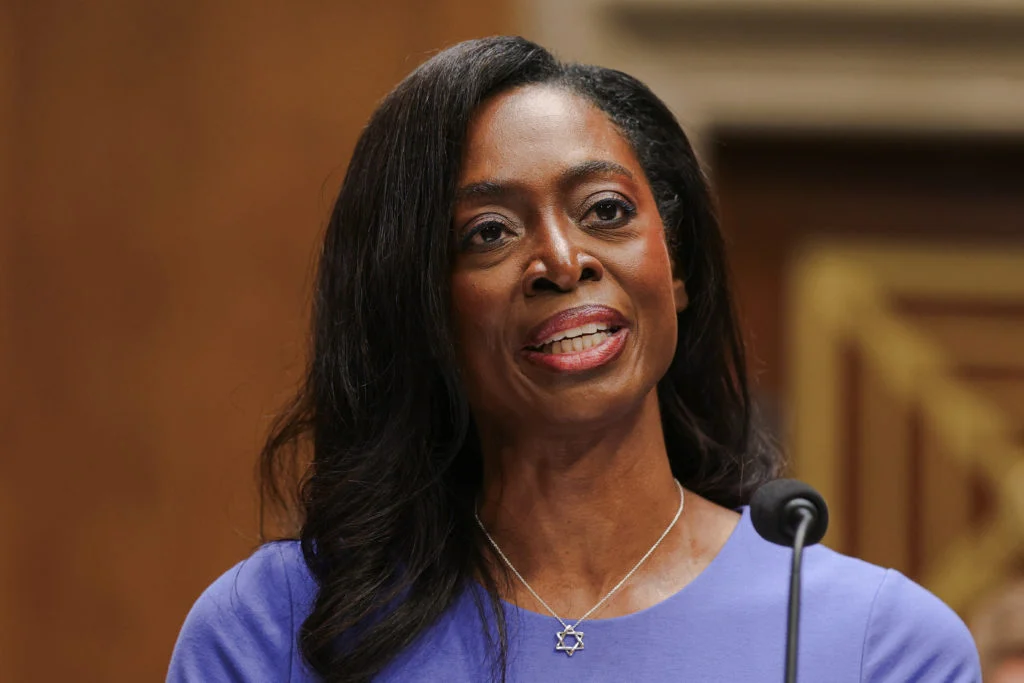
The United States Centers for Disease Control and Prevention (CDC), long considered the "gold standard" of global public health, finds itself at a precarious crossroads. On Wednesday, the Senate Health Committee convened a high-stakes confirmation hearing for Dr. Erica Schwartz, the latest nominee tapped by the Trump administration to steer the agency. The session, marked by pointed questioning and visible frustration from lawmakers, highlighted a deep-seated anxiety regarding the independence of federal science in an era of intense political polarization.
As Dr. Schwartz—a 54-year-old former Deputy Surgeon General with an extensive military background—fielded questions, the proceedings served as a microcosm of the broader struggle between institutional scientific integrity and the ideological mandates of the current executive branch.
The Core Conflict: Science Versus Political Meddling
At the heart of the Senate’s inquiry was a singular, persistent fear: that the CDC is being systematically dismantled as an authoritative, independent voice on public health. Under the oversight of Health Secretary Robert F. Kennedy Jr., who has long been a polarizing figure regarding vaccine policy, the agency has undergone a profound transformation.
Dr. Schwartz attempted to strike a conciliatory tone, pledging to "never betray the science" and promising a return to "radical transparency." However, her testimony frequently faltered when pressed on how she would navigate direct orders from Secretary Kennedy. When asked by Senator Maggie Hassan (D-NH) whether she would defy an order to suspend a vital flu vaccination campaign—a directive previously issued by Kennedy—Schwartz declined to answer directly, stating, "Senator, I don’t speak in hypotheticals."
Hassan’s retort was sharp: "It isn’t hypothetical. It happened." The exchange underscored the primary challenge facing any nominee for this role: the tension between administrative loyalty and the ethical mandate to protect public health.
Chronology of a Crisis: From Stability to Turmoil
To understand the gravity of Dr. Schwartz’s nomination, one must look at the rapid deterioration of the CDC’s internal structure over the past year.
The Exodus of Talent
Since the beginning of the current administration, the CDC has experienced what many observers characterize as a "brain drain." More than 3,000 employees—over a quarter of the agency’s total workforce—have resigned or been laid off. This loss of institutional knowledge has left the agency hollowed out, with morale reaching historic lows.
A Revolving Door of Leadership
The instability at the top has been arguably even more damaging than the staff departures:
- March 2025: Former Florida congressman Dr. David Weldon’s confirmation hearing was aborted just an hour before it began after he failed to secure sufficient support from his own party.
- The Monarez Era: Susan Monarez, who had been serving as acting director, was confirmed by the Senate but ousted less than a month later. Sources within the administration suggested she was terminated due to a lack of "alignment" with the executive agenda. Her departure prompted a wave of resignations from top scientific advisors who saw her firing as the final nail in the coffin for agency independence.
- The Current Vacuum: Since Monarez’s exit, the agency has been passed between temporary appointees and officials from the Department of Health and Human Services (HHS), most recently overseen by NIH Director Jay Bhattacharya.
The "Choose Your Own Adventure" Reality
The impact of this leadership void is not merely bureaucratic; it is felt on the ground in local health departments across the country. Dr. David Margolius, director of the Cleveland health department and a prominent voice among urban health officials, articulated the frustration of the medical community.
"Basically, everybody’s got to kind of choose their own adventure, as opposed to being led by a national public health department," Margolius said. He noted that while the staff remaining at the CDC are "doing their best to navigate choppy waters," the agency no longer functions as the authoritative, communicative anchor it once was during outbreaks and emergencies.
This fragmentation is evidenced by recent public health challenges. Whether it is the surge in cyclosporiasis infections or the management of vaccine schedules, local and state officials are increasingly forced to interpret fragmented or conflicting guidance from Washington, rather than relying on a singular, evidence-based federal directive.
Supporting Data and Financial Transparency
The scrutiny of Dr. Schwartz is not limited to her policy stances; her professional background and financial entanglements have also come under the microscope.
Professional Background
Schwartz’s career has been heavily defined by her military service. As a leader in the U.S. Coast Guard, she managed a complex network of 41 clinics and 150 sick bays, gaining experience in large-scale clinical administration. She also served as Deputy Surgeon General, overseeing health professionals stationed at the CDC. While her supporters point to this as evidence of her operational capability, critics argue that her career has been primarily focused on bureaucratic management rather than the independent scientific research that the CDC director is meant to champion.
Financial Disclosures
As part of the confirmation process, Schwartz filed comprehensive financial disclosures. If confirmed, she has committed to divesting from several lucrative roles, including:
- A position at UnitedHealth Group, where she currently earns an annual salary and bonus package of approximately $850,000.
- Board seats at Butterfly Network Inc. (ultrasound technology), Aveanna Healthcare (home medical care), and the Florida-based Searching for Solutions Institute.
These disclosures are standard, but for the Senate committee, they raise questions about whether the nominee’s private-sector experience—heavily tied to medical corporations—will influence her priorities at a time when the agency is tasked with regulating the very industries she has been part of.
The ASPR Nomination: A Broader Shift in Strategy
The committee also examined the nomination of Sean Kaufman for Assistant Secretary for Preparedness and Response (ASPR). The role is critical, as it oversees the nation’s defense against pandemics and disasters.
Kaufman’s nomination has been particularly controversial due to his public skepticism regarding established vaccination policies. During the hearing, he faced intense questioning regarding past social media posts in which he expressed deep hostility toward the CDC. Furthermore, Kaufman was questioned on the administration’s decision to cancel $500 million in projects dedicated to developing mRNA vaccine technology.
Infectious disease experts have decried the cancellation of these projects, noting that mRNA technology was the linchpin in the successful response to the 2020 pandemic. Kaufman defended the cancellation, arguing that while he supports the technology, it was prudent to pause and "study the work done so far." This response was met with skepticism by Democratic senators, who warned that such delays threaten the nation’s ability to respond to future, inevitable infectious threats.
Implications: A Future of Uncertainty
The implications of these nominations extend far beyond the walls of the CDC in Atlanta. A poll released earlier this year found that only half of U.S. adults trust the CDC’s public health recommendations. This crisis of confidence is unlikely to abate if the agency continues to be perceived as a political instrument rather than a scientific authority.
The "Mission Creep" Argument
During her testimony, Dr. Schwartz offered a glimpse into the administration’s philosophy, suggesting that the CDC has suffered from "mission creep" and is "trying to be all things to all people." While this sentiment echoes the desire of many to see a more focused agency, critics fear it is code for narrowing the CDC’s scope to exclude areas of public health—such as climate-related health threats or gun violence research—that are politically inconvenient to the administration.
The Path Forward
As the Senate prepares for a final vote, the choice is stark. Confirmed nominees will inherit an agency that is severely diminished in size, morale, and public standing. If the administration continues to prioritize political alignment over scientific autonomy, the CDC risks losing its status as a global leader in public health.
For the scientific community, the hope is that whoever leads the agency—whether it is Dr. Schwartz or another candidate—will prioritize the long-term health of the American public over short-term political mandates. For now, however, the "choppy waters" Dr. Margolius described show no sign of calming, leaving the nation’s health infrastructure in a state of suspended animation.