










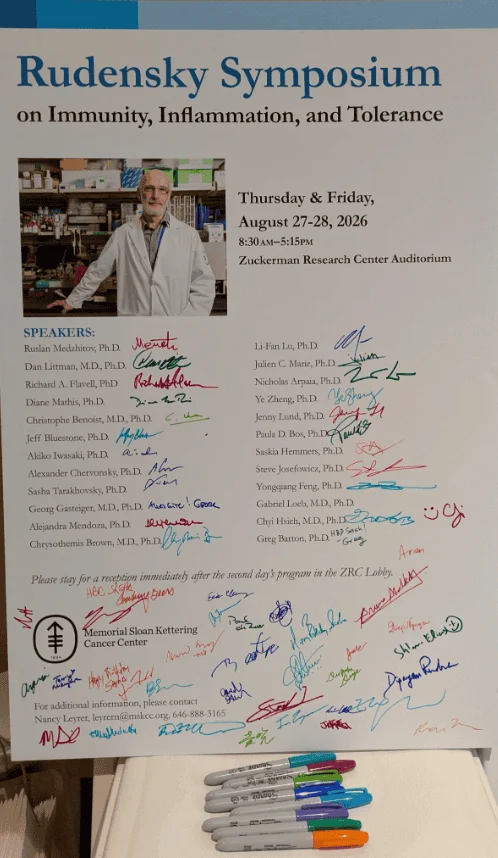
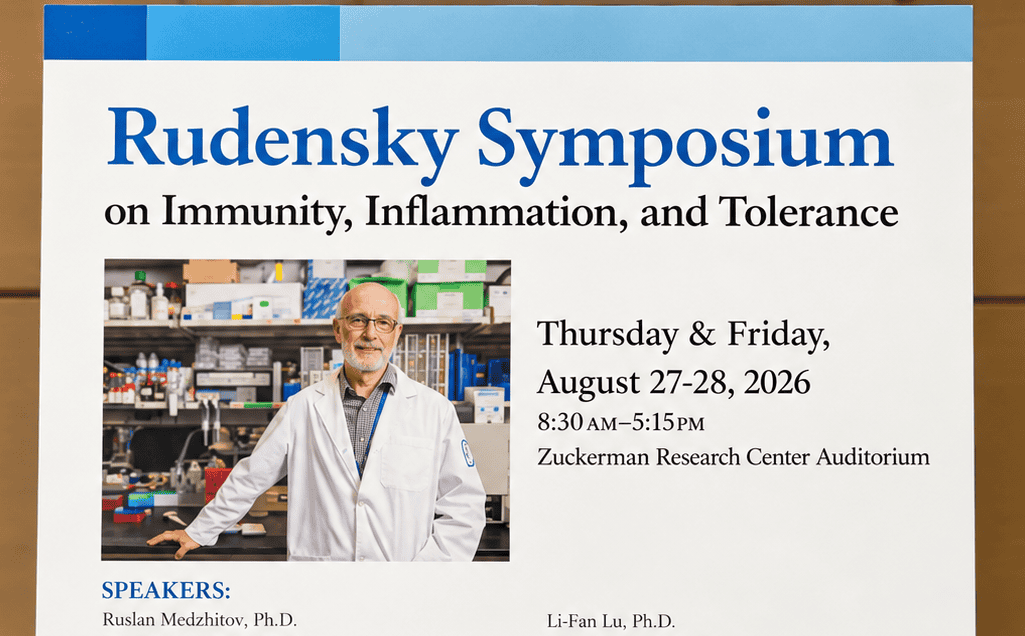
On August 27–28, 2026, the global immunological community converged for the Rudensky Symposium on Immunity, Inflammation, and Tolerance. While the event was held to commemorate the 70th birthday of Dr. Alexander “Sasha” Rudensky of the Memorial Sloan Kettering Cancer Center, the gathering evolved into something far more profound than a milestone celebration. It served as a living archive of scientific progress, bridging the gap between fundamental biological inquiry and the cutting-edge of clinical cancer immunotherapy.
For those in attendance—a "who’s who" of former trainees, collaborators, and esteemed peers—the symposium was a testament to the power of mentorship. It illustrated how, over decades of rigorous investigation, a community of researchers has moved from asking basic questions about how the immune system maintains homeostasis to developing sophisticated, life-saving strategies for treating cancer.
The Foundation: Decades of Investment in Basic Science
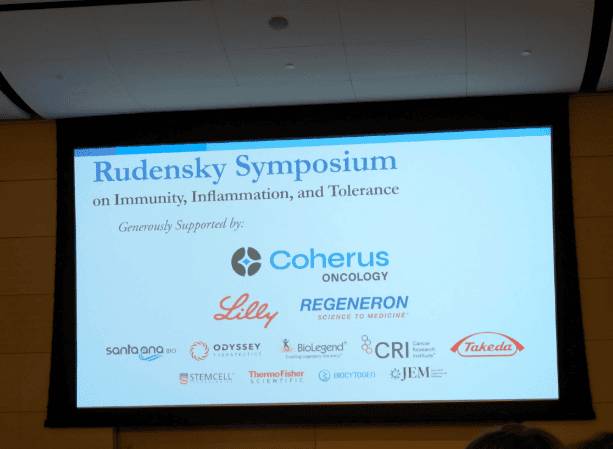
The Cancer Research Institute (CRI), a long-time champion of Dr. Rudensky’s work, played a pivotal role in supporting the symposium. This partnership is emblematic of the CRI’s broader mission: to fund foundational immunology with the foresight that such knowledge is the only true pathway to curing cancer.
Dr. Rudensky’s contributions to the field are monumental. In 2015, he was awarded the prestigious CRI William B. Coley Award for his pioneering research on regulatory T cells (Tregs). Tregs are the "peacekeepers" of the immune system; they restrain excessive immune responses, thereby protecting healthy tissues from collateral damage. However, in the context of oncology, these cells can become "double agents," shielding tumors from immune detection.
CRI’s commitment to this field is not merely academic. For over 20 years, the institute has supported Dr. Rudensky’s laboratory, including funding more than a dozen postdoctoral fellows who have gone on to lead their own transformative research programs. This ecosystem of support ensures that discoveries are not siloed but passed down through generations of investigators.
Chronology of Scientific Insight: From Maintenance to Malignancy
The symposium’s agenda was carefully curated to show the trajectory of immunological thought. It began with the mechanics of tissue balance and moved toward the complex, often chaotic, environment of the tumor microenvironment.
Day One: Homeostasis as a Defense Mechanism
The opening sessions focused on how the immune system functions in a healthy state. Dr. Ruslan Medzhitov, a 2003 CRI Coley Awardee, set the stage by reframing the role of immune cells. He described macrophages not just as soldiers against infection, but as "tissue maintenance crews" that clear damaged protein “garbage” from stressed cells.
This theme of restorative immunity continued with presentations by Dr. Diane Mathis and Dr. Christophe Benoist, both 2024 CRI Coley Awardees. They explored the dual nature of Tregs: Dr. Mathis demonstrated how specific Treg populations manage inflammation and promote repair in injured muscle, while Dr. Benoist highlighted how the molecular targets recognized by a Treg dictate its unique identity and function. These insights provide a critical warning: immune restraint must be surgically precise. When the balance tilts too far, the risk of autoimmunity increases; when it is insufficient, or conversely, hijacked by a tumor, the body loses its ability to police abnormal cell growth.
Day Two: The Pre-Tumor Landscape and Beyond
The second day shifted focus to the earliest markers of disease. Dr. Richard A. Flavell, a 2012 CRI Coley Awardee, presented findings on "immunosurveillance"—the process by which the body identifies and eliminates precancerous cells before they become full-blown tumors. By studying intestinal stem cells in mouse models, his team observed that even cells with cancer-linked BRAF mutations are frequently eliminated by the immune system.
The research suggested that the immune system is a constant, vigilant gatekeeper. When mutant cells lose the ability to "talk" to T cells, they gain a survival advantage, allowing them to colonize the intestinal lining. This discovery reinforces the concept that cancer is not an overnight event; it is the result of a long, often invisible, battle between mutant cells and the immune system.
Dr. Julien C. Marie furthered this discussion by examining the TGF-β signaling pathway. He showed that disrupting this signal can push Th17 cells into a chronic inflammatory state that facilitates DNA damage and cancer progression. Crucially, he noted that this state is reversible, suggesting that we may one day be able to "reset" inflammatory programs to prevent cancer development.
Supporting Data: The Ecosystem of the Tumor
The symposium underscored that a tumor cannot be viewed in isolation. It is a parasite within a wider biological ecosystem.
- The Microbiome Connection: Dr. Dan Littman, a 2016 CRI Coley Awardee, provided evidence that gut bacteria play a fundamental role in "training" T cells. His work confirms that the systemic immune response, initiated in the gut, has a direct, measurable impact on how a patient responds to checkpoint immunotherapy elsewhere in the body.
- The Physical Barrier: Dr. Paula D. Bos presented compelling data on how Tregs shape the physical architecture of breast cancer. By temporarily removing Tregs, her team observed a shift in macrophage behavior and a reduction in the "collagen highways" that tumors use to metastasize. This suggests that we might modulate the tumor microenvironment without inducing systemic immune chaos.
- Targeted Engineering: Dr. Nicholas Arpaia, building on his work regarding fibroblast-attracting Tregs in lung cancer, showcased collaborative efforts with CRI Lloyd J. Old STAR Dr. Tal Danino. Their use of engineered bacteria to deliver therapeutics directly to the tumor site represents the next frontier: precision delivery that maximizes impact while sparing the rest of the body.
Official Responses and The Mentorship Ripple Effect
The symposium was punctuated by personal reflections. A poster board, signed by Dr. Rudensky’s "research family," stood as a visual representation of the academic lineage he has cultivated.
"The symposium was more than a professional gathering; it was a reunion of minds," noted a CRI representative in attendance. "When you see the generations of scientists in that room, you realize that the ‘Rudensky legacy’ is not just a list of publications. It is a culture of rigorous, healthy disagreement and the courage to pursue fundamental questions that may not have immediate commercial applications but hold the key to long-term breakthroughs."
Dr. Rudensky’s own approach to mentorship has clearly left a mark on his students. Many speakers noted that their current research programs—whether in gut immunology, neuroimmunology, or cancer—are direct descendants of the questions they first explored in his lab.
Implications for Future Therapy
The implications of the Rudensky Symposium are twofold. First, it reinforces the necessity of "Basic Science First" policies. Many of the most effective cancer therapies currently in clinical trials began as obscure questions about how a cell repairs itself or how a bacterium interacts with the gut lining. By maintaining a pipeline of fundamental research, the medical community ensures a steady stream of "next-generation" interventions.
Second, the symposium highlights a shift toward preventative immunology. If we can identify the specific immune signatures that precede tumor development, we may move toward a future where "cancer treatment" is replaced by "immune maintenance."
As the symposium concluded, the sentiment was clear: the progress of the last 70 years is merely a prologue. With the next generation of researchers—mentored by the luminaries present at this meeting—already applying these principles to the clinic, the goal of turning cancer into a manageable or preventable condition feels closer than ever.
The Rudensky Symposium served as a powerful reminder that while technology evolves, the core of scientific discovery remains human: a collaborative, iterative process fueled by curiosity, sustained by mentorship, and dedicated to the shared goal of improving patient outcomes.