




4 June, 2026
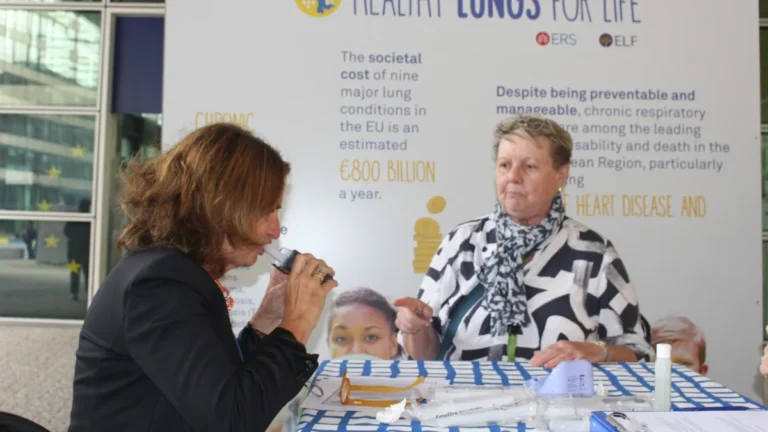
In an unprecedented display of unity, the European Respiratory Society (ERS) has joined forces with nearly 500 organizations, researchers, academics, and patient advocates to issue a clarion call to the highest echelons of the European Union. As negotiations regarding the next Multiannual Financial Framework (MFF)—the EU’s long-term budget—reach a fever pitch, the coalition is demanding that health be elevated to a formal strategic priority, anchored by its own dedicated, ringfenced financial commitment.
The joint letter, addressed to European Commission President Ursula von der Leyen, European Council President António Costa, and the governments of EU Member States, warns that the current trajectory of EU fiscal planning risks neglecting the very foundation of European prosperity: a healthy population.
The Core Argument: Why Health is the Bedrock of Competitiveness
The central thesis of the coalition’s argument is that Europe’s current focus on economic competitiveness, resilience, and industrial security is fundamentally flawed if it treats health as a secondary concern. The signatories argue that health is not merely a social service or a peripheral budgetary item; it is an essential pillar of economic stability.
The Productivity Gap
Data provided by the World Health Organization (WHO) serves as a grim backdrop to these negotiations. The European region loses approximately €442 billion in annual productivity due to avoidable deaths linked to non-communicable diseases. This figure represents a staggering drain on the European economy, impacting everything from labor market participation to long-term fiscal sustainability. By failing to invest in preventive care and public health infrastructure, the coalition argues, the EU is effectively subsidizing its own economic decline.
The ERS and its partners contend that as the EU looks to bolster its "competitiveness" in an increasingly volatile global landscape, it must recognize that a workforce burdened by preventable chronic illness cannot compete effectively. Resilience, in this context, is not just about supply chains and energy independence; it is about the physical and mental stamina of the European citizenry.
Chronology: The Road to the MFF Negotiations
The current advocacy effort is the culmination of months of intense policy discourse. To understand the gravity of this moment, one must look at the timeline of the MFF negotiations:
- Early 2026: The European Parliament signaled a clear shift in legislative priority, adopting a robust position on the next MFF. In a move widely celebrated by health advocates, the Parliament proposed a dedicated €10 billion investment specifically for health, acknowledging the lessons learned from recent global health crises.
- Spring 2026: While the Parliament’s position provided a beacon of hope, the focus shifted toward the European Council. The dynamics of the Council are often more complex, as they represent the varying fiscal priorities of individual Member States.
- May 2026: Behind-the-scenes lobbying intensified as the health coalition finalized its joint letter. Recognizing that the "window of opportunity" was closing as the Council began drafting its formal negotiating position, the coalition sought to leverage the sheer scale of their support—bringing together nearly 500 diverse voices to demonstrate that this is a mainstream, cross-sectoral demand.
- 4 June, 2026: The letter is officially published, marking one of the largest coordinated actions by the European health community in recent history. The timing is deliberate, aimed at influencing the upcoming high-level summits where the MFF framework will be codified.
Supporting Data: The Cost of Inaction
To advocate for a ringfenced budget, the coalition has moved beyond rhetoric, leaning heavily on the economic rationale of preventive health.
The Economic Multiplier of Prevention
Investment in health is frequently categorized as "spending" in budget documents, but the coalition is pushing for a reclassification of these funds as "investments." Evidence suggests that for every euro invested in public health initiatives—such as vaccination programs, early diagnostic screening, and air quality improvements—the return on investment (ROI) is significant.
When accounting for the reduction in long-term hospitalizations, the maintenance of a productive workforce, and the alleviation of the burden on national social security systems, the €10 billion proposed by the European Parliament is viewed by many economists as a modest "insurance premium" against much larger future costs.
The Risks of "Slipping Down the Agenda"
Despite these clear economic indicators, the ERS notes a troubling trend: health appears to be losing its visibility in the hierarchy of political priorities. As the EU pivots toward defense, digitalization, and the green transition, there is a palpable fear that the "health agenda" is being sidelined. The coalition argues that this is a false dichotomy; the green transition, for example, is inextricably linked to respiratory health, and digitalization is essential for the future of European health systems.
Official Responses and the Stance of Member States
The reaction from European policymakers has been mixed but generally receptive, albeit cautious. While some Member States have publicly expressed support for a stronger, more proactive EU health policy, others remain protective of their national budgets, citing concerns over fiscal consolidation.
The Parliamentary Perspective
The European Parliament remains the most vocal champion of this cause. MEPs who backed the €10 billion proposal argue that the EU’s recent experiences have proven that health security is a shared responsibility. Without a dedicated budget, the EU lacks the leverage to coordinate large-scale health crises or drive pan-European research initiatives effectively.
The Council’s Dilemma
The European Council, chaired by António Costa, finds itself at a crossroads. The challenge lies in balancing the demands for a "health-first" budget with the competing pressures of the defense sector, agricultural subsidies, and infrastructure spending. However, the sheer size of the coalition—representing millions of healthcare professionals and patients—is making it increasingly difficult for Member States to ignore the demand for a ringfenced health allocation.
Implications: The Path Forward
The demand for a ringfenced health budget is not merely a request for more money; it is a request for a fundamental shift in the EU’s governance structure.
Why a "Ringfenced" Budget Matters
A ringfenced budget ensures that funds designated for health cannot be reallocated or raided to cover shortfalls in other, more politically expedient areas. It provides a stable, long-term financial horizon that allows for sustained investment in research, training, and infrastructure. Without this structural protection, the coalition warns, health initiatives will remain vulnerable to the shifting winds of political popularity.
The Moral and Human Rights Dimension
Prof. Barbara Hoffmann, Chair of the ERS Advocacy Council, captured the sentiment of the coalition in her recent statement: "Health is not a luxury—it is a human right."
This moral imperative serves as the foundation for the entire movement. The implications of failure are severe. If the EU chooses to bypass a dedicated health budget in the next MFF, it will effectively be signaling that the health of its citizens is a secondary consideration to industrial output or administrative expediency. This, the coalition argues, would be a catastrophic error of judgment that would haunt the Union for the next decade.
Looking Ahead
The next several months will be decisive. As the European Council enters the final phases of budget negotiations, the coalition plans to maintain the pressure. Through continued engagement with national health ministries and ongoing public advocacy, they aim to ensure that the "health-first" mandate is integrated into the final MFF agreement.
The message to EU leaders is clear: the cost of inaction is a future defined by a less productive, less resilient, and ultimately less healthy population. The "cost" of the proposed budget is an investment in the very fabric of European society.
As the negotiations proceed, all eyes will be on Brussels. The question is no longer whether Europe can afford to invest in health; the question is whether it can afford not to. The coalition, representing the heartbeat of the European medical community, is betting that the answer is a resounding "no."
Resources and Further Engagement
- View the Joint Letter: Read the full text of the appeal submitted to the European Commission and Council.
- ERS Advocacy Initiatives: Stay updated on the ongoing advocacy efforts of the European Respiratory Society and its global partners as they continue to push for equitable, evidence-based health policy in the EU.