









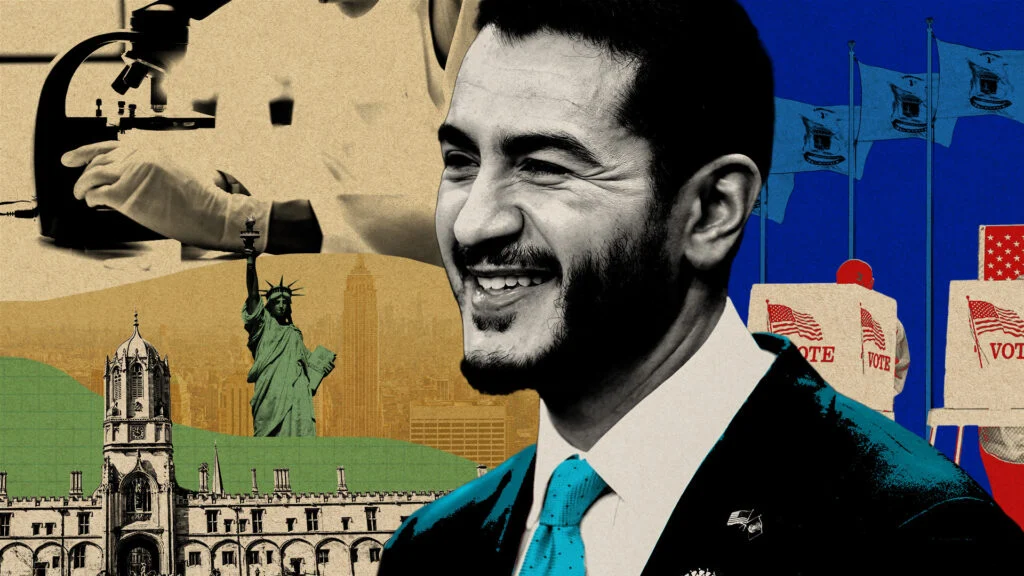
In the closing days of a bruising Michigan Senate campaign, Abdul El-Sayed is finding himself defined by two vastly different personas. To his detractors, particularly those in the upper echelons of the Trump administration, he is a dangerous political provocateur—a figure whom Vice President JD Vance once dismissed as a "little weasel" and whom President Trump has baselessly accused of intending to "open the floodgates" to terrorism. To his supporters, however, he represents something entirely different: a rare, scientifically literate voice in a political climate where public health has been increasingly treated as a partisan battlefield.
El-Sayed, an Egyptian-American physician and epidemiologist, is currently vying to become the first member of his faith to serve in the U.S. Senate. Yet, his platform is not built on identity politics, but on a granular, system-wide critique of the American healthcare apparatus. As the nation grapples with a radical restructuring of the Department of Health and Human Services (HHS) under Secretary Robert F. Kennedy Jr., El-Sayed’s candidacy has transcended a standard local race, becoming a national focal point for the future of evidence-based policy.
The Collision of Science and Politics
The tension of this election cycle is perfectly encapsulated by the stark contrast between El-Sayed’s background and his opponent’s rhetoric. While former FBI agent and Republican Representative Mike Rogers focuses his campaign on the familiar tropes of cultural warfare and skepticism toward universal healthcare, El-Sayed is campaigning on his resume as a public health official who managed Detroit’s health department and a researcher who holds both an M.D. and a D.Phil.
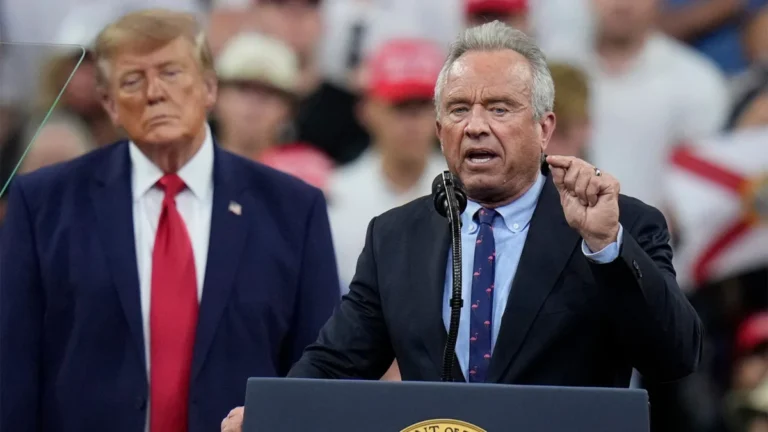
The friction reached a fever pitch this week when Kennedy, while campaigning alongside Rogers, made disparaging remarks regarding the scientific contributions of the Arab world, asserting that the population of 500 million does not produce "science." El-Sayed’s response was swift and sharp, framing the incident as the ultimate irony: a high-ranking official who has frequently trafficked in anti-vaccine rhetoric and eugenicist tropes attempting to lecture a scientist with two doctoral degrees on the value of evidence-based medicine.
"It is truly the most incompetent HHS leadership we have ever seen," El-Sayed told STAT in an interview. He maintains that his primary mission in the Senate, should he win, would be to seek a seat on the Committee on Health, Education, Labor, and Pensions (HELP) to provide a rigorous, expert-level check on the current administration’s dismantling of federal health agencies.

A Life Shaped by Inequity: The Chronology
El-Sayed’s path to the political stage was not linear. Born in Rochester Hills, Michigan, in 1984 to Egyptian immigrant parents—an engineer father and a nurse practitioner mother—he was raised in a household that prioritized both education and social responsibility.
His formative years were defined by a stark realization of privilege. In his memoir, Healing Politics, El-Sayed recounts childhood summers spent visiting his grandmother in Kardasah, Egypt. There, he engaged in what he calls a "matched-pair epidemiological study of sorts," comparing his own life to that of his cousins. He realized that the differences in their health outcomes were not biological, but systemic: clean water, political stability, and access to a robust safety net.
The events of 9/11 served as a secondary, more painful catalyst for his worldview. As a high school student, he navigated a sudden shift in his environment, facing bullying and racial slurs on the football field. This period of alienation fueled his interest in the social determinants of health. By the time he was a senior at the University of Michigan in 2007, he had been named valedictorian, setting his sights on medical school.
His transition into public health was sparked by a chance encounter with mentor Sandro Galea. El-Sayed’s persistence—showing up to Galea’s lab day after day until he was granted a spot—marked the beginning of a prolific research career. During his time as a Rhodes Scholar at Oxford, he utilized AI-based modeling to study racial disparities in obesity. Later, as a professor at Columbia, he pushed the boundaries of the field by documenting the specific health challenges faced by Arab Americans—work that was once dismissed by some political figures but is now recognized as pioneering.
From Academia to the Emergency Room
El-Sayed’s decision to pivot away from clinical medicine was the result of a profound disillusionment with the "revolving door" of healthcare. While working in a New York City emergency room, he encountered a patient—"Martha"—an unhoused woman struggling with HIV, diabetes, and alcoholism. Despite his efforts to secure her care, the systemic failures of the system meant she ended up back on the subway, unhoused and untreated.

"Practicing medicine wasn’t the path to solving the problems I cared about," he wrote, ultimately withdrawing his residency application. This moment of clarity led him to the Detroit Health Department, where he sought to address health outcomes at a municipal level. His tenure there was marked by aggressive, if sometimes controversial, initiatives: providing free glasses to 5,000 children, addressing lead water contamination, and facilitating massive medical debt relief for residents.
Supporting Data: The Case for Medicare for All
El-Sayed’s campaign is built upon the foundational policy of "Medicare for All," a vision he shares with Senator Bernie Sanders. The proposal has faced intense scrutiny, with critics like Joel Zinberg of the Paragon Health Institute arguing that the projected administrative savings are an "illusion" and that the plan would lead to increased costs and care rationing.
However, the political landscape is shifting. KFF polling indicates that support for a national health plan has reached its highest levels since 2016, particularly among younger voters and independents. Supporters argue that El-Sayed is uniquely positioned to move this conversation from a "slogan" to a "rigorous policy" because of his deep understanding of epidemiological data and health systems.
"He is somebody who has carefully analyzed the healthcare system and asked what is the most efficient, just, and democratically accountable way to finance it," says Hayden Rooke-Ley, a professor of health services policy.
Implications: A New Era of Public Health?
As Election Day approaches, the stakes of the Michigan Senate race have never been clearer. For the public health community, the election of El-Sayed would represent a symbolic and practical victory. He would be the first epidemiologist in the Senate, bringing a level of technical expertise that has been largely absent from the chamber for decades.

If he prevails, El-Sayed plans to hit the ground running in 2029, with a comprehensive package of reforms ready for the next Democratic administration. His goals for the federal agencies are ambitious:
- National Institutes of Health (NIH): A shift toward projects that are more responsive to the immediate needs of Americans, with a focus on high-risk, high-impact research.
- Food and Drug Administration (FDA): Streamlining drug approval processes to ensure faster access to life-saving medications.
- Centers for Disease Control and Prevention (CDC): A fundamental restructuring to ensure the agency is more proactive in identifying and responding to future threats.
Beyond these technical changes, El-Sayed intends to engage in what he calls "broad, righteous fights" with private corporations that prioritize profit over patient well-being. He points to the high cost of insulin and other essential medications as evidence that the current system is fundamentally broken.
Conclusion
Regardless of the outcome in six days, Abdul El-Sayed has already succeeded in forcing a conversation about the role of science in American governance. His critics will continue to paint him as an outsider, a radical, or a political opportunist. But to his supporters, he is a necessary corrective—a man who has seen the limitations of both the ivory tower and the emergency room, and who is convinced that the only way to heal a fractured health system is to bring that expertise into the halls of power.
In a moment where the bedrock of public health is being tested, El-Sayed’s campaign represents a test of the American public’s appetite for a candidate who speaks in data, advocates for the marginalized, and views politics not as a game, but as an extension of medicine. Whether or not he wins, his presence on the ballot signals that the fight for the future of American public health has only just begun.