










For over half a century, the oncology community has been fueled by a singular, ambitious vision: the ability to program a patient’s own immune system to identify and eradicate their specific cancer. While the concept of immunotherapy has moved from the fringes of experimental medicine to a pillar of clinical care, a significant milestone has just been reached. Merck and Moderna have officially announced positive top-line results from their Phase 3 clinical trial, INTerpath-001, marking the first time an individualized, mRNA-based cancer vaccine—intismeran autogene—has demonstrated success in a late-stage study.
When administered in tandem with the immune checkpoint inhibitor pembrolizumab (Keytruda®), intismeran autogene significantly extended recurrence-free survival and distant metastasis-free survival in patients with high-risk melanoma who had undergone surgical resection. This result is not merely a data point; it is a transformative shift in how we approach the treatment of malignant disease.
Main Facts: The INTerpath-001 Breakthrough
The INTerpath-001 trial represents a global effort to redefine adjuvant therapy. Enrolling 1,137 patients across various regions, the study focused on individuals with stage IIB through IV cutaneous melanoma. These patients, having had their primary tumors surgically removed, are at a high statistical risk for recurrence.
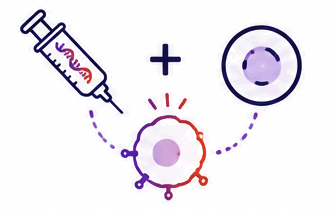
In the trial, patients were randomized to receive either a combination of the mRNA vaccine and Keytruda or Keytruda monotherapy. The interim analysis revealed that the combination approach outperformed the standard-of-care immunotherapy. By combining a "search and destroy" mission—the vaccine—with a "take the brakes off" mechanism—the checkpoint inhibitor—researchers have successfully created a synergistic effect that keeps T cells active, focused, and persistent against residual microscopic disease.
The Chronology of a Scientific Revolution
The success of INTerpath-001 did not happen in a vacuum. It is the culmination of seventy years of rigorous scientific inquiry, much of it championed by the Cancer Research Institute (CRI).
The Foundation (1950s–1990s)
In the mid-20th century, the late Dr. Lloyd J. Old, CRI’s founding scientific director, pioneered the study of immune-based cancer treatments. His work with the tuberculosis vaccine BCG proved that the immune system could be stimulated to attack tumors, establishing the field of cancer immunotherapy. By the 1990s, the focus shifted toward "brakes" on the immune system. Dr. James P. Allison’s seminal research into immune checkpoints—which later earned him a Nobel Prize—demonstrated that by blocking specific proteins like PD-1, the immune system could be unleashed to hunt down cancer cells.
The Rise of the Cancer Vaccine Collaborative (2000s)
In 2001, the CRI and the Ludwig Institute for Cancer Research launched the Cancer Vaccine Collaborative (CVC). This network was designed to move beyond anecdotal success and into systematic clinical development. Over a decade, the CVC conducted nearly 60 early-phase trials, testing various neoantigen targets and determining the necessary secondary signals to ensure a durable immune response.
The mRNA Era (2010s–Present)
The final piece of the puzzle arrived with the advancement of mRNA technology. Researchers like Katalin Karikó, Drew Weissman, Uğur Şahin, and Özlem Türeci laid the groundwork for using genetic instructions to prompt the body to create its own therapeutic proteins. Their work, recognized with the 2023 Nobel Prize, provided the precise delivery mechanism required for the individualized neoantigen vaccines we see today.
Supporting Data: From Concept to Clinical Reality
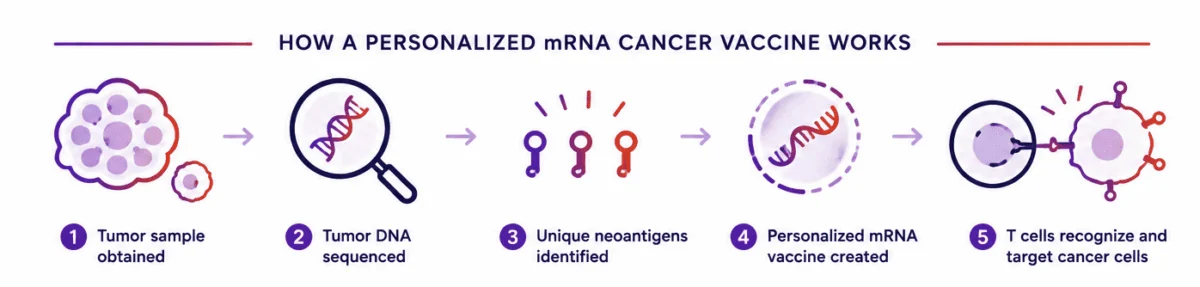
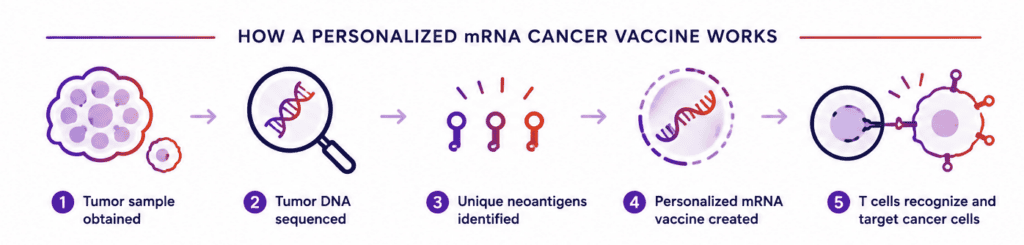
The mechanism behind intismeran autogene is a masterclass in modern biotechnology. Unlike traditional vaccines designed to prevent viral infection, this is a therapeutic intervention.
- Tumor Sequencing: The process begins by analyzing the genetic mutations within a patient’s specific tumor sample.
- Neoantigen Selection: Scientists identify neoantigens—unique protein markers present only on the cancer cells, not the healthy ones.
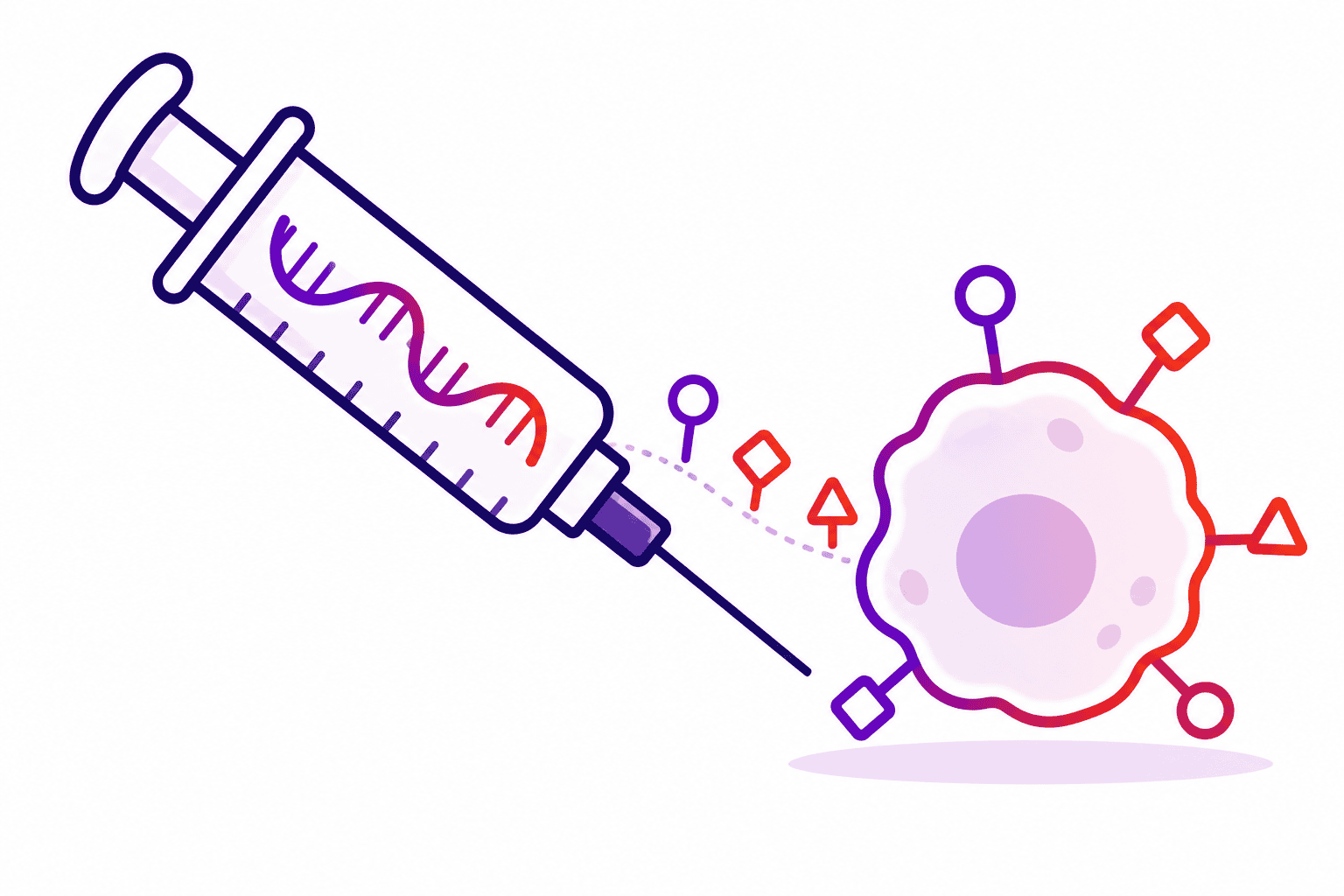
- mRNA Encoding: These neoantigens are encoded into an mRNA sequence. When injected into the patient, the mRNA acts as a "Most Wanted" poster, training the immune system to recognize these specific markers.
- Checkpoint Blockade: Because tumors are adept at "hiding" by hijacking immune checkpoints, Keytruda is administered to keep the patient’s T cells alert and aggressive.
While the full magnitude of the Phase 3 benefit is awaiting detailed publication, the precedent set by the Phase 2b trial is compelling. In that study, five-year follow-up data showed that the combination therapy reduced the risk of recurrence or death by 49% and the risk of distant metastasis or death by 59% compared to Keytruda alone.
Official Responses and Industry Perspectives
The announcement has sent ripples of optimism through the oncology community. For the Cancer Research Institute, this trial serves as the ultimate validation of their long-term investment in basic science.
"This is the culmination of decades of discovery," noted industry analysts tracking the trial. "We are moving from a ‘one-size-fits-all’ model of cancer treatment to a highly precise, patient-centric paradigm."
Merck and Moderna have both emphasized that while these results are a major victory, they remain cautious about the path to commercialization. Regulatory bodies, including the FDA, will require a thorough review of the full dataset before any potential approval for routine clinical use is considered. The companies are currently preparing for detailed presentations at upcoming global oncology summits, where the nuances of the data—including safety profiles and long-term overall survival markers—will be scrutinized.
Implications: Addressing the New Reality
The success of this trial opens a Pandora’s box of both opportunity and logistical challenge. Moving from a clinical trial setting to routine clinical practice requires addressing several critical pillars:
Infrastructure and Scalability
The "individualized" nature of this therapy is its greatest strength and its most significant hurdle. Unlike a pre-packaged pharmaceutical, each vaccine is a bespoke medicine. Hospitals and health systems will need to develop specialized supply chains capable of biopsying a tumor, sequencing its DNA, manufacturing the vaccine, and returning it to the patient within a window that maintains clinical efficacy.
Access and Equity
The cost of producing personalized medicine at scale is substantial. As the field matures, health economists and policymakers must work to ensure that these life-saving therapies do not become luxuries available only to a select few. The infrastructure required for "vein-to-vein" personalized manufacturing is currently limited to high-resource academic medical centers, necessitating a technological evolution to reach community oncology settings.

The Broader Horizon
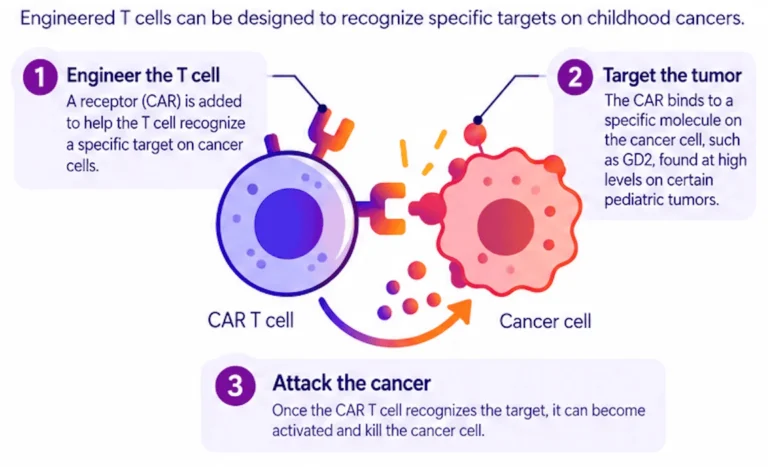
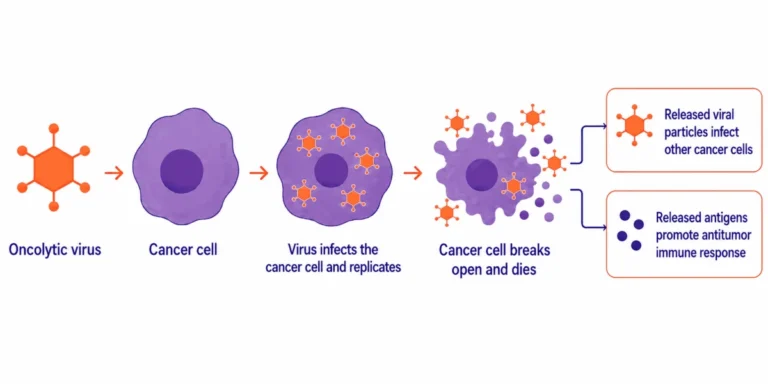
Melanoma is only the beginning. The success of intismeran in this trial has already catalyzed interest in testing similar mRNA platforms across a variety of solid tumors, including lung, breast, and pancreatic cancers. Researchers are now looking at whether these vaccines can be effective in earlier stages of disease or even in combination with other novel therapies like CAR-T cells or bispecific antibodies.
Conclusion: A New Chapter in Oncology
The positive top-line results from the INTerpath-001 trial are not merely a success for Merck and Moderna; they represent a triumph for the collaborative spirit of the scientific community. By merging the foundational work of immune checkpoint blockade with the cutting-edge precision of mRNA technology, we are witnessing the start of a new chapter in medicine.
While there are many questions left to answer—regarding the duration of the immune memory, the optimal timing of vaccination, and the logistical challenges of manufacturing—the fundamental premise has been proven. We have the capability to teach the immune system to recognize the unique signature of an individual’s cancer. As we move forward, the focus shifts from whether this can be done to how we can ensure it reaches every patient who needs it. The dream of the 1950s has become the reality of the 2020s, and the future of cancer treatment is looking more personalized—and more hopeful—than ever before.