By Staff Reporters and Special Correspondence
The World Health Organization (WHO) has issued a cautious assessment of the Ebola epidemic currently ravaging the Democratic Republic of the Congo (DRC), stating that the international response is finally "catching up" with the viral transmission rate. However, for those on the ground, the crisis remains a high-stakes emergency. With confirmed cases exceeding 340 and the contagion having breached international borders into Uganda, the situation underscores the extreme volatility of managing public health crises in regions plagued by decades of conflict and systemic instability.
The Current State of the Crisis: A Geographical Spread
The current outbreak, which was officially declared on May 15, has demonstrated a frightening capacity for rapid expansion. Initially localized to just three health zones—Rwampara, Mongbwalu, and Bunia, the capital of North Ituri province—the virus has since infiltrated more than 20 distinct health zones across the northeastern region.
The toll is mounting daily. As of the most recent data provided by health authorities, 60 lives have been claimed, with 344 individuals confirmed as infected. The surge in cases has placed an immense strain on the region’s fragile infrastructure. Reports from the epicenter indicate that medical facilities were recently overwhelmed, forcing clinicians to turn away symptomatic patients due to a severe shortage of inpatient beds.
The logistical challenge of managing this crisis from the capital, Kinshasa, is immense. Kinshasa is situated approximately 950 miles from the heart of the outbreak in the northeast—a distance comparable to the span between Jackson, Mississippi, and Washington, D.C. This geographical separation highlights the difficulties in mobilizing personnel and equipment in a nation with limited road infrastructure and vast, often inaccessible, terrain.
Chronology of the Outbreak: From Containment to Crisis
The trajectory of this outbreak has been characterized by its speed and the failure of early containment efforts.
- May 15: The government of the DRC officially declares the start of the Ebola outbreak in the Ituri province.
- Late May to Early June: The virus spreads from the initial cluster of three health zones into the wider Ituri region.
- Mid-June: Local medical facilities report reaching full capacity, triggering an urgent international appeal for aid.
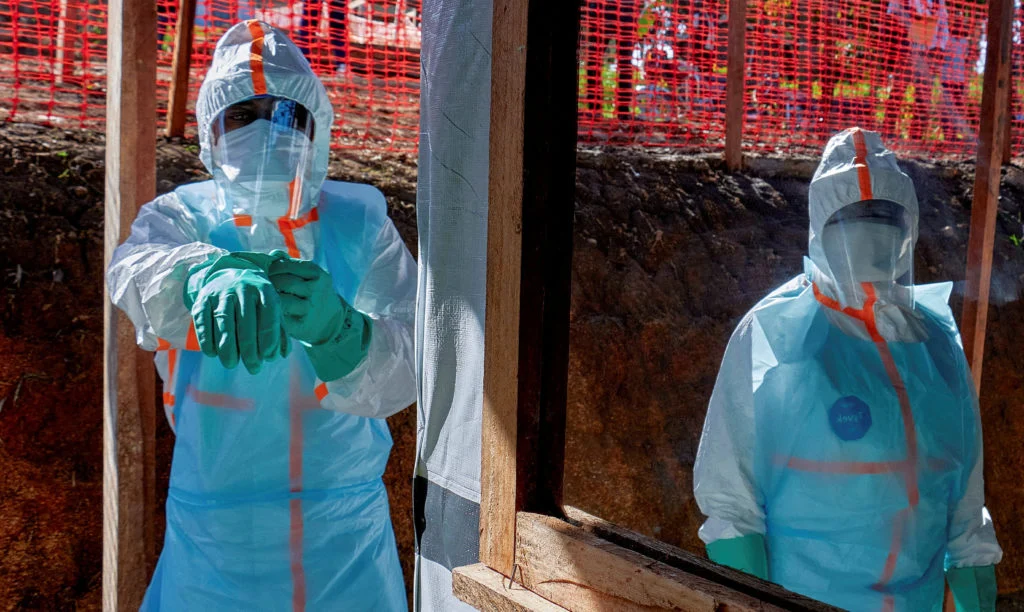
- Late June: The WHO and international partners organize a massive airlift of medical supplies, including personal protective equipment (PPE), sanitation kits, and diagnostic tools, to the epicenter.
- Early July: The virus is confirmed to have crossed the border into Uganda, elevating the status of the outbreak to a regional security and health threat.
- Present: Authorities are working to scale up the number of treatment centers, though the effectiveness of these units remains tethered to the security situation in the region.
Supporting Data and Medical Logistics
The international community’s response has been swift in terms of capital, with millions of dollars raised to bolster the DRC’s health sector. However, money alone cannot bridge the gap created by the lack of physical infrastructure. The airlift of medical supplies to Ituri province has been a critical lifeline, allowing for the establishment of new, specialized treatment centers designed to isolate patients and prevent nosocomial (facility-based) transmission.
Despite these efforts, the data remains sobering. The "reproductive rate" of the virus in such dense, displaced environments is significantly higher than in stable populations. Without aggressive contact tracing—which requires both mobility and the cooperation of the local population—the transmission chains remain difficult to break.
The Shadow of Conflict: A Multi-Front Obstacle
Perhaps the most significant impediment to stopping the transmission of Ebola is the presence of active conflict. The Ituri province and surrounding eastern territories are home to a complex web of armed groups, including the CODECO militia, the Allied Democratic Forces (ADF), and the Zaire rebel group.
These groups have been responsible for widespread violence, forcing thousands of civilians to abandon their homes and congregate in overcrowded, makeshift displaced-persons camps. In these settings, the fundamental pillars of Ebola prevention—such as social distancing and hygienic isolation—are functionally impossible to implement.
Furthermore, the presence of the M23 rebel movement in the eastern DRC has created large "no-go zones" for health workers. Contact tracing, the "gold standard" for controlling Ebola outbreaks, relies on health officials being able to track the movements of individuals who have interacted with infected patients. When those individuals flee into territory controlled by hostile militia, the chain of transmission effectively disappears into the shadows, only to reemerge elsewhere weeks later.
The DRC government and international aid agencies have issued desperate appeals for a humanitarian ceasefire. They are calling on all warring parties to suspend hostilities, arguing that the virus does not distinguish between combatants and non-combatants. The goal is to create "humanitarian corridors" that would allow health workers to reach those in need, vaccinate at-risk populations, and provide safe, dignified burials—a crucial component in ending the cycle of transmission.
Economic Implications and Cross-Border Fragility
The Ebola crisis is not merely a medical emergency; it is an economic catastrophe for the local population. The Ituri region, situated at the borders of Uganda and South Sudan, relies heavily on informal, cross-border trade. For many residents, daily survival is tethered to the ability to transport goods across these borders.
The emergence of the virus has prompted Uganda to shut its border with the DRC, and South Sudan has placed its borders under strict, heightened surveillance. While these measures are understandable from a public health perspective, they have devastated the livelihoods of the local populace. Without the ability to trade, families are being pushed further into poverty, which in turn makes them less likely to cooperate with health officials or report symptoms, fearing that doing so will result in further lockdowns or loss of income.
The World Health Organization has historically cautioned against blanket border closures during outbreaks, arguing that they often do more harm than good by driving trade into the black market, where it remains unmonitored. Instead, the WHO advocates for robust, localized screening and surveillance at border crossings. However, in the current geopolitical climate, countries are exercising their sovereign right to protect their borders, prioritizing internal security over regional integration.
Looking Ahead: The Path to Resolution
The fight against Ebola in the DRC remains a race against time. The success of the current response will be determined by three primary factors:
- Security Stabilization: Can the government and international partners secure enough of a ceasefire to allow for comprehensive contact tracing?
- Community Engagement: Can health workers overcome the deep-seated mistrust that often accompanies external medical interventions in conflict zones?
- Regional Coordination: Can the DRC, Uganda, and South Sudan harmonize their border policies to prevent the total collapse of the local economy while simultaneously slowing the movement of the virus?
As the international community watches, the health workers on the ground remain the unsung heroes. Operating in the shadow of militia violence and the constant threat of a highly contagious, deadly disease, they represent the front line of global health security. The situation in the DRC is a stark reminder that in an interconnected world, the inability to manage a crisis in a remote, conflict-ridden province has profound implications for global health stability. The battle continues, and the world remains vigilant.