KINSHASA, Congo — In the heart of the Democratic Republic of the Congo (DRC), a silent, invisible enemy is moving through dense forests and bustling provincial hubs. The Bundibugyo virus—a rare and particularly lethal strain of Ebola—has pushed the nation’s fragile healthcare system to its breaking point. As suspected case numbers climb and fear ripples through communities already scarred by decades of conflict, the World Health Organization (WHO) has elevated its response to a critical phase.
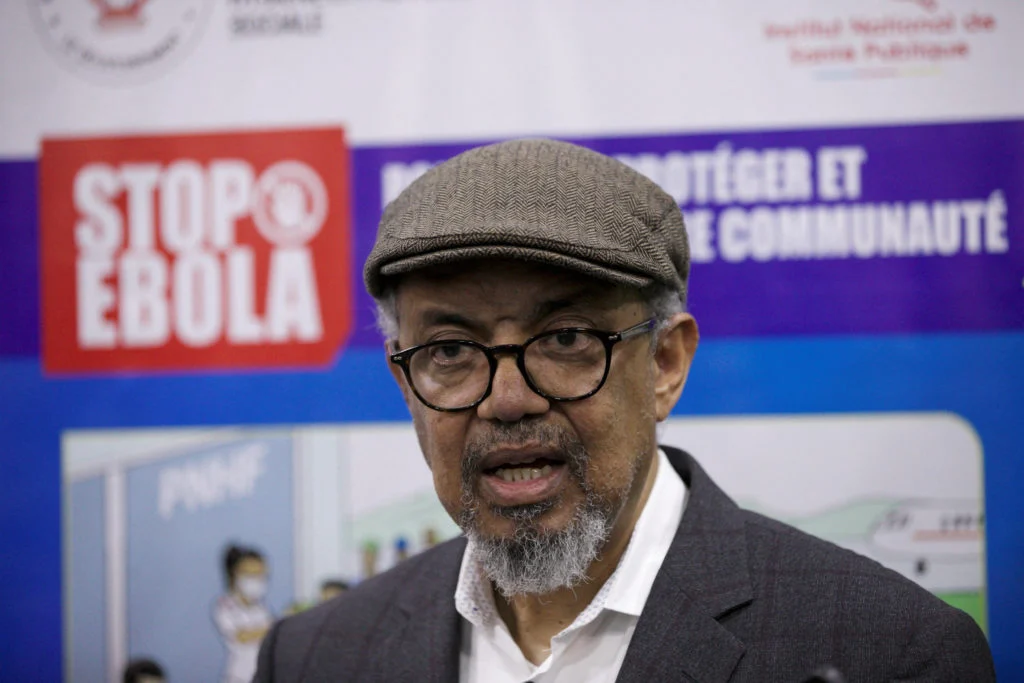
WHO Director-General Dr. Tedros Adhanom Ghebreyesus arrived in Kinshasa late Thursday, a symbolic and strategic move intended to signal global solidarity. Standing before reporters at the airport, Tedros emphasized that while the situation is dire, the path to containment remains open—provided the international community and local populations can bridge the widening gap of trust and resources.
The Scale of the Crisis: Current Data
The statistics emanating from the Ituri province and surrounding regions paint a harrowing picture of an outbreak that likely gained a foothold weeks before its official identification in mid-May. According to the latest figures released by health authorities and the WHO, there are currently 906 suspected cases and 223 suspected deaths linked to the virus.
The Bundibugyo strain, which carries a fatality rate typically ranging between 30% and 50%, presents a unique challenge to clinicians. Unlike other, more documented strains of Ebola, there is currently no approved vaccine or specific pharmaceutical treatment for Bundibugyo.
"We are currently exploring the use of various drugs and compounds that can help save more lives," Congo’s Health Minister, Samuel Roger Kamba, noted during a press briefing. "The disease initially presents just like any other infectious disease—dizziness, headache, fever, vomiting, and diarrhea. This makes early identification exceptionally difficult for frontline workers who are already stretched thin."
A Chronology of a Spreading Threat
The timeline of this outbreak suggests that the virus had been circulating in the shadows long before it was officially recognized. Evidence indicates that the threat was present as early as late March.
- March 27: Three volunteers with the International Federation of Red Cross and Red Crescent Societies perished in Ituri province while performing unrelated health duties. Epidemiologists now believe these deaths were among the first casualties of the current outbreak, preceding the official identification of the virus by over a month.
- Early May: The ADF rebel group intensified attacks in Ituri, killing at least 40 civilians. This violence triggered massive population displacements, inadvertently creating the perfect conditions for the virus to move from remote, forested areas into more densely populated centers.
- Mid-May: Health authorities officially identify the Bundibugyo virus, triggering a scramble for resources.
- Late May/Early June: Medical facilities report a surge in patient arrivals, even as staff struggle with expired supplies and a lack of basic protective equipment.
- Present: International aid begins to arrive in earnest, with the United States pledging $112 million in total support and the European Union delivering specialized medical kits.
The Intersection of Conflict and Contagion
The fight against the Bundibugyo virus is not merely a medical challenge; it is a geopolitical and logistical nightmare. The outbreak is centered in Ituri province, a region long defined by the presence of the Allied Democratic Force (ADF)—a militia linked to the Islamic State—and various ethnic factions.
The instability has created a "perfect storm" for contagion. When residents flee violence, they often abandon their homes in the bush to seek refuge in crowded urban hospitals or temporary camps. This movement makes it nearly impossible for contact tracers to track the chain of transmission. Furthermore, the presence of armed groups limits the ability of international health teams to reach remote "red zones," effectively leaving pockets of infection unmonitored and untreated.
In North and South Kivu, the situation is further complicated by the M23 rebel group, which maintains control over critical cities like Goma and Bukavu. With health infrastructure already damaged by conflict, the introduction of a deadly pathogen threatens to overwhelm the region’s remaining medical capacity.
The Battle for Community Trust
Perhaps the most significant hurdle to containment is not a lack of medicine, but a lack of trust. In many Congolese communities, traditional burial rites are a central pillar of social and spiritual life. However, these rites—which often involve physical contact with the deceased—are the primary driver of Ebola transmission.
When international health workers arrive in full protective gear to enforce strict, "safe" burial protocols, they are frequently viewed with suspicion or outright hostility. This friction has manifested in at least three documented attacks on health centers.
Addressing this, Dr. Tedros underscored the necessity of community-led responses. "Pushing orders from my comfortable office in Geneva is easy," he admitted to the press. "But I am asking my colleagues to work with the community, and I am asking communities to protect themselves. To come here is to show them that they are not alone."
International Response and Economic Implications
The global response has been characterized by a mix of significant financial aid and controversial border policies. The United States recently announced an additional $80 million in funding, bringing its total commitment to $112 million, aimed at bolstering medical infrastructure and providing training for local personnel.
However, the response has also been marked by isolationist tendencies. Uganda has closed its border with the DRC, a move that the WHO has publicly discouraged. Dr. Tedros noted that such bans often hamper the movement of vital supplies and aid workers, potentially doing more harm than good. "There are ways to manage workers and cases without having a strong, restricted travel ban," he stated.
Meanwhile, the U.S. government has implemented a temporary ban on travelers who have visited the DRC, Uganda, or South Sudan within the last 21 days. Furthermore, the U.S. has declared its intent to divert any American citizens exposed to the virus to a specialized facility in Kenya, rather than repatriating them to the U.S. mainland.
A Glimmer of Hope: The Path Forward
Despite the grim realities, there are signs that the response is finally finding its footing. In Bunia, the provincial capital, recent arrivals of international aid have transformed the atmosphere at major medical hubs like Rwampara Hospital.
"The response is significantly more organized than it was even a few days ago," reports an AP correspondent on the ground. Protective gear is finally becoming standard issue, and the presence of support personnel is helping to manage the relentless, around-the-clock influx of patients.
There is also a rare, tangible success story: a patient who had contracted the virus was successfully treated and discharged this past Wednesday. While this remains the only confirmed recovery of the current outbreak, researchers at the WHO suggest that five other infected individuals are showing promising signs of recovery.
Conclusion: The Long Road Ahead
The battle against the Bundibugyo virus in the Congo is a testament to the resilience of the human spirit in the face of compounded crises. It is a conflict fought on two fronts: one against a biological pathogen, and the other against the structural inequalities, violence, and fear that allow it to thrive.
As the international community watches, the success of the mission will not be measured solely by the amount of aid dollars spent, but by the ability of the WHO and its partners to gain the confidence of the people they serve. Only by integrating medical science with local cultural understanding—and by establishing a measure of stability in a volatile region—can the spread of this rare and dangerous virus be halted. For now, the world remains in a state of watchful waiting, hoping that the tide is finally beginning to turn in the forests of the Congo.