By Gwendolyn Wu | Updated: September 23, 2026
In a landmark moment for the intersection of artificial intelligence and pharmaceutical development, Colorado-based Enveda Biosciences has announced a successful $311 million Series E financing round. The capital injection, which rivals the scale of several prominent biotechnology initial public offerings (IPOs) in 2026, signals a robust investor appetite for companies that are not merely digitizing existing processes, but are fundamentally rethinking how we identify the next generation of medicines.
Enveda’s core value proposition—using AI to mine the vast, untapped chemical libraries found in plants and microbes—is moving from theoretical promise to clinical reality. With three candidates now in human testing, the company is positioning itself as a leader in the race to uncover "first-in-class" mechanisms that could solve intractable health challenges, ranging from chronic inflammatory conditions to the complex requirements of metabolic weight management.
The Core Strategy: Mining Nature’s Chemical Library
The pharmaceutical industry has long relied on natural products—compounds derived from living organisms—as a primary source of therapeutic innovation. Historically, however, the process of isolating, identifying, and testing these compounds has been a laborious, "hit-or-miss" endeavor that could take decades.
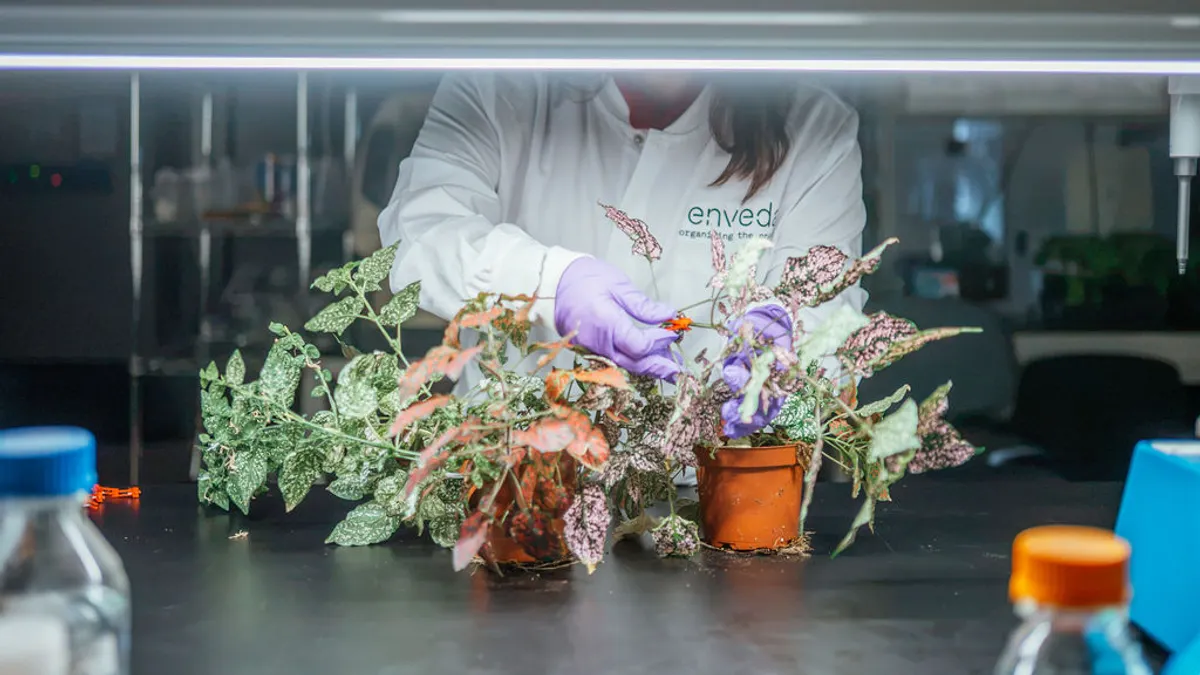
Enveda Biosciences has introduced a radical acceleration to this traditional model. By leveraging a proprietary artificial intelligence platform, the company digitizes the chemical signatures of thousands of plants and microbes. The AI system predicts the structure and function of these molecules, effectively "triaging" nature’s vast chemical complexity to identify those with the highest probability of clinical success.
Once the AI identifies a promising candidate, Enveda’s internal chemistry teams refine these molecules into drug prospects. According to CEO and founder Viswa Colluru, the company currently has 17 programs at various stages of maturation, a pipeline that suggests the platform is not just a one-off success but a scalable engine for drug discovery.

A Chronology of Growth: From Start-up to Clinical Powerhouse
The journey of Enveda reflects the rapid maturation of the "AI-first" biotech sector.
- Foundational Years: Enveda emerged from the concept that nature holds the keys to chemical scaffolds that human-designed molecules cannot easily replicate.
- 2025 Capital Expansion: The company demonstrated significant market confidence when it closed a $150 million Series D round, attracting high-profile board members and investors, including former industry titans.
- June 2026 Benchmarks: During a mid-year strategy briefing, CEO Viswa Colluru emphasized that the company’s goal was to bypass the "iterative" tweaks that dominate big pharma R&D in favor of "paradigm-shifting" medicine.
- September 2026 (The Series E): The company secured $311 million, led by Catalio Capital Management, with participation from heavyweights such as Surveyor Capital, T. Rowe Price, and Lux Capital, along with a sovereign wealth fund. This funding effectively secures the company’s runway as it pushes its lead assets deeper into the clinical trial process.
Supporting Data: The Pipeline at a Glance
The $311 million infusion is earmarked for the advancement of three primary clinical-stage candidates. Each represents a distinct strategic bet on high-value, high-need therapeutic areas.
1. ENV-294: The Molecular Glue for Atopic Dermatitis
Perhaps the most scrutinized of Enveda’s assets is ENV-294, an oral "molecular glue" designed to address atopic dermatitis. Unlike existing injectable biologics, such as Dupixent, which are highly effective but require clinical administration or self-injection, ENV-294 aims to provide the convenience of a pill while potentially serving patients who have failed to respond to current standard-of-care treatments. Early Phase 1b data has been encouraging, and the company has already moved into Phase 2 trials for both eczema and asthma, testing the molecule’s broader systemic efficacy.
2. ENV-308: The "Exercise Mimetic"
In the wake of the GLP-1 (semaglutide/tirzepatide) revolution, the pharmaceutical industry is aggressively searching for next-generation weight management solutions. ENV-308 is Enveda’s answer: a pill designed to mimic the hormonal effects of exercise—specifically targeting "Lac-Phe," a metabolite released by the body during physical exertion. The company envisions this therapy as a tool to help patients maintain weight loss after they discontinue the use of GLP-1 agonists, a critical unmet need as the medical community grapples with the long-term usage profiles of current obesity drugs.
3. ENV-6949: Targeting the TL1A Pathway
Enveda is also entering the competitive space of inflammatory bowel disease (IBD) with ENV-6949. This program targets the TL1A pathway, an emerging "hot" target in immunology that has seen significant M&A interest from major pharmaceutical players. By entering this space, Enveda is signaling its ability to compete directly with legacy pharma on high-complexity targets.
Official Perspectives: The Philosophy of "Power Law" Returns
CEO Viswa Colluru has been vocal about the firm’s philosophy, which prioritizes high-impact, first-in-class breakthroughs over incremental improvements.

"As much as the industry has gotten comfortable with the more iterative approaches, the thing that moves the needle for patients and seeds power law returns for companies is first-in-class mechanisms that shift the paradigm," Colluru stated earlier this year.
The strategy behind the latest funding is as much about tactical business development as it is about science. Colluru noted that the company intends to strategically partner these assets at "value inflection points." This "hub-and-spoke" model allows Enveda to maintain ownership of its core platform while leveraging the infrastructure of larger, more established pharmaceutical companies to handle late-stage trials and commercialization. This approach not only provides the capital to fund the next round of "chess pieces" in the pipeline but also serves as external validation for the efficacy of their AI platform.
Implications: The Future of AI in Drug Development
The success of Enveda’s Series E round has several broader implications for the biotech landscape:
The "Death" of the Traditional Screening Process
Enveda’s ability to successfully move from a plant-based discovery to a clinical-stage pill in a short timeframe is a proof-of-concept for the entire AI-driven drug discovery sector. If the platform continues to produce clinical-stage assets, it suggests that the "dark matter" of natural chemistry—molecules previously considered too difficult to isolate or optimize—is now effectively accessible.
Shifting Investor Sentiment
Investors are increasingly distinguishing between "AI-enabled" companies and true "AI-first" innovators. By securing $311 million in a challenging macro-economic environment, Enveda proves that institutional capital is flowing toward firms that possess both a robust proprietary dataset and an actual, functioning clinical pipeline.
The Evolution of Personalized Medicine
With programs like ENV-308, Enveda is not just creating new drugs; it is creating "metabolic maintenance" therapies. This marks a shift from treating disease to optimizing physiological states—a trend that is expected to dominate the health sector over the next decade.

Strategic Competition
The participation of a sovereign wealth fund and legacy investment firms like T. Rowe Price indicates that Enveda is viewed as a "category winner." For competitors, the pressure is now on to prove that their AI platforms can deliver similarly tangible results in the clinic.
Conclusion
Enveda Biosciences stands at the vanguard of a new era. By successfully merging the ancient wisdom of natural product chemistry with the modern computational power of machine learning, they have bridged the gap between raw data and patient impact. With $311 million in new capital, the company is well-equipped to transition from a promising startup to a potential pharmaceutical powerhouse.
As the industry watches the development of ENV-294, ENV-308, and ENV-6949, the results will serve as a bellwether for the future of AI in medicine. If the company’s early successes hold, the next great pharmaceutical breakthrough may not come from a computer-generated design in a vacuum, but from the complex, elegant, and ancient chemical blueprints hidden within the natural world.