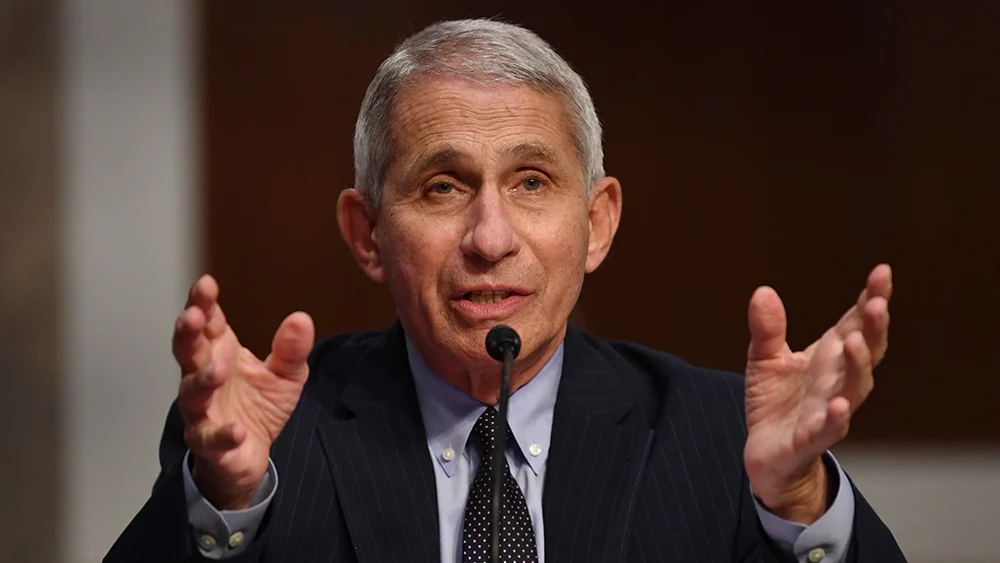
The internal decision-making process of the U.S. government during the height of the COVID-19 pandemic has long been a subject of intense public scrutiny. Now, a treasure trove of private records—specifically, the personal diary of Dr. Anthony Fauci, former chief White House medical adviser—has provided an unprecedented window into the high-stakes environment of the summer of 2021. Released by Sen. Rand Paul (R-KY), these documents reveal a critical reality: as the Biden administration navigated the emergence of the Delta variant, American public health policy was being fundamentally shaped by data imported from Israel, as domestic data remained insufficient to justify national booster mandates.
The release of these 1,100 pages follows a period of heightened friction between the Senate and the veteran health official. The documents were unveiled just days before a pivotal appearance by Dr. Fauci before the Senate Homeland Security and Governmental Affairs Committee on July 29, an event that saw him invoke his Fifth Amendment rights over 100 times, further fueling the fire of a nation demanding transparency regarding the federal response to the pandemic.
A Dependency on Foreign Intelligence
By mid-2021, the United States found itself in a precarious position. While the American vaccination campaign had reached millions, the country lacked a centralized, real-time health registry capable of tracking vaccine waning and breakthrough infections with the precision required to make rapid policy changes. Conversely, Israel—with its highly digitized, centralized healthcare system—offered a "gold standard" look at the long-term performance of the Pfizer-BioNTech vaccine.
The diary entries make it clear that Israeli scientists and health officials were not merely consultants; they were the primary architects of the American booster strategy. Dr. Fauci’s notes from the summer of 2021 demonstrate that he viewed Israeli data as the only reliable barometer for what was to come in the U.S. As American officials struggled to assemble their own cohorts for study, they turned to their Israeli counterparts, who were tracking the Delta variant’s impact on population immunity in real time.
Chronology: The Summer of Uncertainty
The timeline captured within the diary entries illustrates a rapid escalation of concern. On July 6, 2021, Dr. Fauci documented a critical finding from Israeli researchers: vaccine efficacy against infection had plummeted from roughly 94% to 64% in the face of the Delta variant. This entry was significant not only for its scientific implications but for its timing. Fauci immediately relayed these findings to President Joe Biden.
The urgency intensified throughout August 2021. As Israeli officials began reporting a "significant decrease" in protection against severe hospitalization, the pressure to authorize a third dose of the vaccine grew. However, the path to authorization was not without internal dissent. Prominent scientists, including Dr. Paul Offit and Dr. Vincent Racaniello, argued for a more measured approach, demanding more robust domestic evidence before recommending a third shot for the general public.
Fauci’s internal notes reflect the tension between scientific caution and political necessity. He candidly acknowledged in his diary that while U.S. cohorts were hinting at waning immunity, they lacked the definitive, granular evidence that the Israeli data provided. In one entry, Fauci wrote that Israeli observational evidence was "well ahead" of the data provided by the Centers for Disease Control and Prevention (CDC), effectively forcing the administration to rely on foreign findings to fill a dangerous intelligence gap.
The Discrepancy Between Messaging and Reality
Perhaps the most damaging revelation within the diary concerns the nature of the administration’s communication with the American public. Throughout the summer of 2021, White House officials repeatedly characterized the decision to implement an eight-month booster interval as a decision driven purely by the "science."
Dr. Fauci’s private diary tells a different story. In a moment of striking candor, he noted that the eight-month timeline was, in fact, dictated by logistical considerations rather than a strictly scientific consensus. Expressing palpable frustration with his colleagues in the White House who insisted on framing the timeline as a science-driven necessity, Fauci wrote: "That is just not true."
This revelation highlights a recurring theme in the critique of the administration’s pandemic response: the prioritization of clear, consistent public messaging over the acknowledgment of scientific nuance or internal debate. For many, this admission serves as a smoking gun, suggesting that the "follow the science" mantra was often used as a rhetorical shield to mask bureaucratic decision-making.
Addressing Allegations of Misconduct
The release of these records has been championed by Sen. Rand Paul as proof of a broader pattern of obfuscation. Sen. Paul has long alleged that Dr. Fauci misled Congress regarding the origins of the virus, the efficacy of masking, and the necessity of school closures.
However, a comprehensive review of the diary by PolitiFact suggests a more complex reality. When cross-referenced against his public statements, Fauci’s private writings often align with his public positions. Regarding the lab leak hypothesis, for instance, his notes from January 2020 show that while he was skeptical of a direct link to the Wuhan market, he remained consistent in his public belief that the virus likely originated from a zoonotic transfer. Similarly, the records offer no evidence that Fauci privately doubted the efficacy of masks or that his public stances on school reopenings diverged significantly from his private concerns.
While the documents may not prove the accusations of a coordinated conspiracy, they do confirm that the administration’s decision-making was often more reactive and less "data-perfect" than it was portrayed to be.
The Implications for Public Trust
The release of Dr. Fauci’s diary serves as a defining moment in the post-pandemic reckoning. It highlights the inherent tension between the need for government to act quickly during a crisis and the need for public transparency. By relying on foreign data to drive domestic policy, the administration was able to stay ahead of the virus, but by obscuring the origins of that policy, they inadvertently deepened the divide between the public and the scientific establishment.
The refusal of Dr. Fauci to provide further testimony before the Senate, combined with the release of these intimate documents, leaves the historical record in a state of suspended animation. On one hand, the diaries provide evidence of a man navigating a chaotic, fast-moving crisis with the best available tools, even if those tools originated abroad. On the other, they highlight the dangers of a messaging strategy that prizes uniformity over honesty.
As the country moves further away from the acute phase of the pandemic, the debate over how federal officials communicate risk and uncertainty will likely continue. For many Americans, the question remains: was the "white lie" regarding the booster interval necessary to ensure public compliance, or did it irrevocably damage the credibility of the institutions tasked with protecting public health?
The legacy of these records is one of scrutiny. They suggest that while the scientific guidance provided by Dr. Fauci was grounded in the best available global data, the institutional culture of the time prioritized a perception of certainty that was, at times, at odds with the messy, evolving reality of scientific discovery. As lawmakers continue to pore over these pages, the diary remains a vital, if incomplete, piece of a larger puzzle—one that will likely influence public policy and institutional reform for years to come.
Key Takeaways
- Reliance on Foreign Data: The U.S. booster rollout was heavily dependent on Israeli healthcare registry data due to a lack of comparable U.S. data at the time.
- Logistics vs. Science: Internal diaries reveal that the timing of the booster rollout was driven by logistics, despite public claims that the decision was solely science-driven.
- Public vs. Private Consistency: A review of the diary indicates that Dr. Fauci’s private views on major issues like the lab leak theory and masking were largely consistent with his public statements.
- The Role of Oversight: The documents serve as a focal point for ongoing congressional investigations into the transparency of the U.S. pandemic response.