For decades, the public health mantra for healthy aging has centered almost exclusively on cardiovascular health. We are told to walk, swim, and cycle to keep our hearts pumping and our blood pressure in check. However, a landmark study led by researchers at the University at Buffalo (UB) has shifted the focus, suggesting that for older women, the secret to a longer life may not just be found in a brisk walk, but in the power of their muscles.
The study, published in JAMA Network Open, provides compelling evidence that muscle strength is a critical, independent predictor of mortality. By analyzing data from more than 5,000 women between the ages of 63 and 99, researchers have established that maintaining physical power—specifically grip strength and the ability to rise from a chair—is as vital as any aerobic exercise routine.
The Core Findings: Strength as a Lifeline
The research team tracked participants over an eight-year period, utilizing standardized clinical tests to gauge physical function. The two primary metrics—hand-grip strength and the "sit-to-stand" chair test—served as proxies for overall musculoskeletal health.
The results were striking. Women who demonstrated higher levels of muscular strength showed significantly lower mortality rates compared to their weaker counterparts. The data revealed a dose-response relationship: for every additional 7 kilograms of grip strength, participants saw an average 12% reduction in their risk of death. Similarly, performance on the chair-stand test—which measures the time required to complete five unassisted repetitions—was a strong predictor of survival. Even a 6-second improvement in speed was linked to a 4% lower mortality rate.
These findings are particularly robust because the researchers accounted for variables that typically cloud such studies. By adjusting for physical activity levels, sedentary behavior (measured via accelerometers), gait speed, and systemic inflammation markers like C-reactive protein (CRP), the team isolated the specific impact of muscle strength. Even when these other factors were neutralized, strength remained a powerful, independent guardian of longevity.
A Chronology of the Study: From Data to Discovery
The journey toward these findings began with a desire to fill a significant gap in gerontological research. Historically, large-scale studies on aging have struggled to differentiate between "fitness" and "strength." While previous research consistently linked cardiovascular fitness to longer life, the role of muscle tissue was often viewed as a secondary benefit of general activity.
- The Cohort Formation: Researchers assembled a massive cohort of 5,000 women, aged 63 to 99, providing a diverse cross-section of the aging population.
- The Monitoring Phase: Over an eight-year follow-up period, the team meticulously recorded health outcomes and physical performance data.
- The Adjustment Phase: Recognizing that inflammation and body composition often confound health studies, the team utilized blood markers and accelerometer data to ensure the findings were not merely reflecting the benefits of being generally "active."
- The Analysis: In the final phase, the researchers scaled strength metrics to both body weight and lean body mass to ensure that the results weren’t simply reflecting larger, naturally stronger individuals. The correlation between strength and reduced mortality remained consistent regardless of body size.
Supporting Data: Why Strength Defies Traditional Metrics
One of the most surprising takeaways from the study is that strength benefits are "additive" to traditional exercise guidelines. Current public health recommendations—such as those issued by the American Heart Association and the CDC—urge adults to strive for 150 minutes of moderate-intensity aerobic activity per week.
The UB study found that even among women who failed to meet these aerobic thresholds, those with high muscle strength still experienced significantly lower mortality risks. This suggests that muscle-strengthening activities should not be considered "extra credit" for the physically fit, but rather a fundamental requirement for the sedentary or those with limited aerobic capacity.
Furthermore, the study debunked the theory that these results were merely a byproduct of body mass. By normalizing strength against lean body mass, the researchers proved that the quality and function of the muscle tissue, rather than just the quantity of muscle or total body size, are what drive longevity. This finding is crucial because it helps demystify the "obesity paradox" in older adults, suggesting that functional strength may mitigate the risks associated with various body compositions.
Official Responses: Insights from Lead Researchers
Dr. Michael LaMonte, a research professor of epidemiology and environmental health in the UB School of Public Health and Health Professions, has become a vocal advocate for integrating strength training into standard geriatric care.
"If you don’t have enough muscle strength to get up, it is going to be hard to do aerobic activities, such as walking, which is the most commonly reported recreational activity in U.S. adults ages 65 and older," Dr. LaMonte explains.
He emphasizes the mechanics of the aging body: "Muscular strength, in many ways, enables one to move their body from one point to another, particularly when moving against gravity. Healthy aging probably is best pursued through adequate amounts of both aerobic and muscle-strengthening physical activities. When we no longer can get out of the chair and move around, we are in trouble."
Dr. LaMonte notes that because the population of women over 80 is the fastest-growing demographic in the United States, the implications of this study are profound. "The importance of monitoring and maintaining muscular strength will have huge public health implications in the coming decades," he adds. By shifting the clinical focus to include simple strength assessments during annual check-ups, physicians could potentially identify high-risk patients long before they experience a decline in independence.
Implications for Public Health and Daily Life
The implications of this research extend far beyond the laboratory. For the general public, the message is one of empowerment: you do not need a high-end gym membership to reap these benefits.
Practical Strategies for Strength Maintenance
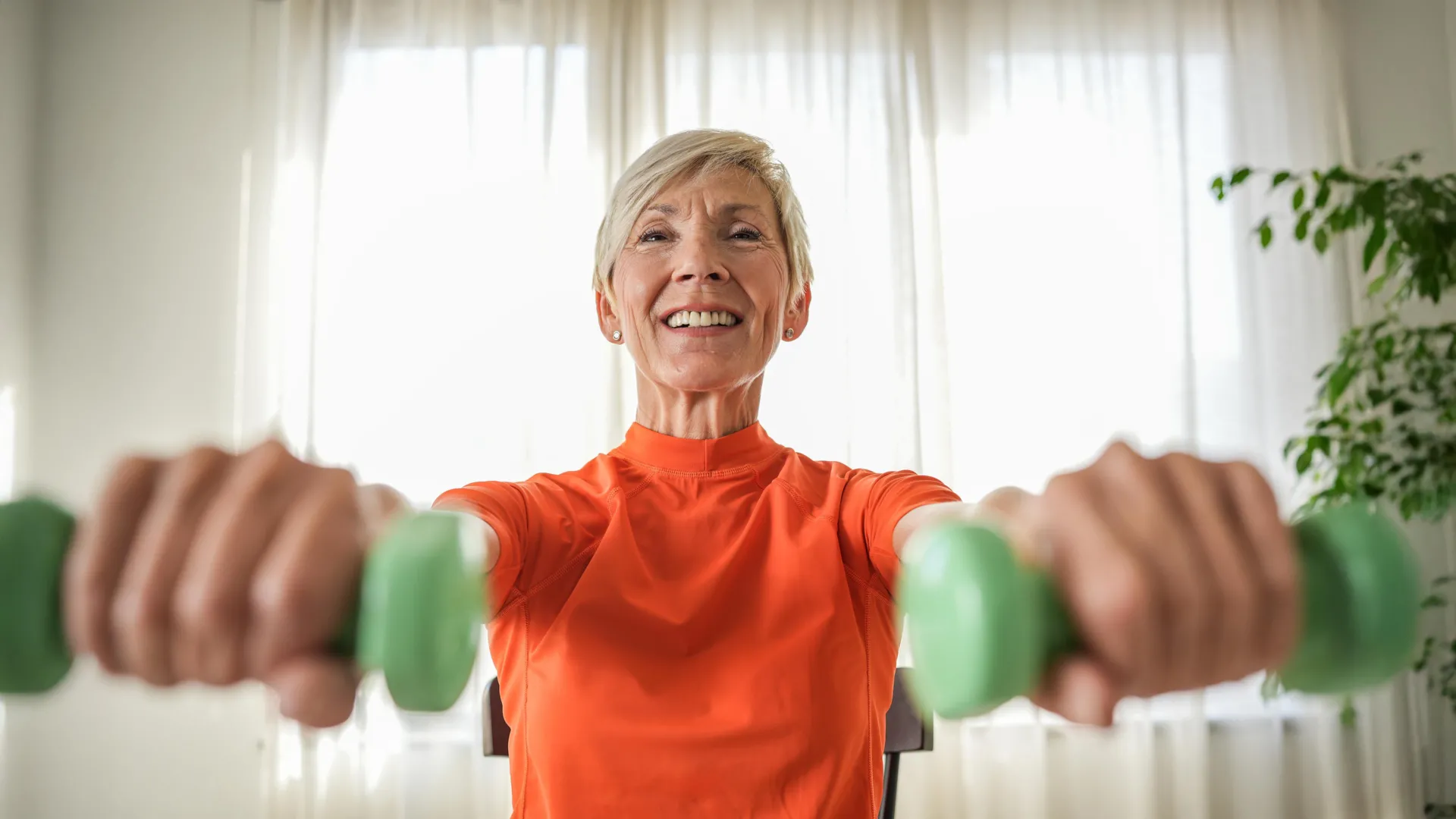
The researchers advocate for accessible, low-barrier strength training. For those intimidated by weight rooms, the study suggests that muscle-building can be integrated into daily life with minimal equipment:
- Bodyweight Resistance: Movements such as modified push-ups, wall presses, and knee bends (or squats) can be performed in the safety of one’s own living room.
- Household Objects: Dr. LaMonte suggests that common items, such as canned goods or heavy books, can act as effective resistance tools for those just beginning their journey.
- Professional Guidance: While simple movements are effective, the study advises that those with pre-existing conditions or those entirely new to resistance training should consult a healthcare provider or a physical therapist. A professional can help ensure that exercises are performed with the correct form to prevent injury and ensure consistent progress.
A New Paradigm for Aging
The overarching implication of the UB study is that we must redefine what it means to be "fit" in our later years. If we treat muscle strength as a vital sign—much like heart rate or blood pressure—we can fundamentally change the trajectory of the aging process.
The research also highlights a significant shift in how public health messaging should be constructed. For years, the emphasis has been on aerobic "burn." This new data suggests that the focus should pivot toward "functional independence." By prioritizing the ability to perform basic, daily movements against gravity, older adults can maintain their independence, reduce their risk of falls, and, as the study suggests, significantly increase their longevity.
Conclusion: The Future of Geriatric Care
The University at Buffalo study represents a pivotal moment in our understanding of the aging process. By providing empirical evidence that muscular strength is an independent pillar of longevity, the researchers have offered a roadmap for future health policies.
As we look toward a future where the number of octogenarians and nonagenarians will continue to climb, the findings suggest that the path to a longer, healthier life is paved with muscle. Whether through simple chair-stand drills in a doctor’s office or the use of soup cans as makeshift weights at home, the message is clear: strength is not just about muscle—it is about life itself. By embracing resistance training as a standard component of healthy aging, we can ensure that our golden years are not just longer, but defined by the vitality and independence that strength provides.