











9 July, 2026
As the European Union navigates the complex intersections of technological advancement and systemic institutional stress, two critical debates have converged in the halls of the European Parliament. On one front, policymakers are wrestling with the temptation to use Artificial Intelligence (AI) as a stop-gap for a crumbling healthcare workforce. On the other, they are questioning the efficacy of the newly minted European Centre for Democratic Resilience, fearing it may lack the teeth necessary to combat the rising tide of digital disinformation.
These dual challenges—the preservation of human-centric medicine and the protection of democratic integrity—form the bedrock of the Defend Science, Protect Public Health campaign, which argues that without rigorous oversight and sustained investment, the European model of public well-being is at significant risk.
The AI Mirage: Can Technology Solve a Human Crisis?
In a recent hearing of the European Parliament’s health committee, MEPs and medical experts gathered to dissect the role of AI in modern medicine. The context is dire: Europe’s healthcare systems are currently grappling with chronic staff shortages, burnout, and an aging population, creating an environment where the allure of “quick-fix” technological solutions has never been stronger.
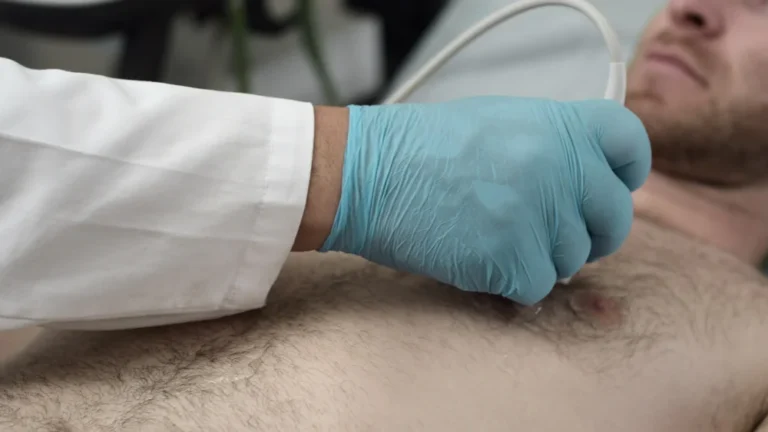
However, the consensus among lawmakers and medical professionals was one of cautious skepticism. While AI-driven diagnostic tools—particularly those capable of detecting lung and prostate cancer with remarkable speed—are being hailed as breakthroughs, they are not a panacea for the underlying structural decay of the health sector.
The Warning from The Left
MEP Catarina Martins, representing The Left group in Portugal, issued a pointed warning during the hearing. She highlighted a dangerous trend: the assumption that AI can act as a substitute for human medical staff.
“I’m afraid there’s some kind of expectation that AI can alleviate us from the workforce crisis,” Martins stated. Her concern is echoed by labor unions and medical associations across the continent, who fear that governments may use AI integration as an excuse to further underfund public hospitals or neglect the working conditions of doctors and nurses.
The Science of Reliability
Beyond the workforce implications, experts emphasized that the utility of AI is fundamentally tethered to the quality of its inputs. Prof. Barbara Hoffmann, Chair of the ERS Advocacy Council, provided a sobering reality check.
“AI has real potential to support clinicians, particularly in screening and early detection,” Hoffmann noted. “But it must remain a properly vetted, supporting tool, guided and overseen by trained professionals at every stage, not a substitute for the healthcare workforce or the scientific evidence that underpins good care.”
The core of the issue is data bias. AI models trained on incomplete, skewed, or unrepresentative data sets run the risk of propagating medical errors that could have catastrophic consequences for patient outcomes, particularly for marginalized communities.
Chronology of a Crisis: From Innovation to Institutional Doubt
The current parliamentary scrutiny is the culmination of several years of rapid, often unchecked, technological deployment in the EU.
- 2023–2024: The widespread emergence of Generative AI triggers an explosion of medical research applications, accompanied by growing concern over the lack of a unified EU regulatory framework for medical AI.
- February 2026: The European Centre for Democratic Resilience is launched as a flagship initiative under the European Democracy Shield. It is designed to act as a pan-European hub to detect and respond to threats to democratic processes, including the weaponization of disinformation.
- Spring 2026: Reports emerge indicating that health systems in several member states are failing to meet patient demand, leading to a spike in “AI-as-a-solution” discourse within local ministries of health.
- July 2026: The European Parliament holds its high-level hearing, where the limitations of AI in medicine and the organizational weaknesses of the Democracy Shield become the primary points of contention.
The Democracy Shield: A Paper Tiger or a Bastion of Resilience?
While the health committee discussed the risks of AI in the clinic, a parallel debate occurred regarding the European Centre for Democratic Resilience. Launched with high hopes in February 2026, the Centre was intended to be the EU’s primary line of defense against the digital manipulation of public opinion.
However, a recent report by The Brussels Times revealed that MEPs are increasingly dissatisfied with the Centre’s operational status. The primary fear is that the initiative is becoming a “symbolic front”—a bureaucratic entity that lacks the legal authority, the budget, and the enforcement mechanisms to actually stop disinformation campaigns.
The Call for Binding Legislation
MEPs have begun a concerted push for the Centre to be backed by binding EU legislation. The argument is simple: in an era of hyper-personalized disinformation, a center that relies on voluntary cooperation and soft power is essentially powerless.
Dr. Eva Polverino, ERS Director of Scientific Relations with the European Union, summarized the urgency of the situation: “An anti-disinformation body is only as strong as the resources and authority behind it. If Europe is serious about protecting public debate and public health, that commitment needs to be backed by real funding and real powers, not just good intentions.”
Implications: The Intersection of Health and Democracy
The implications of these developments extend far beyond the technical. Dr. Polverino pointedly noted that the current healthcare crisis is, in itself, a democratic issue.
“Insufficient access to healthcare specialists must be considered as a threat to democracy, negatively affecting the agency of patients,” she argued. When citizens lose faith in their healthcare system, they become more susceptible to medical misinformation, conspiracy theories, and populist rhetoric. This creates a feedback loop: a struggling health system breeds distrust, which leads to the spread of disinformation, which further weakens the institutions responsible for public health.
Protecting Patient Agency
The convergence of AI misinformation and declining healthcare access creates a dangerous environment for the average European citizen. As AI tools become more integrated into daily life, the need for a robust regulatory body that can distinguish between evidence-based medicine and algorithmically generated falsehoods becomes paramount.
Without such oversight, the very technologies designed to "save" time and lives could become the vehicles through which patient trust is eroded.
The Path Forward: Defending Science
The Defend Science, Protect Public Health campaign has identified three pillars necessary to navigate this volatile period:
- Properly Resourced Health Systems: There is no substitute for human expertise. Investment in the workforce, infrastructure, and training remains the only viable way to ensure long-term stability in European healthcare.
- Independent Oversight of New Technologies: AI must be treated as an adjunct to human intelligence, not a replacement. This requires transparent, multi-stakeholder audits of AI algorithms used in clinical settings.
- Robust Challenges to Misinformation: The European Centre for Democratic Resilience must be empowered with the legal standing to take proactive measures against entities that spread harmful, health-related misinformation.
A Call to Action
The current parliamentary debates serve as a warning. Policy, when decoupled from scientific reality, creates a vacuum that is inevitably filled by commercial interest or, worse, political manipulation. The European Union stands at a critical juncture: it can either commit to the difficult, resource-heavy path of strengthening its public institutions, or it can succumb to the seductive, but ultimately hollow, promise of automated solutions.
As Prof. Hoffmann and Dr. Polverino have underscored, the future of European public health depends on the courage to demand more than just “good intentions.” It requires a steadfast commitment to the integrity of science and the protection of the people who rely on it.
For those wishing to engage with these issues, the Defend Science campaign provides comprehensive resources, including multilingual social media content and direct-action templates to facilitate communication with policymakers. Supporting these initiatives is not merely a political preference; it is an essential step toward ensuring that the healthcare systems of tomorrow remain both human and resilient.
References & Further Reading:
- EURACTIV: MEPs warn against treating AI as a quick fix for Europe’s healthcare crisis.
- The Brussels Times: MEPs do not want EU anti-disinformation body to be purely symbolic.
- ERS Advocacy: Defend Science, Protect Public Health.