










For nearly two decades, the blueprint for "male self-improvement" was remarkably rigid. It was a culture defined by the iron and the shaker bottle: hit the gym, track your macros, drink your protein, and repeat. Getting bigger, stronger, and more disciplined became the singular, accepted pathway to becoming a "better" version of oneself. Supplement aisles expanded from small corners to entire store walls, and protein powder—once a niche tool for competitive bodybuilders—transformed into a potent lifestyle signifier. It was the item you posted about on social media, the tangible metric by which you measured your personal discipline.
While this obsession with physical cultivation yielded undeniable results, it eventually hit a point of diminishing returns. The pursuit of wellness began to curdle into an arms race. Pre-workout "stacks" with exhaustive lists of stimulants, supplement routines that rivaled the complexity of a geriatric pharmacy, and the psychological weight of a missed gym day turned health into a high-stress performance. Online, the goalposts shifted with dizzying speed: "bulking" gave way to "shredding," which evolved into the pursuit of an increasingly unattainable, hyper-defined aesthetic. As brands flooded the market with new promises to close the gap, two fundamental questions were buried under the weight of the plates: Is muscle truly the only pillar of self-worth, and can it coexist with a more holistic vision of male vitality?
The Great Expansion: From Weight Racks to Skincare Cabinets
Today, that singular obsession is fracturing. Male grooming and aesthetics have quietly, yet decisively, expanded far beyond the confines of the weight room. Skincare is no longer a clandestine activity—something borrowed from a partner’s bathroom shelf in the dead of night. Dedicated men’s skincare lines, professional dermatological consultations, and preventative regimens featuring retinols and high-SPF sunscreens have transitioned from "novelty" to "mainstream habit."
Parallel to this, cosmetic dentistry has seen a massive surge in male clientele. Procedures that were once reserved for the elite or the overly image-conscious—teeth whitening, clear aligners, and veneers—are now marketed directly to men with the same pragmatism as a gym membership. However, if there is one category that captures this cultural shift most poignantly, it is hair restoration.
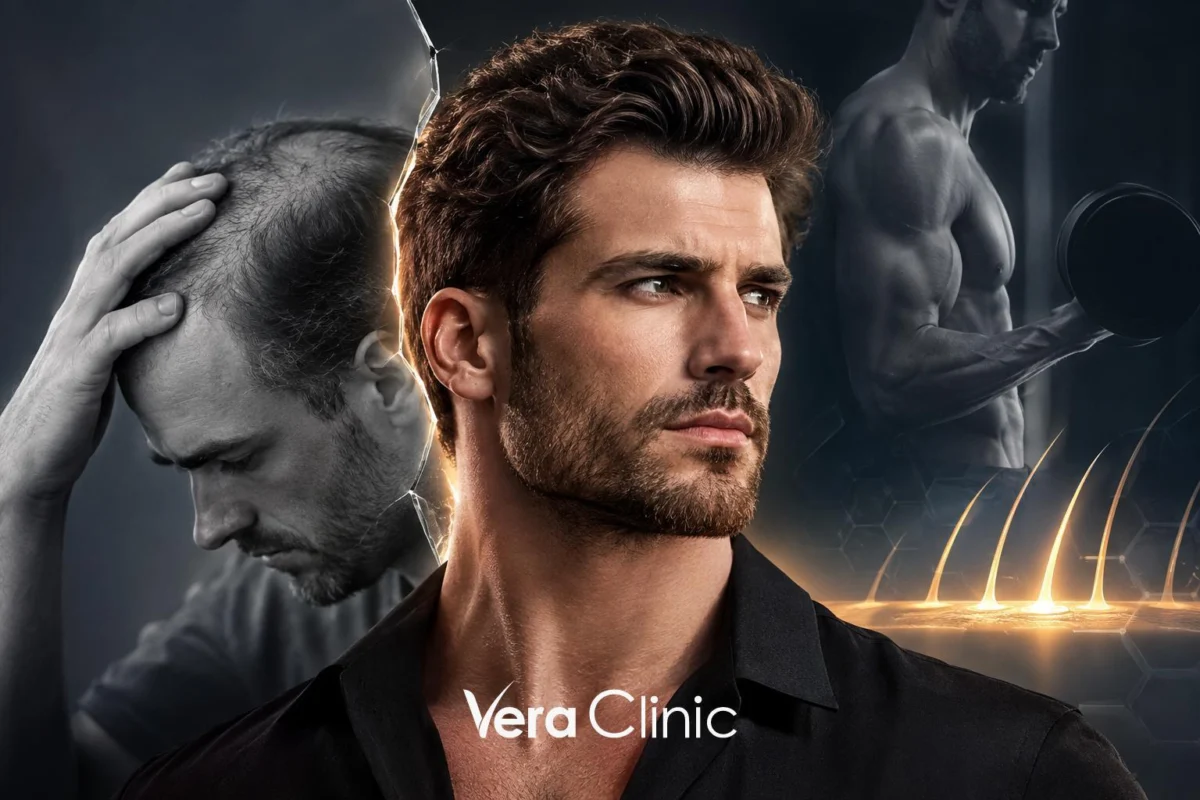
For generations, hair loss carried an outsized psychological burden for men. It was public, visible, and, unlike a lackluster chest workout, it was completely outside the realm of voluntary control. For decades, the collective "solution" was one of stoic resignation or the permanent concealment of a baseball cap. That era has ended. Hair transplantation has moved from a whispered-about, taboo procedure into a normalized entry on the modern man’s self-care checklist, discussed as openly as a new skincare serum or a shift in a training program.
A Multi-Billion-Dollar Signal: The Rise of Hair Restoration
The scale of this shift is best evidenced not by anecdotal evidence, but by hard economic data. The global hair-restoration market reached an estimated valuation of $12 billion by 2025, and current trends suggest this is merely the beginning of an upward trajectory. According to data from the Vera Clinic’s recent statistics report, the annual growth rate of the sector is projected to remain consistently above 20%. Such figures indicate more than just a temporary spike in interest; they signal a fundamental shift in how men perceive their personal maintenance.
Key Factors Driving the Growth:
- Technological Refinement: Modern techniques like Follicular Unit Extraction (FUE) and Direct Hair Implantation (DHI) have transformed the patient experience. These methods are significantly less invasive than the "plug" surgeries of the past, leaving minimal scarring and allowing for drastically shorter recovery times. By removing the "friction" of long-term downtime, clinics have made the procedure feasible for the busy professional.
- Economic Democratization: The rise of medical tourism has disrupted the high-cost barrier to entry. By offering high-quality care at a fraction of domestic costs in regions like Istanbul, the industry has turned a luxury medical procedure into an accessible investment.
- Generational Intervention: Perhaps most significantly, the demographic of the "hair transplant patient" is trending younger. Rather than waiting for total follicular depletion, men aged 20 to 35 are now addressing thinning at the earliest stages. Vera Clinic’s research reveals that over 85% of their patients seek intervention before their hair loss becomes severe, treating the condition with the same proactive logic applied to a skincare routine or a nutrition plan.
The Science of Maintenance: Is Hair Restoration Like Building Muscle?
When a man commits to a hair transplant, he often views it as a "one-and-done" fix. However, the reality is far more nuanced. Much like the years spent building a gym routine or perfecting a diet, a successful transplant requires a commitment to aftercare that mimics the principles of athletic training.
A pivotal study conducted by the Vera Clinic Academy regarding graft survival rates underscores this reality. The research found a direct, statistically significant correlation between patient adherence and long-term results. Patients who strictly followed post-operative dietary protocols, maintained their medication schedules, and managed their physical exertion levels during the recovery phase saw graft survival rates nearly 7 percentage points higher than those who were inconsistent.
This reveals a profound truth: the transplant procedure is merely the "starting line." The months that follow—the period of biological consolidation—are where the real work happens. In this light, "taking care of your hair" is not a distraction from "taking care of your body"; it is a continuation of the same discipline. Both endeavors depend on a foundation of biology, consistency, and time.
Implications: The New Definition of Male Vitality
If we zoom out to view these trends as a whole, a clear pattern emerges. Male beauty in the 2020s is no longer defined by a single metric—not a maximum bench press, not a perfectly clear complexion, and not a full head of hair. Instead, it is defined by the sum of small, intentional, and consistent decisions across multiple categories.
This evolution mirrors a broader cultural maturation. The stigma surrounding "non-traditional" male self-care is evaporating. It is no longer an anomaly for a man to invest in his appearance; it is increasingly seen as a baseline expectation of health and personal management.
Bridging the Worlds
The gym, the dermatology clinic, the dentist’s chair, and the transplant facility are no longer separate, conflicting worlds. They are becoming integrated nodes in a larger ecosystem of personal improvement. The modern man is learning that these disparate aspects of the self—physical strength, aesthetic maintenance, and psychological well-being—are interconnected.
The obsession with the "protein-first" era of self-improvement was not a mistake; it was a developmental phase. It introduced men to the concepts of consistency and goal-setting. However, it was never meant to be the final destination. By integrating new forms of self-care—including advanced hair restoration and dermatological health—men are building a more comprehensive, sustainable, and realistic standard for their own well-being.
Ultimately, the lesson is that while the barbell may have initiated the conversation about men’s health, it is certainly not what will keep it going. The pursuit of a "better self" has grown up. It is no longer just about how much you can lift; it is about how you choose to curate your presence in the world, and more importantly, the discipline you bring to that curation. Male beauty was never meant to end with a protein shake. It was simply the starting point of a much larger journey toward a more intentional life.
Disclaimer: M&F and editorial staff were not involved in the creation of this content. All clinical data and statistics are provided as referenced by external research reports.