








While the barbell back squat has long held the title of the "king of exercises," the evolving landscape of fitness science and home-based training has begun to challenge the primacy of traditional equipment. In the quest for hypertrophic gains—specifically in the quadriceps—athletes are increasingly looking for movements that prioritize mechanical tension and range of motion over sheer axial loading.
Enter the "Somersault Squat," a specialized movement recently thrust into the spotlight by Australian bodybuilder and fitness influencer Kwame Duah. Through his viral Instagram content, Duah has highlighted why this dumbbell-centric variation—often referred to as the "Joe Daniels Squat"—is becoming a staple for those seeking to maximize quad growth without the necessity of a full gym setup.
The Main Facts: Defining the Somersault Squat
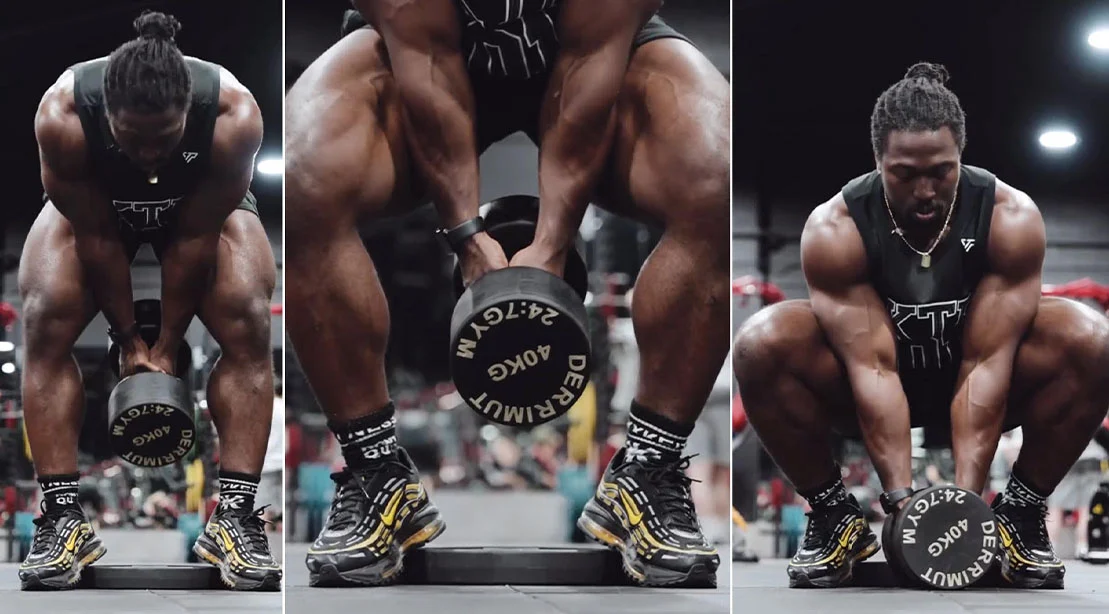
The somersault squat is a sophisticated, advanced variation of the goblet squat. Unlike the traditional goblet squat, which typically utilizes a single weight held at the chest, the somersault squat shifts the load to a position between the legs, creating a unique biomechanical demand on the knees and hips.
The movement requires two primary modifications to a standard squat:
- Heel Elevation: Using weight plates or a slant board, the lifter elevates their heels, which effectively increases ankle dorsiflexion and shifts the center of gravity forward.
- Dynamic Load Pathing: The weight is held in a neutral grip between the legs. As the lifter descends, the weight follows a controlled, sweeping trajectory that mimics a "somersaulting" motion relative to the body’s midline.
This movement is designed to isolate the quadriceps by forcing deep knee flexion. By keeping the torso relatively upright and the heels elevated, the lifter minimizes the involvement of the posterior chain (glutes and hamstrings) and places maximum stress on the quadriceps musculature.
Chronology: From Niche Movement to Social Media Phenomenon
The origins of the movement are traced back to coach Joe Daniels, who sought to solve a common problem for home-gym enthusiasts: how to achieve deep-tissue stimulation for the legs without a rack or a barbell.
- The Early Phase: Initially popularized within small, underground bodybuilding circles, the move was touted as a "hack" for people training with limited equipment during the global rise of home fitness.
- The Refinement Period: Coaches began to notice that the movement wasn’t just a substitute for limited equipment; it was a superior tool for hypertrophy due to the constant tension it placed on the distal portion of the quad (the "teardrop" or vastus medialis).
- The Viral Surge: In recent months, fitness influencer Kwame Duah brought the movement to a massive audience via his Instagram and TikTok channels. His high-definition, instructional reels showcased the precise form required, leading to a surge in search interest and community adoption of the exercise.
Supporting Data: The Biomechanics of Growth
To understand why the somersault squat is effective, one must look at the principles of muscle hypertrophy. Muscle growth is primarily driven by three factors: mechanical tension, metabolic stress, and muscle damage.
The Role of Knee Flexion
Research in sports kinesiology consistently indicates that deep knee flexion—where the angle between the calf and the thigh is minimized—is the primary driver for quad hypertrophy. When the heel is elevated, the "travel" of the knee over the toes is increased. This shift allows the quadriceps to move through a greater range of motion under load.
Neutral Grip and Core Stability
Holding the weight between the legs with a neutral grip prevents the common "forward lean" seen in traditional back squats. In a barbell back squat, the weight rests on the traps, which often forces the lifter to hinge at the hips to maintain balance, thereby involving the glutes. By keeping the weight centered, the somersault squat keeps the center of mass directly over the base of support, ensuring that the quadriceps remain the primary movers.
Kwame Duah’s Methodology: How to Execute for Maximum Gains
In his recent tutorials, Kwame Duah breaks down the execution of the somersault squat into a systematic, repeatable process.
Step 1: Set Up and Stability
"Grab two plates and elevate your heels to improve ankle mobility and stability," Duah instructs. This foundation is non-negotiable. Without elevated heels, the average lifter will lack the ankle dorsiflexion required to keep the torso upright.
Step 2: The Load and Grip
Holding a single dumbbell or kettlebell between the legs with a neutral grip (palms facing each other) allows the weight to hang vertically. This prevents the weight from interfering with the forward movement of the knees.
Step 3: The Descent
The lifter should initiate the movement by bending through the knees, allowing them to travel forward past the toes. Duah emphasizes that the goal is not to sit back into a chair, but to drop the hips vertically, maintaining an upright chest throughout the range of motion.
Step 4: The Ascent
The drive comes from the heels. As the lifter powers back up, they should focus on pushing through the mid-foot, feeling the tension concentrate in the quads. The "somersaulting" trajectory—where the weight moves forward and then back—should be controlled, not jerky.
Expert Commentary: Training Frequency and Programming
When followers questioned Duah on how to integrate this move into their weekly routines, his advice emphasized the importance of individual recovery.
"It really depends on how well you recover," Duah noted. "But I’d recommend training quads at least twice per week."
Duah suggests a "split-bias" approach for those struggling to grow their legs. If an athlete has a dedicated leg day, they can make their second, usually posterior-chain-focused day (hamstring/glute day), more "quad-dominant" by leading with the somersault squat. By prioritizing the movement early in the workout when energy levels are highest, the lifter ensures that the quadriceps receive the necessary volume to trigger growth signals.
Implications: The Shift Toward Specialized Hypertrophy
The rise of the somersault squat represents a broader shift in the fitness industry. We are moving away from the "one-size-fits-all" barbell mentality and toward movements that respect individual biomechanics.
Accessibility and Safety
The somersault squat is remarkably democratic. It requires only a single weight and a pair of plates, making it an ideal movement for the modern, hybrid athlete. However, it is not without risk. Because the movement forces the knees into a position of high mechanical stress, it is not recommended for individuals with existing patellar tendinopathy or meniscus issues.
The Future of Leg Training
The implication for the bodybuilding community is significant. If an athlete can achieve the same—or better—hypertrophic results through a somersault squat as they could through a heavy barbell squat, they effectively reduce the risk of spinal compression and lower back injury associated with heavy back-loading.
Conclusion: Is the Somersault Squat Right for You?
The somersault squat is a testament to the fact that innovation in fitness often comes from the simplification of complex mechanics. By stripping away the need for a barbell and focusing on the pure physics of knee flexion and weight distribution, Kwame Duah and Joe Daniels have provided the fitness community with a potent tool for lower-body development.
However, before attempting this move, ensure you have mastered the basic goblet squat. If you have the ankle mobility and the desire to push your quads beyond the standard barbell plateau, the somersault squat may be the precise, high-tension movement your routine has been missing.
As with any advanced training technique, start light. Master the trajectory, respect the range of motion, and allow your legs the time to adapt to the new, localized stress. If you are ready to stop "lifting" and start "building," the somersault squat is waiting.