










In the pantheon of gym culture, one question serves as the ultimate litmus test for physical prowess: "How much can you bench?" It is the universal shorthand for strength, a metric that transcends language and borders. Whether you are a seasoned powerlifter or a novice navigating the weight room for the first time, the bench press stands as the undisputed king of upper-body compound movements. It is an exercise that builds the chest, sculpts the shoulders, and forges the triceps into pillars of power.
However, beneath the veneer of its popularity lies a sobering reality. For many, the bench press is not a vehicle for growth, but a fast track to the orthopedist’s office. It has, perhaps, sidelined more athletes and fitness enthusiasts than any other movement in the modern gym. Yet, to blame the exercise is to misunderstand the mechanics. The bench press is not inherently dangerous; rather, it is frequently performed with a lack of respect for technique, biology, and ego management.
The Anatomy of a Benchmark Movement
To understand the bench press, one must first appreciate its function. As a compound movement, it requires the recruitment of multiple muscle groups working in concert. When executed with precision, the pectoralis major drives the push, the anterior deltoids provide the initial stability, and the triceps provide the finishing lockout.
Historically, the bench press rose to prominence in the mid-20th century, transitioning from a specialty movement for weightlifters to the primary measure of upper-body strength in athletic testing. Its simplicity—a barbell, a bench, and gravity—belies the technical complexity required to perform it safely. In professional strength and conditioning circles, the bench press is regarded as a high-skill movement. Experts emphasize that the "push" is only the end result; the real work happens in the setup, the bracing, and the path of the bar.
The Ego Trap: Why Beginners Stumble
The primary impediment to long-term bench press success is not a lack of effort, but an excess of ego. In the modern social media era, where "personal record" videos are currency, beginners often feel pressured to move heavy weight before they have developed the requisite structural integrity.
"The first rule of the bench press is simple: leave your ego at the door," says veteran strength coach Marcus Thorne. "Nobody cares what you bench except you. More beginners get hurt trying to impress strangers than for any other reason. The goal isn’t to move the heaviest weight in the gym; the goal is to stimulate muscle growth while keeping your shoulders, elbows, and wrists healthy enough to train again next week."
This ego-driven approach leads to "bouncing" the bar off the chest, flaring the elbows at dangerous angles, and sacrificing the integrity of the shoulder girdle. When the weight exceeds the lifter’s capacity to control it, the body inevitably shifts the load onto the joints and connective tissues, which are far less resilient than the muscles they serve.
The Progressive Path: From Training Wheels to Heavy Metal
For those new to the movement, the transition to the bench press should be systematic. There is no shame in utilizing the Smith machine to establish a baseline. While purists may scoff, the Smith machine provides a fixed path, allowing a novice to focus on learning the sensation of the movement, muscle activation, and body positioning without the instability of a free-weight barbell.
Think of it as training wheels. Once an individual has mastered the bar path and understands how to retract their scapula and brace their core, they can graduate to the Olympic bar. This progression ensures that when the lifter finally transitions to free weights, they have the neuromuscular control to navigate the inherent instability of the bar, which is vital for engaging the stabilizing muscles that prevent injury.
Technical Execution: The Mechanics of Safety
Proper form is not just about aesthetics; it is the fundamental barrier between longevity and injury. A professional-grade bench press setup follows a specific protocol:
- The Foundation: Ensure your feet are planted firmly on the floor. Leg drive is not just a myth; it is a critical component of stability that generates force through the entire kinetic chain.
- Scapular Retraction: Pinch your shoulder blades together. This creates a stable platform on the bench and prevents the shoulders from rolling forward during the lift, which is the primary cause of impingement.
- The Bar Path: The bar should not travel in a straight vertical line. It should descend toward the lower chest or upper abdomen and arc slightly toward the shoulders as it ascends. This J-curve path is more biomechanically efficient and easier on the shoulder joints.
- Controlled Tempo: Muscle responds to tension, not momentum. A three-second eccentric (lowering) phase ensures that the target muscles are doing the work, not gravity.
The Role of the Spotter: A Vital Partnership
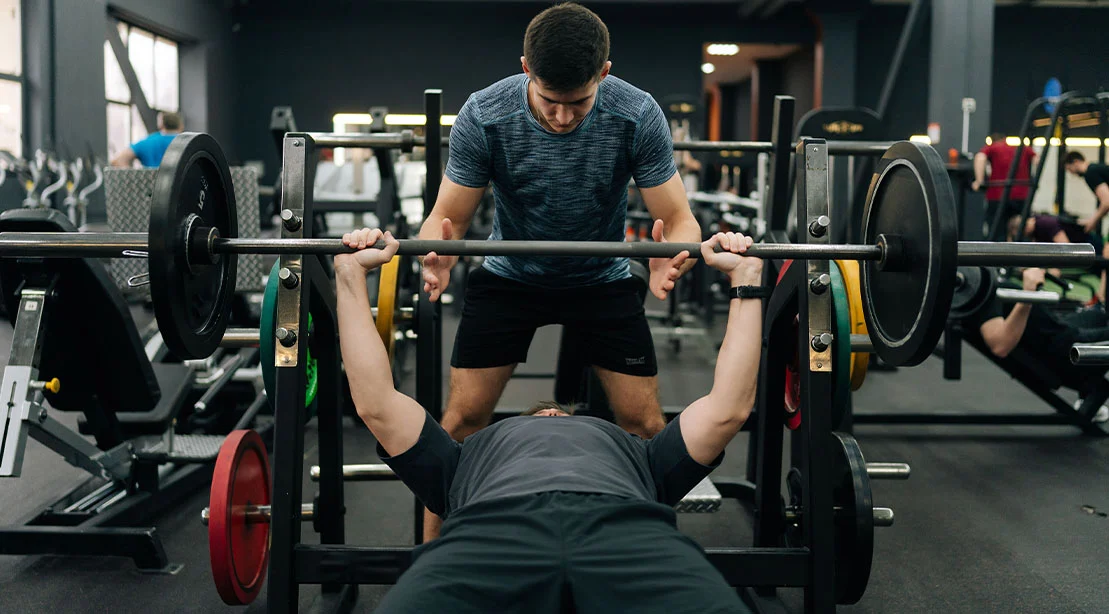
In the realm of heavy resistance, a spotter is not merely an assistant; they are a safety requirement. A competent spotter understands the nuance of the lift. They keep their hands in close proximity to the bar—without touching it—ready to intervene only if the bar stalls or deviates from the established path.
Professional trainers emphasize communication. Before a single plate is loaded, the lifter and spotter must agree on the parameters:
- "How many reps are you aiming for?"
- "Do you want a lift-off, or will you unrack it yourself?"
- "If I reach failure, do you want to assist, or should I bail?"
These questions eliminate the confusion that often leads to accidents. If you are training solo, the rules shift: abandon the quest for one-rep maxes. Instead, utilize a power rack with safety pins set at a height that allows you to safely set the bar down if your muscles give out.
Supporting Data: Why Balance Matters
The obsession with the bench press often leads to a "mirror muscle" imbalance. Lifters frequently focus exclusively on the chest, neglecting the upper back and the rotator cuff. This creates a posture where the shoulders are perpetually pulled forward, leading to chronic pain and reduced range of motion.
Sports medicine journals consistently indicate that a healthy shoulder joint requires a balance between pushing and pulling. For every set of bench presses, a lifter should ideally perform an equal amount of volume in horizontal pulling movements, such as seated rows or chest-supported rows. This counter-balance keeps the shoulder blades anchored and the rotator cuff strong, providing the necessary support for the heavy loads of the bench press.
Implications for Longevity
The implications of poor form are long-term. Chronic inflammation, tendonitis, and rotator cuff tears are the silent killers of a fitness career. Once a shoulder is compromised, it may take months of physical therapy to return to baseline—time that could have been spent making progress.
Conversely, those who prioritize form and progressive overload are the ones who stay in the game for decades. Progressive overload—the practice of gradually increasing weight, repetitions, or sets over time—is the only sustainable path to growth. It is not about how much you can lift in a single afternoon; it is about how much you can lift over a lifetime.
Conclusion: Respect the Iron
The bench press remains the most effective tool for upper-body development precisely because it is demanding. It asks for more than just muscle; it asks for discipline, patience, and humility. By leaving the ego at the door, embracing the necessity of a spotter, and balancing the movement with appropriate accessory work, any lifter can master the bench press.
The strongest lifter in the gym is not the one who struggles through a shaky, dangerous repetition to impress the crowd. The strongest lifter is the one who performs the movement with technical perfection, maintains their health, and continues to grow stronger, year after year, for the next two decades. Master the movement, respect the weight, and the bench press will provide the foundation for a lifetime of physical excellence.