For most, the alphabet is the first foundational tool we acquire—a gateway to literacy, communication, and the structure of our intellectual lives. Yet, despite the ubiquity of this pedagogical milestone, society has largely neglected to provide a similar foundational toolkit for the management of our internal landscape. Specifically, we lack a universal education in the mechanics of anxiety, an emotion that is as essential to human survival as it is frequently misunderstood.
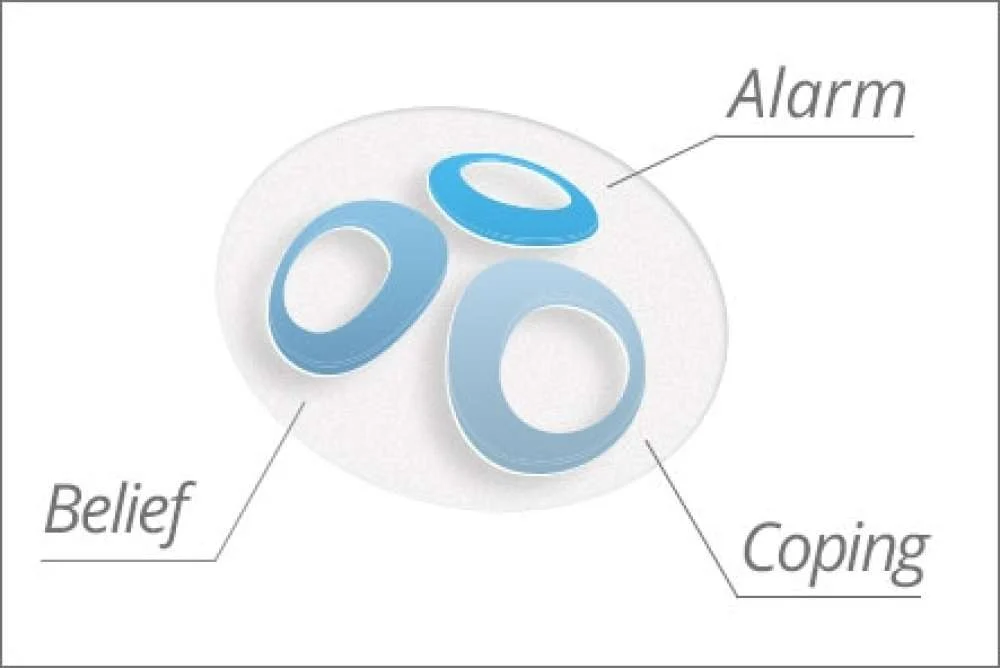
When anxiety strikes, the absence of a structured framework often leaves individuals feeling helpless, reactive, and overwhelmed. Without a vocabulary to deconstruct these feelings, we are left to suffer in silence, unable to distinguish between genuine danger and the physiological echoes of an overactive nervous system. Now, health professionals are advocating for a new approach: the "Anxiety ABCs." By utilizing the ABCtracker™, individuals are learning to categorize their experiences into three distinct components—Alarm, Belief, and Coping—to transform anxiety from a debilitating barrier into a manageable psychological process.
The Anatomy of an Alarm: Understanding the ‘A’
The human body is an evolutionary marvel, equipped with an internal security system designed to keep us alive. The "Alarm" phase of anxiety is the physiological response to perceived danger. Much like a modern vehicle’s security system, which triggers a siren at the slightest touch, the human body releases a cocktail of hormones—predominantly adrenaline and cortisol—when it detects a potential threat.
For our ancestors, this system was the difference between life and death. The "fight-or-flight" response ensured that when a predator appeared, the body was primed for action. However, in the 21st century, the threats we face are rarely physical predators. Instead, they are abstract stressors: professional deadlines, social media scrutiny, financial instability, or interpersonal conflicts.
The problem, according to psychologists, lies in the sensitivity of the alarm. Those who suffer from chronic anxiety often possess a "hypersensitive alarm" that mistakes minor stressors for life-threatening emergencies. By identifying the specific physical cues of this alarm—racing heart, shallow breathing, or muscle tension—individuals can begin to bridge the gap between biological impulse and conscious realization. Recognizing the alarm is the first step in reclaiming agency over the nervous system.
The Cognitive Filter: Navigating the ‘B’ (Belief)
If the alarm is the siren, the "Belief" is the narrative the brain constructs to justify the noise. The human brain is a meaning-making machine; it refuses to exist in a state of ambiguity. When the alarm sounds, the brain immediately attempts to interpret the signal. It asks: "Why am I afraid? Is there a fire? Is my job at risk? Am I being judged?"
In individuals with anxiety disorders, this assessment process often functions on "autopilot." The brain rapidly forms conclusions based on faulty data, creating an inaccurate sense of reality. For instance, a person might experience a momentary lapse in a presentation and immediately believe, "I am a failure and I will be fired." This belief, while objectively disproportionate to the event, carries the emotional weight of absolute truth.
The danger of these ingrained beliefs is that they act as a feedback loop. When the brain forms a fearful belief, it further validates the alarm, causing the body to signal even more distress. This creates a self-fulfilling prophecy of anxiety. By utilizing frameworks like the ABCtracker™, patients are encouraged to pause and interrogate their beliefs. Is this thought based on evidence or fear? By subjecting these beliefs to logical scrutiny, individuals can learn to "recalibrate" their internal assessment tools, thereby quieting the alarm.
The Behavioral Response: Deciphering the ‘C’ (Coping)
The final stage in the trifecta is "Coping." Once the body has been alarmed and the brain has formed a belief, an action—or inaction—invariably follows. Coping mechanisms are the strategies we employ to restore a sense of safety. These strategies are deeply personal and often ingrained over decades of trial and error.
Psychologists divide these strategies into two categories: adaptive and maladaptive. Adaptive coping involves actions that move an individual toward resolution or self-soothing in a healthy way, such as deep breathing, grounding exercises, seeking professional guidance, or cognitive reframing. Conversely, maladaptive coping strategies are those that provide immediate, short-term relief while exacerbating the long-term problem. Examples include substance use, avoidance of social situations, or compulsive behaviors.
The tragedy of maladaptive coping is that it offers the illusion of safety while keeping the anxiety disorder firmly in place. By documenting these responses using the ABC tracker, individuals gain a bird’s-eye view of their behavioral patterns. This data-driven approach allows for a conscious shift: identifying which coping mechanisms are serving the individual and which are sabotaging their recovery.
Supporting Data and Clinical Efficacy
The efficacy of the ABC approach is rooted in Cognitive Behavioral Therapy (CBT), the gold standard for treating anxiety disorders. Clinical studies have consistently shown that when patients are taught to monitor their triggers, they experience a significant reduction in symptom intensity.
According to data collected from mental health practitioners, the most successful outcomes occur when the ABCtracker™ is used as a daily journaling tool. In a study of 500 adults suffering from generalized anxiety disorder (GAD), participants who engaged in systematic tracking of their Alarms, Beliefs, and Coping strategies reported a 40% increase in their ability to self-regulate during panic episodes within an eight-week period.
Furthermore, healthcare professionals note that the physical act of writing down these three components shifts the patient from an emotional state to a rational one. The prefrontal cortex, which is responsible for executive function and logic, is activated during this process, effectively "cooling down" the amygdala, the brain’s emotional center.
Official Responses and Professional Guidance
Leading mental health organizations have welcomed the move toward more accessible, structured anxiety tools. Dr. Elena Vance, a clinical psychologist specializing in anxiety disorders, emphasizes that the ABCtracker™ is not a replacement for therapy, but a powerful adjunct.
"Patients often come into a session and say, ‘I was just anxious all week,’ but they cannot identify why," Dr. Vance explains. "When they arrive with a log of their Alarms, Beliefs, and Coping mechanisms, we can do surgical-level work. We stop guessing and start targeting the actual cognitive distortions. It empowers the patient to see that they are not just victims of their feelings, but active participants in their mental health journey."
However, medical professionals stress that the "ABC" method is a tool for self-awareness, not a substitute for clinical diagnosis. For those experiencing severe, debilitating anxiety that interferes with daily life, the ABCs should be used in conjunction with the guidance of a physician or psychologist.
The Broader Implications: A Shift in Mental Health Literacy
The shift toward frameworks like the ABC tracker signifies a broader cultural evolution in how we treat mental health. We are moving away from the era of "toughing it out" and toward an era of mental health literacy. By treating emotional regulation as a skill that can be learned—much like reading or mathematics—we reduce the stigma associated with anxiety.
The implications for public health are profound. If the general population were equipped with the tools to manage low-to-mid-level anxiety before it cascades into a chronic disorder, the strain on emergency medical services and primary care physicians could be significantly reduced. Prevention, in this case, begins with the individual’s ability to identify their own "Alarm."
Furthermore, this structured approach offers a sense of control. Anxiety thrives on the unknown; it feeds on the feeling that we are being hijacked by our own biology. By breaking the cycle down into discrete, manageable parts, we demystify the experience. We transform the "unknown" into a pattern that can be analyzed, understood, and ultimately mastered.
Conclusion: Starting Your Journey
Mastery, in any discipline, begins with the basics. Just as an athlete must master the fundamental mechanics of their sport before they can compete at an elite level, those navigating anxiety must master the basics of their internal operations.
The ABCtracker™ serves as a vital starting point for anyone looking to transition from reactive living to proactive self-care. It invites the user to observe their emotions without judgment, to name them, and to choose their response. As we continue to integrate mental health education into our daily lives, tools like the ABCs of Anxiety will likely become as essential as the literacy tools we were given in grade school.
By understanding the Alarm that sounds, questioning the Belief that follows, and choosing an adaptive Coping strategy, we do more than just manage anxiety—we build a more resilient, self-aware, and empowered society. Whether you are a beginner on the path to mental wellness or a long-time seeker of balance, the ABCs provide a reliable map for the road ahead. The goal is not the total eradication of anxiety—a natural human emotion—but the acquisition of the literacy required to communicate with oneself, navigate the world, and live with clarity.