




As the final days of September mark the conclusion of Pain Awareness Month, the national conversation often shifts toward other observances. However, for more than 60 million Americans, the challenges associated with chronic pain do not vanish when the calendar turns. For this significant portion of the population, pain is not a seasonal event—it is a 365-day-a-year reality that shapes every facet of existence, from professional pursuits to intimate family moments.
The Chronic Reality: Understanding the Scope of the Crisis
The scale of chronic pain in the United States is staggering. According to the Centers for Disease Control and Prevention (CDC), chronic pain affects one in five U.S. adults. It is a leading cause of long-term disability, contributing to billions of dollars in lost productivity and healthcare expenditures annually. Beyond the economic metrics, there is the human toll: the erosion of quality of life, the strain on mental health, and the exhausting, daily navigation of a healthcare system that often fails to provide definitive answers.
The conclusion of Pain Awareness Month serves as a poignant reminder that while awareness campaigns are essential, they are merely the beginning. The movement—encapsulated by the theme "All Ages, Countless Diagnoses, Millions of Stories, One Movement"—seeks to transition from temporary recognition to systemic change.
Chronology of a Movement: From Awareness to Advocacy
The history of pain advocacy in the United States has evolved from a siloed, patient-specific struggle to a unified, multi-stakeholder movement.
- Early 2000s: Advocacy was largely fragmented. Individuals with specific conditions, such as fibromyalgia or CRPS (Complex Regional Pain Syndrome), operated in isolated support groups, often struggling to gain legitimacy within the medical establishment.
- The Mid-2010s: A shift occurred as the opioid crisis forced a national conversation about pain management. Unfortunately, this often led to pendulum swings that made it harder for legitimate patients to access necessary care.
- 2020–Present: The movement matured into a broader advocacy front, emphasizing "One Voice for Pain." This phase has prioritized the intersectionality of pain—recognizing that regardless of the diagnosis, the systemic barriers to relief, validation, and quality of life are remarkably similar.
What Sustains the Human Spirit?
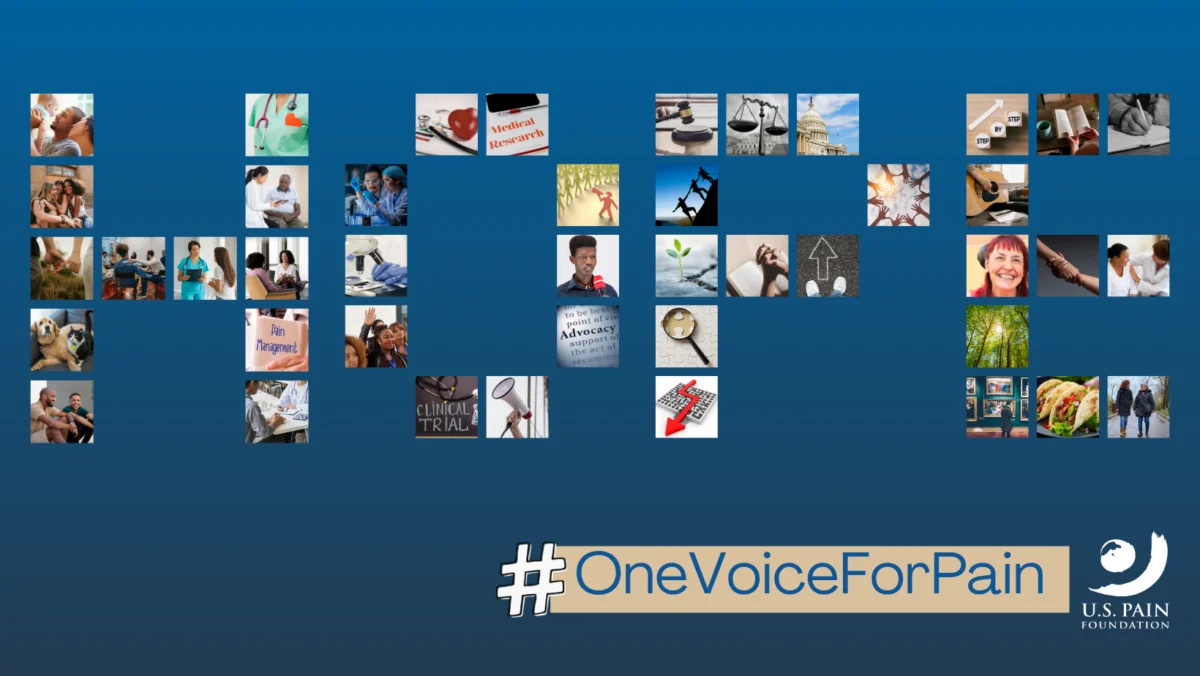
Throughout the month of September, we reached out to the community to pose a fundamental, existential question: What keeps you moving forward? The responses were a tapestry of resilience, revealing that hope is rarely a singular, grand event. Instead, it is a mosaic of small, intentional acts and structural supports.
1. The Anchors of Support
Human connection remains the most potent buffer against the isolation of chronic pain. Whether it is a partner who also navigates disability, or the unconditional love of a pet, these relationships provide a "soft place to land."
"My partner, who is also disabled and in chronic pain, understands in a way no one else can," says Barry, 57. This sentiment of "shared understanding" is a recurring theme. For many, the validation of a friend who "gets it" is more therapeutic than any prescription. Even for those with families, the perspective shifts; Kari, 37, finds hope in "the tiny glimmers of a typical child," using her daughter’s moments of play to anchor herself during debilitating flares.
2. The Critical Role of Provider Validation
The patient-provider relationship is often the fulcrum upon which a treatment journey turns. When a patient is gaslit or dismissed, the physical pain is compounded by psychological trauma. Conversely, a physician or therapist who listens can be transformative.
Erica, 45, notes that her mental health therapist has been instrumental in teaching her that "reaching goals" can simply mean "modifying how I get there." This validation—the idea that you are not "broken," just requiring different tools—is a vital component of sustainable pain management.
3. Innovation and the Promise of Research
Technological and pharmacological progress remains a pillar of hope. For Debbie, 68, the fact that fibromyalgia is "much more understood now than it was 18 years ago" provides a sense of progress. While many are still searching for their "magic bullet," the influx of new medications, neuromodulation devices, and holistic integrative therapies keeps the door to relief ajar.
4. Advocacy as an Act of Purpose
For many, the act of advocacy transforms their trauma into a catalyst for systemic improvement. Sammie, 31, describes her transition into advocacy as a necessity: "I have to make something positive come out of it." By speaking up, these individuals aren’t just fighting for their own future; they are paving the way for the millions who will be diagnosed in the years to come.
Data and Implications: The Gap Between Hope and Reality
Despite the stories of resilience, the data remains sobering. A significant subset of the population feels that hope is, at times, inaccessible. The candid admissions from individuals like "Anonymous, 56," who states, "Nothing gives me hope. I just survive day to day," represent a failure of the current medical and social infrastructure.
Implications for Future Policy
The evidence suggests that we are moving toward a more holistic view of pain management, yet the implementation is inconsistent. The implications for the medical community are clear:
- Integrated Care Models: Moving beyond the "pill-only" approach to incorporate physical therapy, psychological support, and lifestyle intervention.
- Patient-Centered Metrics: Success should be measured by patient-reported quality of life, not just clinical data points.
- Education Reform: Medical schools must prioritize pain education to ensure providers enter the field with a compassionate, nuanced understanding of chronic conditions.
Redefining Success: Creativity and Small Wins
When the pain is chronic, the definition of a "good day" must be redefined. For many, success is not the absence of pain, but the presence of meaning. Whether it is a singer-songwriter like Traci, 49, writing songs about her struggle, or Beth, 72, focusing on "small victories," the redirection of energy toward creativity acts as a powerful distraction and a mechanism for processing complex emotions.
Moving Forward: The #LetsChangePain Mandate
As we look beyond the formal conclusion of Pain Awareness Month, the mission remains urgent. The reality of chronic pain is not confined to a 30-day window; it is a permanent fixture in the lives of millions.
We must continue to foster a culture where:
- Validation is the standard of care. No patient should ever leave a clinic feeling their pain is "in their head."
- Solidarity is encouraged. By sharing our stories, we strip away the stigma that often accompanies chronic invisible illnesses.
- Research is prioritized. We need continued investment in understanding the mechanisms of pain to develop safer, more effective interventions.
Hope, as it turns out, is not a passive emotion. It is a deliberate choice made by those who live in the trenches of pain every single day. It is found in the smile of a neighbor, the comfort of a book, the persistence of a doctor, and the collective voice of a movement.
As we carry #OneVoiceForPain into the coming year, let us remember that the most important work happens when the awareness ribbons are put away. Let us continue to listen, to learn, and to advocate for a future where chronic pain is met with compassion, resources, and, ultimately, effective solutions.
#LetsChangePain. Together.