








Updated September 29, 2026
In the modern professional landscape, the "sedentary trap" has become an invisible epidemic. For millions of remote and office-based workers, the standard eight-hour workday—often extended by commutes and domestic responsibilities—is defined by static posture. While the physiological consequences, such as chronic lumbar pain, hip impingement, and thoracic kyphosis (hunched shoulders), are well-documented, a more insidious issue is emerging: the degradation of cognitive clarity.
Olive Walton, a renowned yoga teacher and mixed movement coach, has spent the better part of a decade investigating the intersection of kinetic awareness and psychological health. Since 2018, Walton has championed the philosophy that movement is not merely a method for physical conditioning, but a fundamental tool for mental regulation.
The Cognitive Cost of Sedentary Life
The neurological impact of prolonged sitting is profound. When the body remains static, the brain often enters a state of "alert boredom." This manifests as an inability to focus, the compulsive need for digital distractions (such as incessant social media scrolling), and a general sense of mental fatigue.
"Those moments during the workday when you can’t seem to process a single email without seeking an external distraction are often your mind’s SOS signal," says Walton. "It is a plea for proprioceptive input. When we deny the body movement, we starve the brain of the very stimuli required to maintain high-level executive function."
Scientific literature supports this perspective. Research published in the National Center for Biotechnology Information (NCBI) highlights that structured physical movement acts as a physiological reset. By engaging in "yoga-inspired mobility," individuals can disrupt the cortisol-heavy stress cycle that accompanies a stagnant workday, effectively clearing the "mental fog" that accumulates after hours of screen time.
Chronology of the Modern Movement Crisis
To understand the necessity of mobility practices, one must look at the evolution of the workplace over the last six years:
- 2020–2022 (The Great Transition): The rapid shift to remote work environments led to a decline in "incidental movement"—the walking between meetings, commuting, and standing at desks—which previously served as a baseline of activity for the average worker.
- 2023–2024 (The Plateau of Discomfort): Public health data began to show a spike in musculoskeletal complaints among the 25–45 age demographic, correlated with home-office setups that lacked ergonomic standards.
- 2025–2026 (The Movement Resurgence): A cultural shift occurred, moving away from high-intensity, "no-pain-no-gain" gym culture toward functional, mindful movement. Coaches like Walton began emphasizing "mobility snacks"—brief, intentional movement sequences designed to be performed within the workspace.
Supporting Data: Why Mobility Matters
The argument for integrating movement into the workday is not merely anecdotal. Clinical observations suggest that mobility training impacts the body in three key ways:
- Joint Lubrication: Through controlled rotation, synovial fluid—the body’s natural lubricant—is redistributed throughout the joint capsules, reducing friction and the sensation of stiffness.
- Fascial Release: Chronic sitting causes the body’s fascia (connective tissue) to "knit" together, restricting range of motion. Movement acts as a gentle exfoliation for these tissues.
- Nervous System Regulation: By shifting the body into non-habitual positions, practitioners trigger the parasympathetic nervous system, lowering heart rate and promoting a state of "relaxed alertness."
Expert Perspectives: The Walton Protocol
Olive Walton advocates for a 16-minute "mobility reset." This routine is designed to be accessible, requiring nothing more than a few square feet of space and comfortable clothing.
"The goal isn’t to build muscle mass or burn calories," Walton explains. "The goal is to reintroduce the body to its own range of motion. We spend our days in ‘narrow’ positions—shoulders forward, hips flexed. We need to counter this with ‘wide’ and ‘dynamic’ positions."
The 16-Minute Mobility Sequence
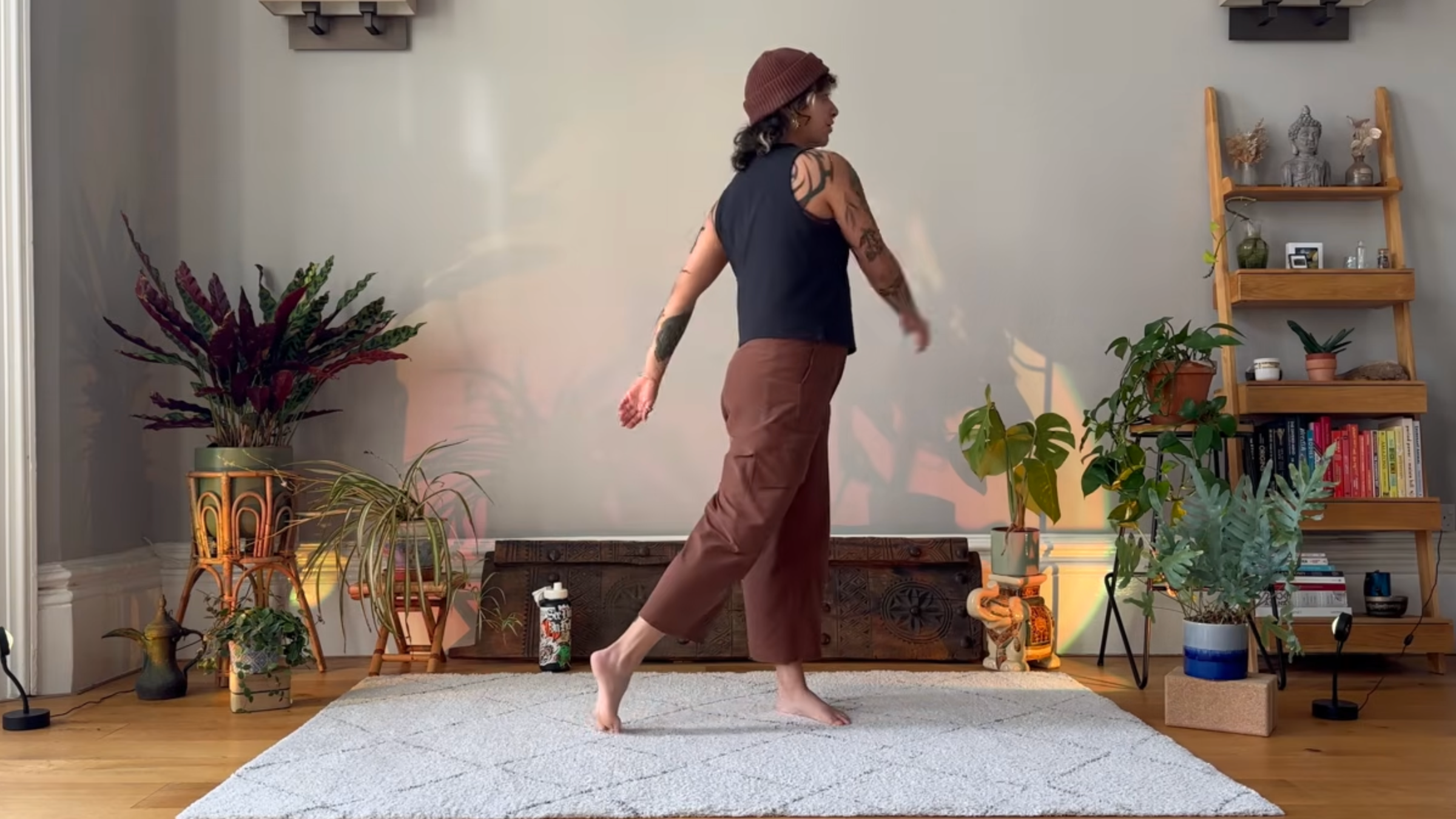
1. Standing Spinal Rotation
This movement initiates the process by waking up the core and the spine. By standing hip-width apart and letting the arms swing with momentum from the mid-section, the practitioner facilitates a gentle spinal twist. Lifting the heels alternately ensures that the rotation travels through the kinetic chain, rather than just the lower back.
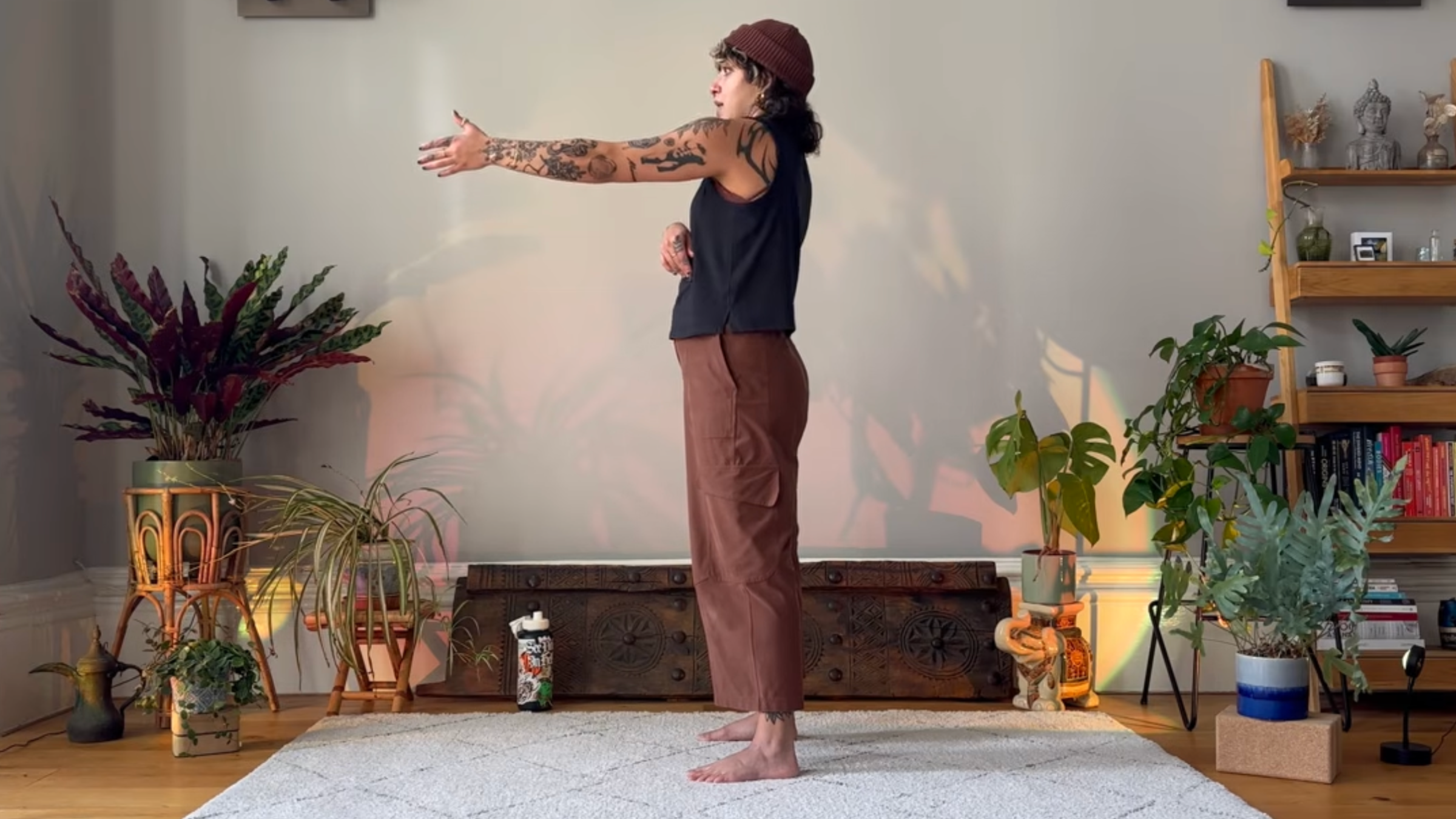
2. Targeted Shoulder Circles
Sedentary workers often suffer from "frozen" scapulae. By reaching one arm forward and drawing the shoulder joint through a full circular range—ear, forward, down, and back—the practitioner isolates the joint. This movement is often described as "clunky" initially, which Walton notes is a sign of long-term disuse.
3. Hip Airplanes
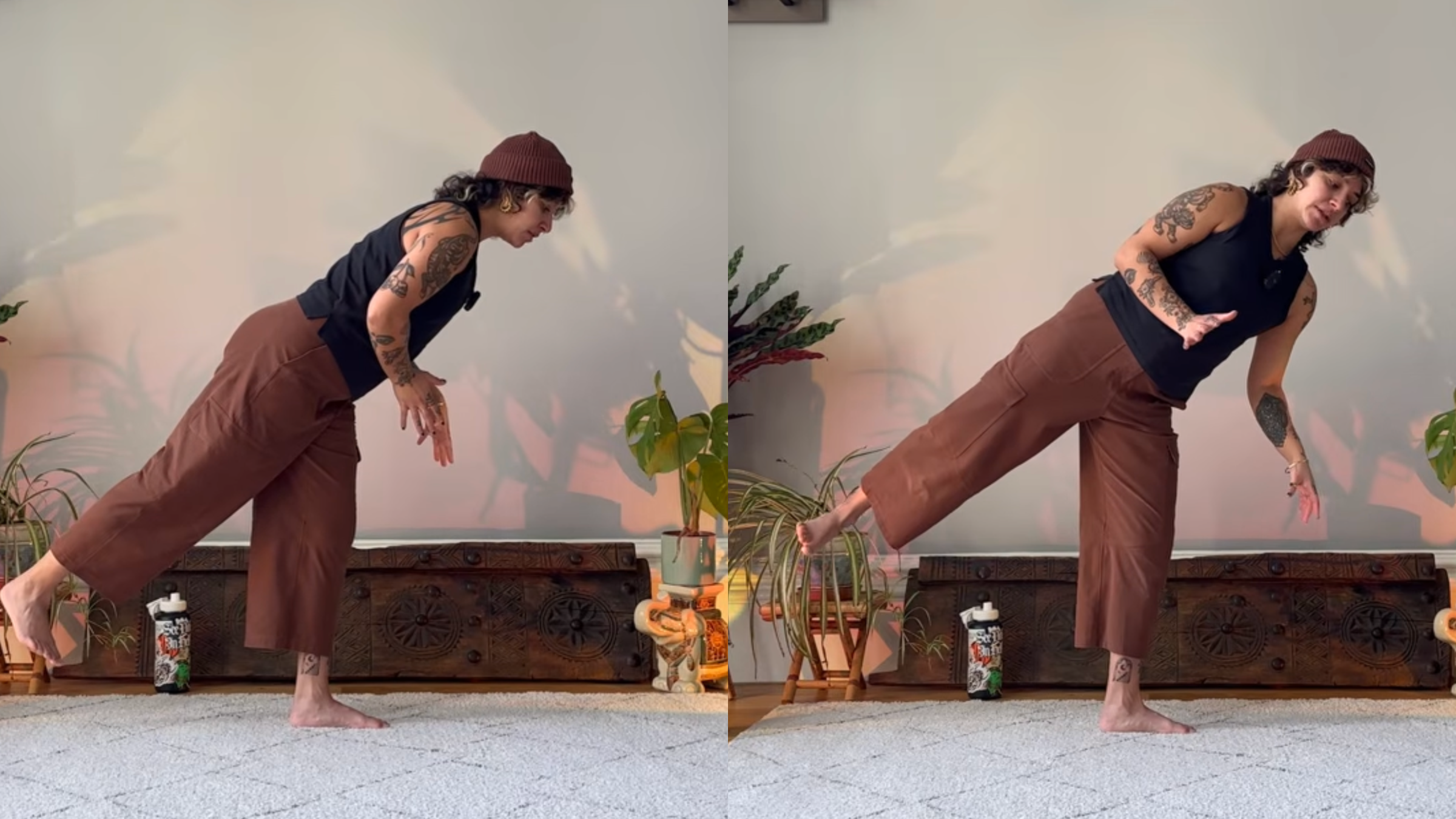
Using a wall or chair for balance, the Hip Airplane involves rotating the pelvis while the body is in a single-leg hinge. Walton utilizes the visualization of a "beam of light" originating from the belly button. Rotating this beam from the left wall to the right wall forces the deep hip rotators to engage, countering the tightening effect of long hours in a chair.
4. Upper Body Circles
This movement targets the thoracic spine. By stepping the feet wide and moving the torso in a circular motion, the practitioner addresses the stiffness that often resides between the shoulder blades—an area frequently compromised by poor desk posture.
5. Wrist and Forearm Stretches
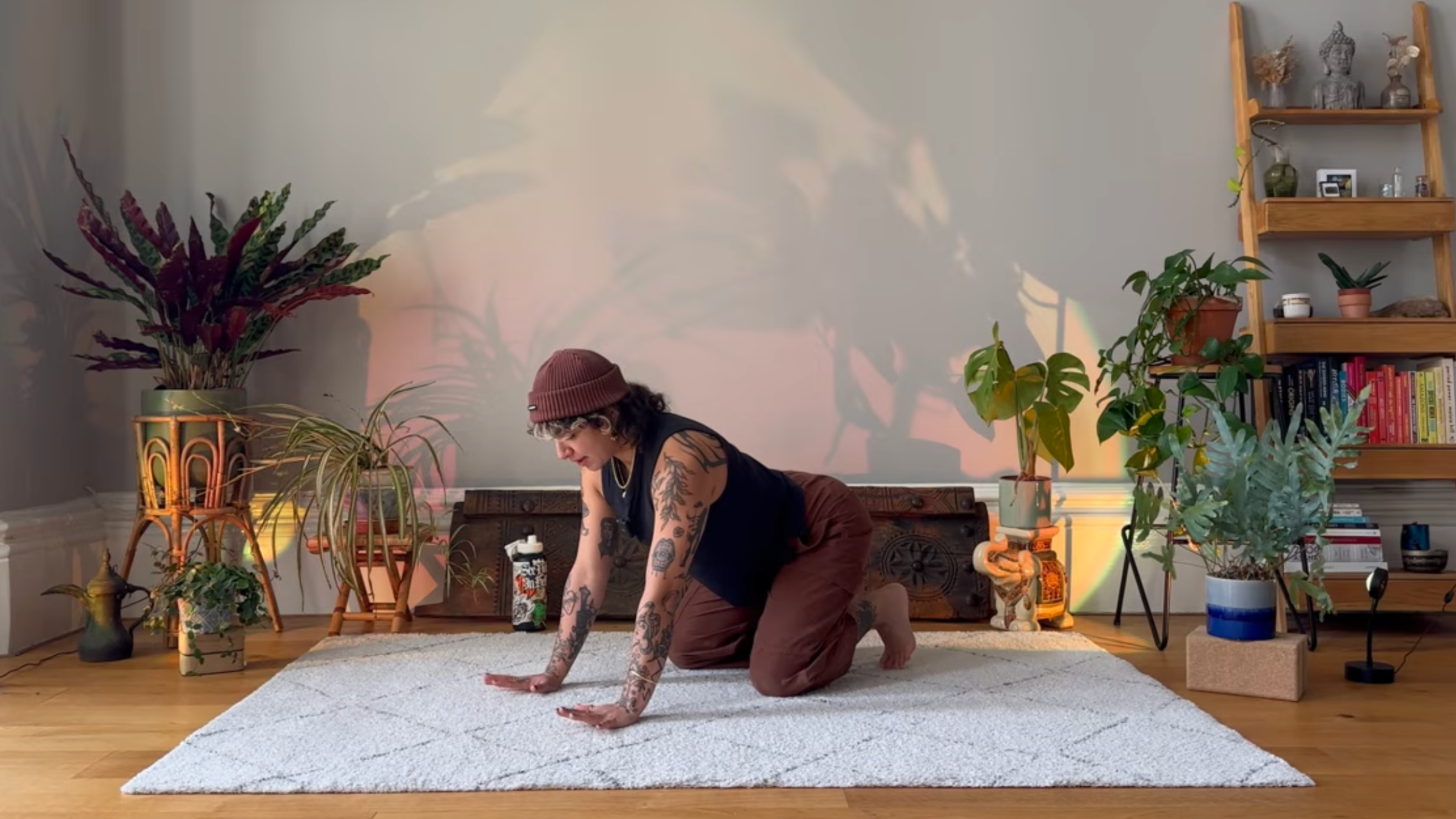
Often overlooked, the hands and wrists bear the brunt of digital work. Walton’s technique involves rocking on hands and knees while shifting weight between the palms and the fingertips. This manual manipulation of the carpal area is essential for preventing repetitive strain injuries.
6. Ankle Stretches
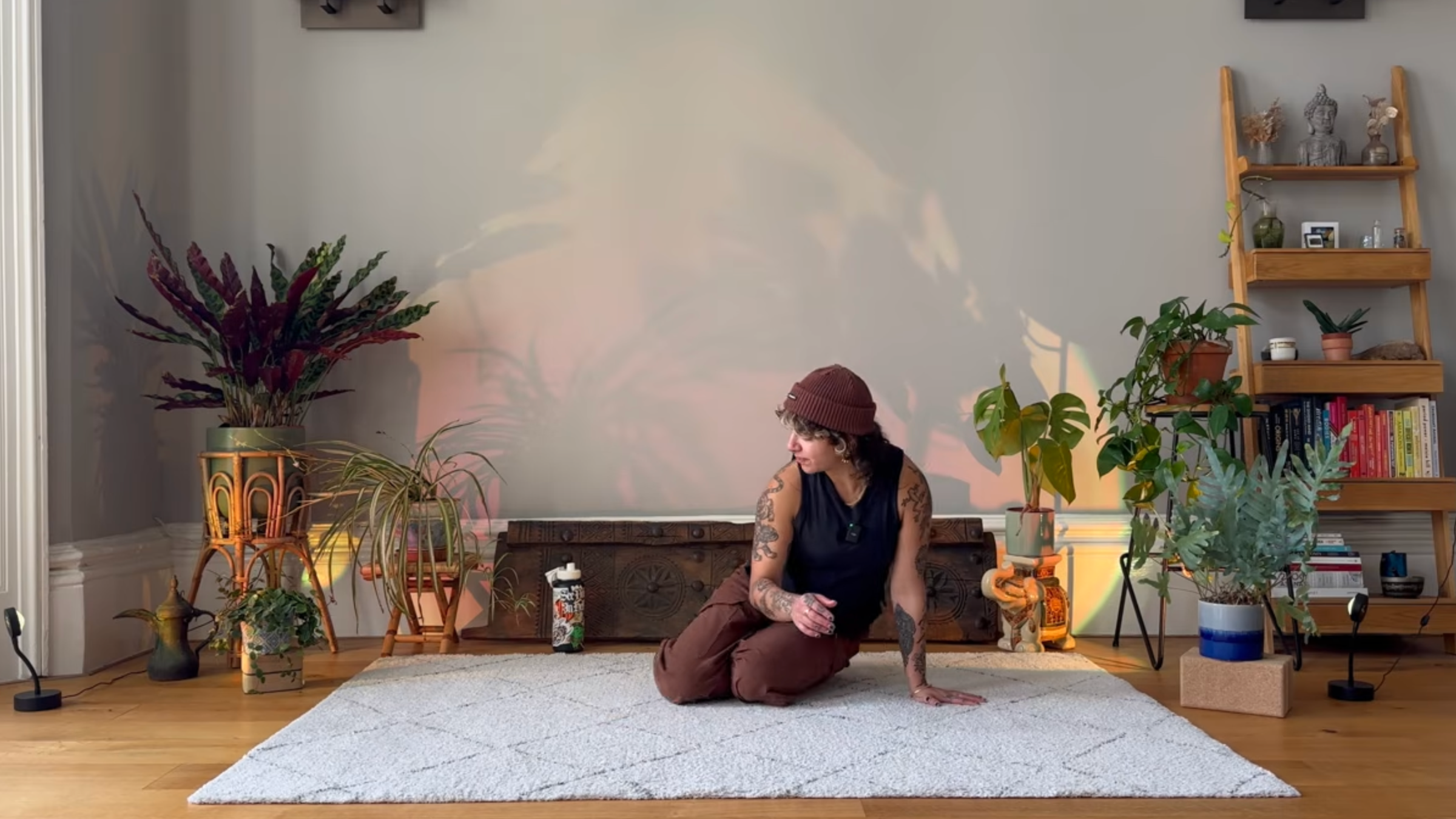
Often, the ankles are the most neglected part of the body. Sitting on the heels and transitioning into a "mermaid-style" seated position allows for a deep, passive stretch of the anterior ankle and the peroneal muscles.
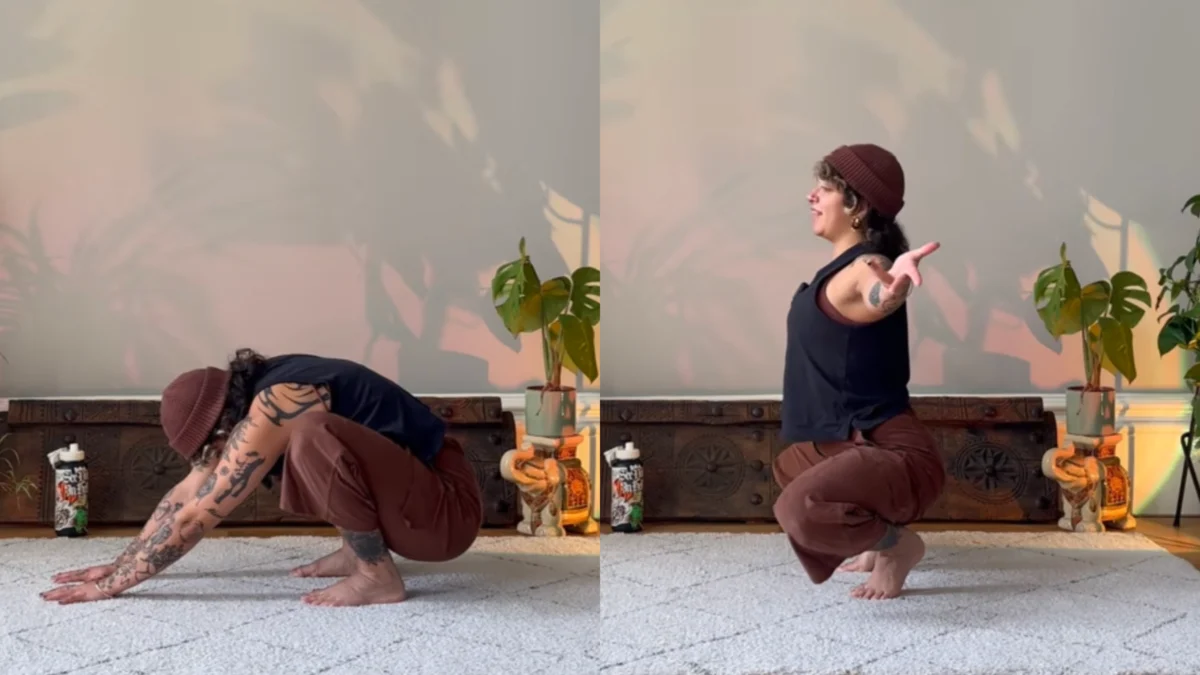
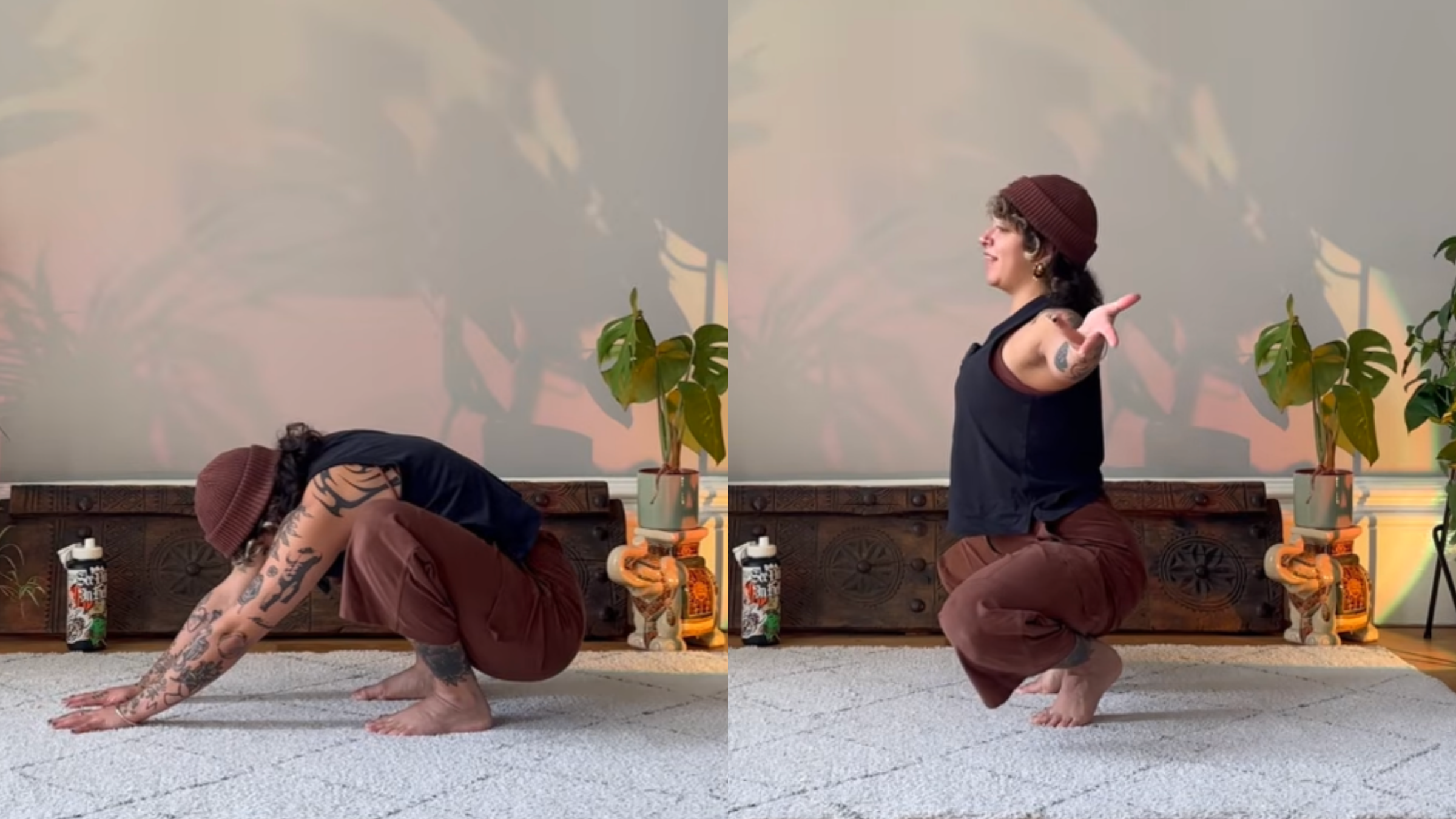
7. Squat Stretches
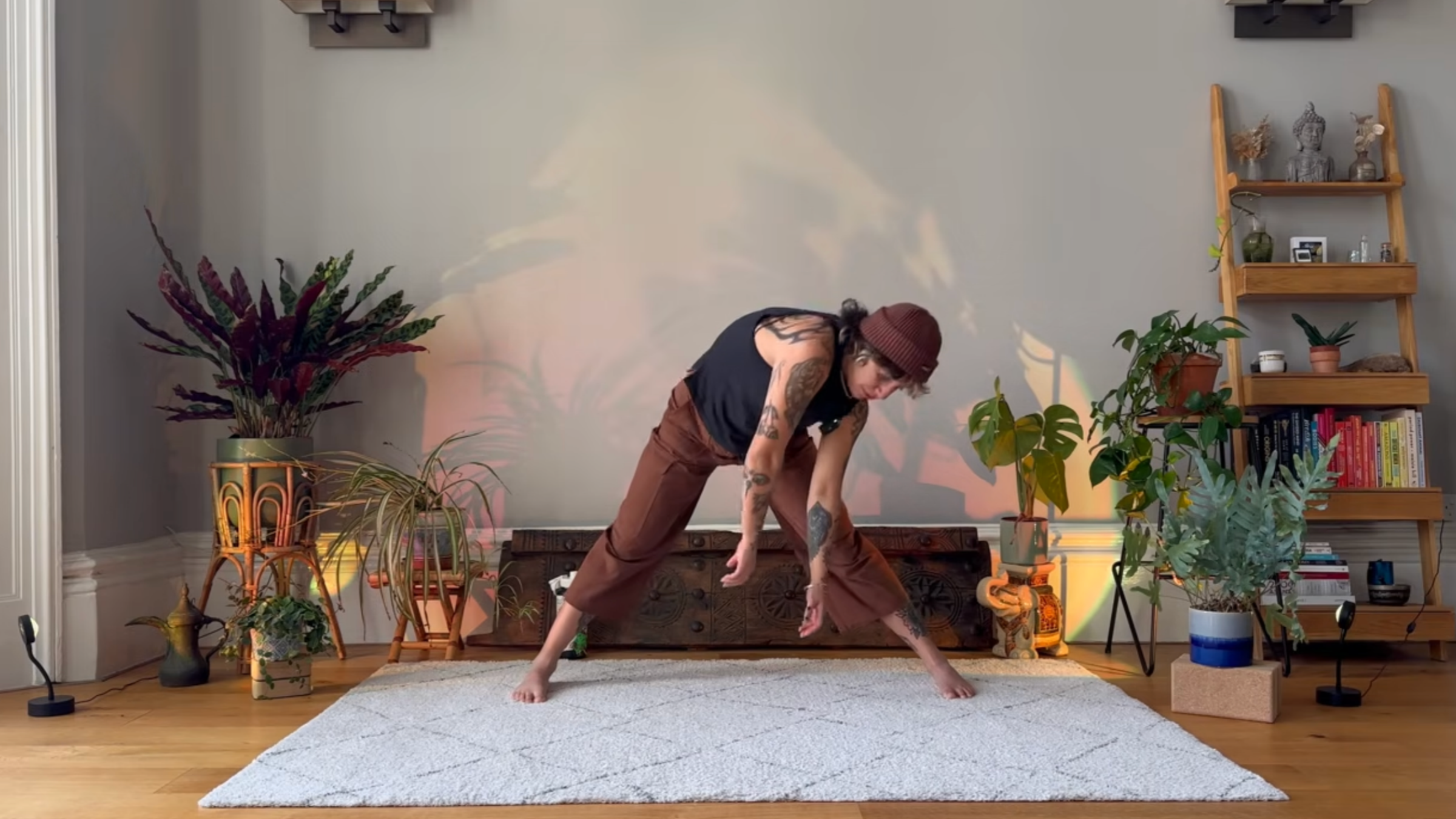
The deep squat is a foundational human movement that modern chairs have effectively eliminated. By lowering the hips into a squat and using the hands to walk the torso, the practitioner opens the hip flexors and stretches the posterior chain. This pose acts as a full-body recalibration.
8. Rag Doll
The sequence concludes with a slow transition into Rag Doll. By straightening the legs and allowing the upper body to hang heavy, the practitioner uses gravity to decompress the vertebrae.
Implications for Future Workplace Wellness
The implications of these findings are significant for human resources and corporate health policy. Companies that integrate "movement culture" into their daily operations—perhaps through mandated "stretch breaks" or the provision of dedicated movement spaces—are seeing higher levels of employee satisfaction and lower rates of burnout.
When asked about the sustainability of such practices, Walton is optimistic. "You don’t need to be a yoga master to reclaim your body," they note. "You just need to be willing to be curious about how you move. If you spend five minutes doing these exercises, the ‘work’ you return to will feel fundamentally different. You aren’t just reading an email anymore; you are reading it from a body that feels open, energized, and capable."
The data is clear: the desk chair is not a permanent fixture of our biological reality. By reclaiming the mobility that is inherent to human physiology, we can mitigate the risks of a sedentary life and, perhaps more importantly, rediscover the mental clarity required to navigate an increasingly complex world.
As of September 2026, the movement toward "micro-mobility" is gaining momentum. It is a simple, cost-effective, and deeply human response to the challenges of the digital age—proving that sometimes, the most effective way to move forward is to simply stand up and rotate.