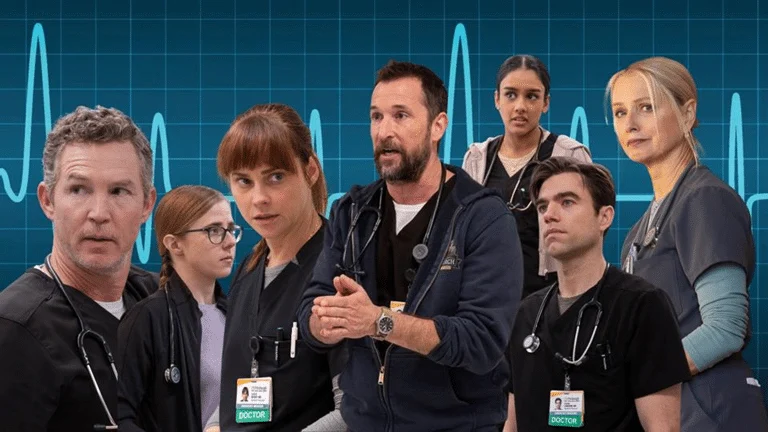
If you have not yet tuned into the high-octane intensity of HBO Max’s medical drama The Pitt, you are missing more than just compelling television; you are missing a masterclass in the systemic fractures currently defining the American healthcare landscape. While the show is categorized as a medical drama, it functions more like a mirror, reflecting the visceral, exhausting, and often heartbreaking realities of an emergency department (ED) pushed to its absolute limits.
Through the eyes of Dr. Robby and his team at the Pittsburgh Trauma Medical Center, The Pitt captures the frantic pulse of emergency medicine. Yet, as the show progresses into its second season, it transcends the typical tropes of the genre. It does not merely focus on the "clamshell" thoracic surgeries or the technical precision of resuscitation; it centers on the human cost of a system struggling to support its most vulnerable demographic: the aging population.
The Reality of the "Caregiver Burden"
The narrative arc of The Pitt frequently returns to the concept of caregiver burden, presenting perhaps the most accurate depiction of this phenomenon ever aired on primetime television. The show avoids the "medical hero" archetype to focus on the quiet desperation of the daughter caring for aging parents, or the husband struggling to hold his family together while navigating his wife’s terminal diagnosis.
One particularly poignant episode in the first season follows a mother-daughter duo. The daughter, visibly fraying at the edges, finds herself overwhelmed by the mounting physical and cognitive needs of her mother. In a moment of raw human frailty, the daughter disappears for several hours—not to escape, but simply to fall asleep in her parked car, driven to the brink by the crushing weight of responsibility.
The Statistical Reality
These are not merely plot devices designed to generate sympathy for the main characters. They are reflections of a national crisis. According to the Caregiver Action Network, more than 63 million U.S. adults are currently serving as caregivers for a spouse, elderly parent, or relative with special needs. Approximately one in five of these individuals is simultaneously balancing a full-time career. The physical and mental toll is documented extensively: caregivers face higher rates of clinical depression, anxiety, and an increased risk of developing their own chronic health conditions, often because they prioritize the health of their loved ones over their own preventative care.
A Systemic Shortage: The Geriatrician Gap
In a notable scene, Dr. Mohan is encouraged to pursue a geriatrics fellowship. The suggestion is delivered as a backhanded insult, implying that geriatrics is a "slower" or "easier" path compared to the adrenaline-fueled environment of the trauma center. This dialogue, while biting, exposes a profound cultural and structural bias within medicine: the undervaluation of geriatric care.
The Numbers Behind the Shortage
The reality is far less forgiving than the show’s dialogue. By 2030, the "Silver Tsunami" will be in full effect, with one in five Americans—the entire Baby Boomer generation—reaching the age of 65 or older. Despite this demographic shift, the United States faces a catastrophic shortage of specialists trained to treat them.
Current data shows the U.S. has roughly 7,000 board-certified geriatricians. To put that in perspective, there are over 60,000 pediatricians in the country. The U.S. Department of Health and Human Services has projected a shortfall of nearly 27,000 geriatric providers—a deadline that, by most metrics, has already passed. The crisis is exacerbated by medical education; only one in ten U.S. medical schools requires a dedicated geriatrics clinical rotation, despite the fact that virtually every physician will spend the majority of their career treating older adults.
The Overwhelmed ED: A Breeding Ground for Burnout
The Pitt excels at illustrating the "perpetual motion" of a modern hospital. The waiting room is a character in itself—constantly full, perpetually chaotic, and consistently under-resourced. In a telling sequence, Dr. Langdon admits to treating 16 patients in a single morning, only to realize he cannot recall a patient he saw just four hours prior.
The Impact on Patient Outcomes
The American Medical Association (AMA) has identified emergency medicine as the specialty with the highest rates of physician burnout. When providers are pushed to this extreme, the environment becomes inherently dangerous for older adults. Older patients are particularly susceptible to the "boomerang" effect—the cycle of being discharged from an overwhelmed ED, only to be readmitted shortly after due to complications or a lack of coordinated follow-up care. The speed at which care is delivered, while necessary for volume, often precludes the time required to manage the complex, comorbid conditions that define geriatric medicine.
The "Last Mile" Problem: Transportation and Access
Perhaps the most grounded, and therefore most harrowing, plot point involves a patient named Vera. After being technically cleared for discharge, Vera is left stranded in the hospital. She has no way to return home: her neighbor is unable to drive at night, and she lacks the financial means for a private taxi. The situation is only resolved when a medical student, Dr. Whittaker, pays out-of-pocket for a ride-share and personally escorts her to the ambulance bay.
Bridging the Gap
Transportation remains one of the most significant, yet overlooked, barriers to healthcare access. Research suggests that 3.6 million Americans miss or delay medical appointments specifically due to lack of reliable transportation. Furthermore, 50% of older adults report that they fear they will have to skip future appointments for the same reason. When the "last mile" of healthcare is not supported, the best clinical outcomes in the world are rendered moot.
Financial Dread and the Cost of Survival
The specter of financial ruin looms over every interaction in The Pitt. The show explores the ethical tightrope physicians must walk when their patients cannot afford prescribed care. When Medicaid cuts force doctors to scramble for workarounds, the emotional cost is immense. In one episode, a patient is discharged prematurely in a desperate attempt to spare his family from crushing medical debt, only to return hours later in a terminal state. The daughter’s subsequent turn to crowdfunding—a "Go Fund Me" for medical expenses—is a stark, albeit common, reality in the modern American experience.
Implications for the Future
The Pitt is more than a fictionalized account of medical chaos; it is a critique of a system that is currently failing to adapt to its aging citizenry. The issues highlighted—caregiver burnout, the geriatrician shortage, the lack of transportation, and the rising costs of care—are not merely points of dramatic tension. They are policy failures currently being negotiated in Congress, in medical board meetings, and in the boardrooms of health insurance providers.
As we look toward the next decade, the decisions made today regarding medical school curriculum, Medicare reimbursement rates, and social safety nets will dictate the quality of life for the largest generation of older adults in American history. If there is one lesson to be taken from the relentless, high-stakes environment of The Pitt, it is that we cannot continue to rely on the individual heroics of exhausted medical students and physicians to fill the gaps created by systemic neglect.
The healthcare system is at a turning point. We must prioritize structural support for caregivers and invest in a geriatric workforce that is commensurate with our demographic reality. If we fail to do so, we are not just watching a drama—we are living through the consequences of it.
Katrin Werner-Perez is the Director of Health Programs at the Alliance for Aging Research, where she advocates for policies that improve the quality of life and health for older Americans.