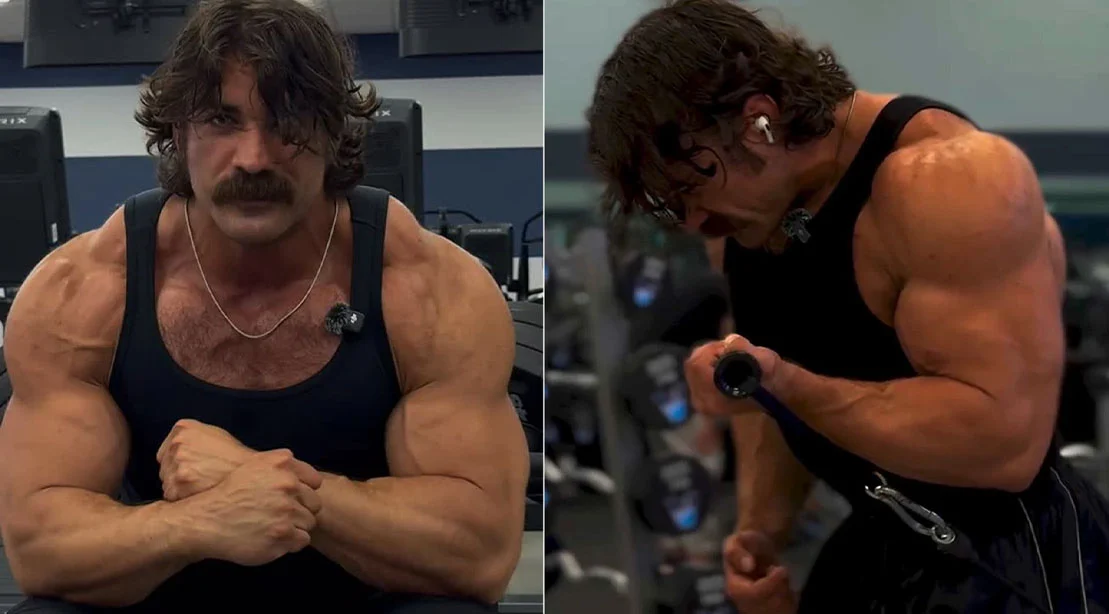
For decades, the dumbbell bicep curl has reigned supreme as the gold standard for arm development. It is the exercise that occupies the most space in gym lore—a quintessential movement for anyone seeking to add mass to their upper arms. Yet, as the science of hypertrophy evolves, so too must our training methodologies. While free weights remain an essential tool in any bodybuilder’s arsenal, a new movement is gaining traction for its unique ability to maximize tension: the Bayesian bicep curl.
Championed by elite fitness influencers and backed by emerging exercise science, the Bayesian curl is shifting the focus from simply "moving weight" to mastering the art of constant tension. Among its most vocal proponents is Swiss-born bodybuilder and architect Moritz Willen, whose recent endorsements have brought this cable-based movement into the mainstream fitness spotlight.
The Architect of Gains: Who is Moritz Willen?
Moritz Willen is far from your typical fitness influencer. Born in Bern, Switzerland, and currently based in Santa Barbara, California, Willen leads a dual life that bridges the gap between structured precision and physical intensity. By day, he is a professional architect, designing complex structures; by night, he applies that same level of analytical rigor to his physique.
With a following nearing 100,000 on Instagram—a cohort that includes high-profile figures such as UFC legend Mark Coleman—Willen has cultivated a reputation for high-intensity, science-backed training. His philosophy is rooted in "constructing" the body with the same meticulous planning one would use to build a skyscraper. His recent transition to prioritizing Bayesian curls as a cornerstone of his arm day routine has caught the attention of both amateur lifters and seasoned pros alike, sparking a broader conversation about why cables are currently outperforming free weights for specific hypertrophy goals.
The Mechanics: What is the Bayesian Bicep Curl?
At its core, the Bayesian curl is an exercise that leverages the unique properties of cable resistance to isolate the bicep brachii through its entire functional range.
To perform the movement, the athlete stands with their back to a cable machine, with the pulley set at a low position. By gripping the handle and pulling it forward and upward—maintaining a supinated (underhand) grip—the lifter moves the load across the body. The critical distinction between this and a standard dumbbell curl lies in the vector of resistance.
In a traditional dumbbell curl, the weight is subject to gravity. At the bottom of the movement, the resistance is minimal because the weight is directly beneath the shoulder joint. In contrast, the Bayesian curl—because it is performed with a cable—keeps the line of force perpendicular to the forearm throughout the entire arc of the movement. This ensures that the bicep is under constant, unyielding tension from the moment the set begins until the final repetition is completed.
Supporting Data: The Science of Muscle Length
The effectiveness of the Bayesian curl is not merely anecdotal; it is grounded in the principles of exercise physiology. Recent studies, including research published in journals such as Frontiers in Physiology, have highlighted the importance of training muscle groups at long muscle lengths.
When a muscle is stretched, it is capable of generating more force and is subjected to greater mechanical tension—a primary driver of hypertrophy. The Bayesian curl allows the bicep to reach a fully stretched position behind the plane of the torso. By initiating the curl from this extended position, the lifter is able to recruit more muscle fibers than a standard standing curl, which typically begins with the arm at the side of the body.
Furthermore, because the cable provides resistance even during the eccentric (lowering) phase of the lift, the muscle is forced to work against a constant load. This "time under tension" is the variable that many lifters miss when relying solely on dumbbells, where momentum and gravity often create "dead zones" at the bottom and top of the repetition.
The Evolution of Arm Day: Why Switch?
"Unlock your bicep potential with this freaking cooker!" Willen declared in a recent social media post. His enthusiasm is shared by many who find that their progress with dumbbells has plateaued.
The primary implication for those making the switch is the removal of the need for heavy stabilization. When lifting a heavy dumbbell, the body must expend a significant amount of energy stabilizing the weight through the shoulders and core. While this is great for functional strength, it can detract from the total mechanical load that the bicep can handle. By using a cable, the body is supported by the machine, allowing the lifter to direct 100% of their neurological drive toward the bicep contraction.
"Standing cable Bayesian curls keep tension locked on the bicep from start to finish," Willen explains. "The cable resistance means you’re working throughout the entire range of motion, not just at the peak. You don’t need heavy weight, just enough to light your arms on fire."
Strategic Implementation: How to Integrate the Movement
For those looking to incorporate the Bayesian curl into their current routine, Willen suggests a shift in mindset. It is not about how much weight is on the stack, but how much "intention" is placed into the movement.
Step-by-Step Execution:
- Setup: Set the cable pulley to the lowest position.
- Stance: Stand facing away from the machine. Step forward so there is tension on the cable before you even begin the rep.
- The Hold: Grasp the handle (or a rope attachment) with your arm extended behind you.
- The Arc: Curl the handle toward your chest, keeping your elbow relatively stationary or slightly tucked back.
- The Squeeze: Focus on a slow, controlled contraction at the top, ensuring the bicep is fully shortened.
- The Stretch: Return to the starting position with complete control, allowing the cable to pull your arm into a deep stretch.
"Focus on dragging that handle up with intention, feeling every inch of the contraction," says Willen. "Progressive overload happens naturally when you dial in the form and squeeze harder, leaning into that mind-muscle connection."
Implications for Future Training
The rise of the Bayesian curl signifies a shift in modern bodybuilding away from "ego lifting" and toward specialized hypertrophy techniques. As more lifters prioritize the mechanics of muscle fiber recruitment over the sheer weight on the bar, we are likely to see a decline in the dominance of free weights for accessory movements.
While dumbbells will always have a place in building functional, explosive strength, the cable machine is increasingly being viewed as the superior tool for isolation. For the competitive bodybuilder, the ability to control the resistance curve of a movement—as the Bayesian curl does—is the difference between average growth and elite-level development.
Conclusion: Turning Arms into "Swiss Mountain Peaks"
As Moritz Willen demonstrates, the secret to massive arms isn’t just about the heaviest load; it’s about the most efficient application of that load. By understanding the biomechanics of the bicep—specifically the benefits of the long-length stretch—lifters can bypass the plateaus that have frustrated them for years.
The Bayesian curl is more than a trendy Instagram exercise; it is a scientifically sound methodology for anyone serious about their physique. By integrating this movement into your routine, you aren’t just training your arms; you are refining the way you engage with your muscles. As Willen aptly puts it, once you master the connection, all that remains is to increase the resistance, track your progress, and "watch your biceps turn into Swiss mountain peaks."
For those ready to refine their approach to arm development, the path is clear: step away from the dumbbell rack, find an open cable station, and start prioritizing the tension that builds real, lasting size.
To follow Moritz Willen’s journey and see his training techniques in action, you can find him on Instagram at @moritz_willen.