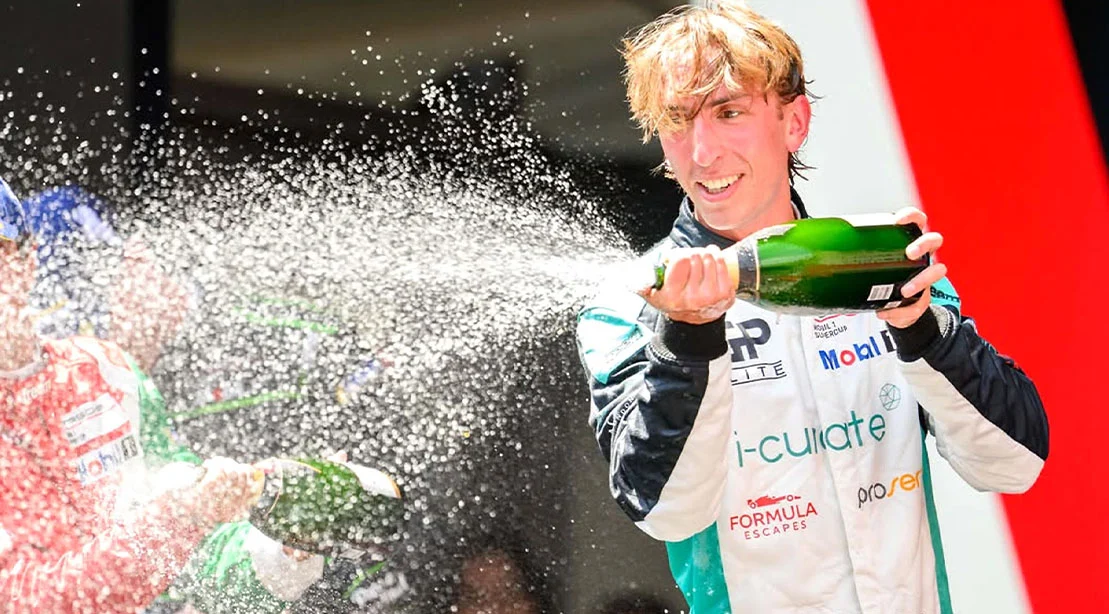
In the high-octane world of international motorsport, the gap between a podium finish and the scrapheap of "what-could-have-been" is often measured not in milliseconds, but in currency. For British racing prodigy Gustav Burton, the road to the Porsche Supercup—the premier support series for Formula 1—has become a masterclass in modern entrepreneurship. While his peers navigate the traditional, often opaque corridors of corporate sponsorship, the 2021 British GT Champion (GT4 Silver) is rewriting the playbook, turning his personal brand into a decentralized engine for his racing career.
The Dual Struggle: Cockpit Precision vs. Financial Agility
The life of a professional racer is frequently romanticized as a pursuit of pure speed. However, for Burton, the reality is a bifurcated existence. On one hand, he faces the brutal physical demands of a Porsche 911 GT3 Cup car, where cockpit temperatures routinely soar above 140°F (60°C). On the other, he faces the cold, calculated arithmetic of professional sport.
"If you’d asked me three years ago what my goal was, it would be to become a factory driver," Burton explains. "You want that Porsche contract where you’re employed, you don’t have to worry about the business side, and you just drive. But the landscape has shifted."
Burton, who cut his teeth winning the 2018 Renault Clio Cup UK Junior title, has realized that in the current climate, reliance on a single corporate benefactor is a high-risk strategy. By leveraging his growing social media presence and his role as the founder of the BackSeat Drivers podcast, Burton has transitioned from a traditional athlete to a content creator and entrepreneur, aiming for a model of self-sufficiency that empowers his community to be his primary sponsor.
Chronology of a Crisis: The Race to Monza
The vulnerability of the modern racing model was laid bare in late 2024. With the Porsche Mobil 1 Supercup round at the iconic Autodromo Nazionale Monza approaching on September 6, Burton found himself in a precarious position. After initial sponsorship commitments failed to materialize, he was faced with a stark reality: he was a world-class driver without the requisite funding to field his car on the grid.
In an era where most athletes might retreat into silence while scrambling for private equity, Burton took a different route. He opted for radical transparency. Through his social media channels, he laid out the financial requirements to his followers, effectively crowdsourcing his way to the Italian Grand Prix.
The Micro-Sponsorship Revolution
By breaking down the massive costs of professional racing into "mini-sponsorships"—some as accessible as $13.50—Burton engaged a fanbase that felt personally invested in his success. This was not merely a donation drive; it was a shift in the power dynamic of the sport. It transformed his followers from passive observers into active participants in his career trajectory.
"I couldn’t believe the response," Burton remarked during the peak of the campaign. "The power of social media to mobilize a community, when traditional channels fail, is truly the future of the sport for many of us."
The Physical Architecture of a Modern Racer
While the financial side of his career requires the agility of a hedge fund manager, the physical side requires the resilience of a combat athlete. At 6’4”, Burton is an outlier in a sport that typically favors a lower center of gravity. His training regimen is a testament to the extreme physiological toll of GT racing.
Strength, G-Forces, and Neck Integrity
Racing at the level of the Porsche Supercup is not merely about steering; it is about managing massive, sustained G-forces. "Whilst undergoing those forces, you’re holding your left foot on the brake with immense pressure while your right foot is dancing on the throttle," Burton explains. "Imagine swerving a road car as hard as you possibly can, then holding that position for 30 or 40 minutes. It’s an endurance test for every major muscle group."
Beyond the legs, the neck and shoulders are under constant bombardment. A professional racing helmet, including the HANS (Head and Neck Support) device and communication equipment, can weigh up to 11 pounds (5kg). In a high-speed corner, this weight is multiplied by several Gs, putting enormous strain on the cervical spine. To combat this, Burton utilizes a precise protocol of reverse flies, front raises, and standing rows to build a structural foundation capable of resisting fatigue during long-distance endurance sprints.
The Scale of Discipline: Weight Management
In motorsport, every gram is accounted for. Because the car’s total legal weight includes the driver, there is zero margin for error. "After every session, we go straight to the scales with our helmet," Burton notes. "If you don’t hit your target, you risk disqualification."
This rigid requirement forces a lifestyle of extreme discipline. Burton’s use of fasted cardio in the morning, while admittedly "boring," serves as a metabolic anchor. It allows him the flexibility to navigate the chaotic nutritional landscape of international travel, where healthy options are often scarce. However, as Burton points out, the Porsche hospitality suites are a sanctuary, offering high-quality, balanced nutrition that allows him to remain at his peak performance weight without sacrificing the fuel needed for high-intensity racing.
Official Responses and Industry Implications
The success of Burton’s "last-ditch effort" to reach Monza was confirmed only days before the event. A combination of grassroots funding from his community and a significant contribution from Formula Escapes ultimately bridged the gap.
This development carries significant implications for the future of motorsport talent development. The traditional "arrive-and-drive" model, which relies on either extreme personal wealth or massive corporate sponsorships, is increasingly being challenged by the "community-funded" model.
The Implications of Decentralized Sponsorship
- Democratization of the Grid: If drivers like Burton can sustain their careers through micro-sponsorships, it lowers the barrier to entry for talented drivers who lack family wealth or elite corporate connections.
- The "Creator-Athlete" Paradigm: The modern driver is expected to be a media entity. Sponsors are no longer looking for a logo on a car; they are looking for engagement metrics, storytelling, and an audience that trusts the driver’s voice.
- Institutional Stability: While Burton’s success with crowdsourcing is a heartening story of resilience, it also highlights a failure in the current sponsorship ecosystem. The reliance on last-minute, emotional fundraising is not a sustainable long-term strategy for professional racing series.
Conclusion: The Journey Continues
As Gustav Burton continues to navigate the complexities of his career, his story serves as a mirror to the broader state of professional sport. It is a tale of grit, not just in the cockpit, but in the boardroom. By successfully securing his place on the grid at Monza, Burton didn’t just win a race against time; he validated a new way of surviving in a sport that historically devours those who cannot pay to play.
"This crowdfunding was an absolute last-ditch effort," Burton shared on social media after the funds were secured. "We f***ing succeeded. I cannot believe it… We’re going to Monza!"
For now, the focus shifts back to the tarmac. But the lesson remains: for the modern athlete, the finish line is no longer the end of the journey—it is merely the start of the next fundraising cycle. Whether this model can scale to the heights of Formula 1 or endurance racing at Le Mans remains to be seen, but one thing is certain: Gustav Burton has proven that when you bring your fans into the driver’s seat, you are never truly racing alone.