







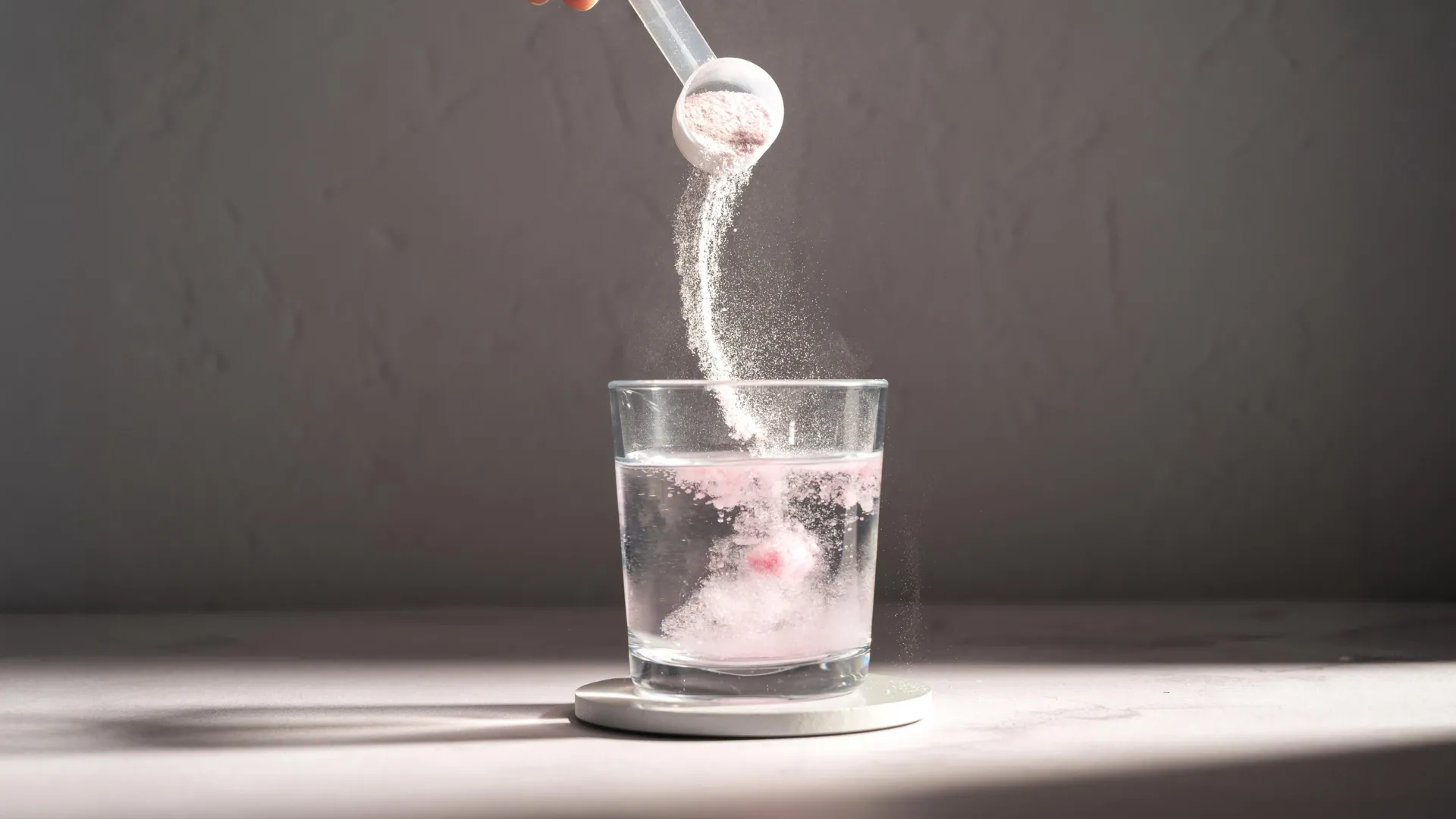
For decades, the fitness industry has cast creatine as the exclusive province of bodybuilders and high-performance athletes—a white, powdery supplement associated with heavy iron and bulging biceps. However, a groundbreaking new study from Texas A&M University is dismantling these stereotypes, suggesting that creatine may be an essential tool for middle-aged adults seeking to preserve their vitality, combat sarcopenia, and optimize body composition.
Led by Dr. Richard Kreider, a titan in the field of exercise physiology and director of the Exercise and Sport Nutrition Lab at Texas A&M, this research signals a paradigm shift. The findings, published in the Journal of the International Society of Sports Nutrition, indicate that the benefits of creatine extend far beyond the gym floor, offering a promising, safe, and cost-effective intervention for the physiological declines that define middle age.
Main Facts: The New Frontier of Supplementation
The core revelation of the study is that creatine monohydrate—a compound naturally produced by the human body—functions as a powerful metabolic aid even in the absence of a grueling exercise regimen. In a 12-week controlled intervention, researchers observed that adults aged 45 to 65 who supplemented with 10 grams of creatine daily saw measurable improvements in lean muscle mass and physical strength, regardless of whether they engaged in structured exercise.
This is a departure from conventional wisdom. Traditionally, it was believed that creatine was only "activated" by the high-intensity energy demands of resistance training. While the study confirms that pairing the supplement with exercise yields the most profound results, the fact that sedentary individuals experienced physical gains suggests that creatine may help "prime" muscle tissue against the atrophy often associated with the aging process.
A Chronological Breakdown of the Study
To understand the scope of these findings, it is necessary to examine the rigorous framework of the 12-week study.
The Methodology
The research involved 64 healthy adults, split into two primary cohorts: those who committed to a structured, diet-induced weight-loss and exercise program, and those who maintained their baseline lifestyle (the "non-exercise" group).
Within these groups, participants were randomized to receive either 10 grams of creatine monohydrate per day or a placebo. This double-blind, placebo-controlled design is the gold standard for clinical research, ensuring that the results were not skewed by participant bias or the placebo effect.
The 12-Week Progression
- Weeks 1–4: Baseline measurements were established, focusing on body composition (lean tissue vs. fat mass), leg press strength, bench press strength, and aerobic capacity.
- Weeks 5–8: Participants began their respective protocols. In the exercise group, participants engaged in both resistance and aerobic training three times per week, coupled with a mild caloric deficit.
- Weeks 9–12: Final data collection confirmed that the creatine cohort was outperforming the placebo group in every metric of muscular strength and body composition, marking a significant divergence in metabolic health.
Supporting Data: By the Numbers
The quantitative outcomes of the Texas A&M study provide a compelling argument for the inclusion of creatine in a daily health regimen for the over-45 demographic.
Strength and Lean Tissue Gains
In the non-exercise group, participants supplementing with creatine gained an average of 2.4 pounds of lean tissue over the 12-week period. Furthermore, these individuals demonstrated a marked increase in both leg press and bench press strength—a finding that holds massive implications for fall prevention and functional independence in later life.
The "Fat-Loss, Muscle-Gain" Paradox
Perhaps the most striking data point concerns the exercise group. Typically, when an individual enters a calorie-restricted, weight-loss program, they lose both fat and muscle mass. However, the creatine users experienced the "holy grail" of body recomposition: they added nearly three pounds of lean tissue while simultaneously shedding fat.
In contrast, the placebo group—following the exact same diet and exercise routine—showed minimal changes in lean tissue. The creatine group also achieved a significantly larger decrease in body fat percentage, marking the first time a study has explicitly linked creatine supplementation to superior fat-loss outcomes in a weight-loss program.
The Limits of Aerobic Capacity
It is important to note where the supplement did not move the needle. The study found that creatine did not improve aerobic capacity (VO2 max) beyond the improvements achieved by exercise alone. This aligns with historical data suggesting that creatine’s primary mechanism of action is the resynthesis of ATP (adenosine triphosphate) during high-intensity, short-duration bouts of effort, rather than the sustained cardiovascular output required for endurance sports.
Official Responses and Expert Perspective
Dr. Richard Kreider, who has spent over three decades researching the molecule, views these findings as a validation of his life’s work. "We are moving past the era where creatine is just for the athlete," says Kreider. "We are looking at it as a longevity molecule."
Addressing the Safety Profile
A frequent concern for middle-aged adults considering supplementation is long-term safety. Kreider’s team addressed this directly in a 2025 analysis of 685 clinical trials. The conclusion was unequivocal: there was no significant difference in side-effect rates between those taking creatine and those on a placebo. Given that the body naturally synthesizes creatine and that it is found in small amounts in red meat and fish, it is considered one of the most thoroughly vetted and safest supplements on the market.
The "Practicality" Gap
When asked why people don’t just get their creatine from food, Dr. Kreider is blunt about the logistics. "To hit a therapeutic dose of 10 grams per day, you would need to consume five to ten pounds of meat or fish," he explains. "That is not only impractical and expensive, but it also introduces a massive caloric and cholesterol load that would negate the benefits of the supplement." Consequently, high-quality, synthetic creatine monohydrate remains the only viable path to achieving these physiological results.
Implications for Public Health and Healthy Aging
The implications of this research are vast, touching on everything from geriatric healthcare to the prevention of metabolic syndrome.
Combating Sarcopenia
Sarcopenia—the age-related loss of muscle mass and function—is a silent epidemic. As people enter their 50s and 60s, they lose muscle at an accelerating rate, which leads to frailty, loss of mobility, and a higher risk of injury. By providing a safe, simple way to maintain muscle mass, creatine could become a frontline defense in the fight to extend "healthspan"—the number of years a person lives in good health.
Beyond Muscle: Cognitive and Metabolic Benefits
While the Texas A&M study focused on physical composition, Dr. Kreider and his peers are increasingly looking at the brain. Because the brain is a high-energy organ that relies on ATP, emerging research suggests that creatine may play a role in supporting cognitive function, memory, and neuroprotection. If the muscle-building benefits of creatine are the "primary" effect, its potential to stave off cognitive decline could be the most important secondary effect.
A New Standard of Care
The medical community is traditionally slow to adopt supplementation, but the sheer volume of data supporting creatine is becoming impossible to ignore. As the population ages, healthcare providers may soon move toward recommending creatine as a standard, low-cost intervention for older adults, much like vitamin D or calcium.
Conclusion: A Supplement for Everyone
The Texas A&M University study serves as a wake-up call for the general public. We are moving toward a future where the definition of "performance" is no longer about hitting a new personal best on the bench press, but about maintaining the metabolic engine required for a long, independent, and high-quality life.
By separating creatine from the stigma of bodybuilders and placing it firmly within the context of healthy aging, researchers have opened the door to a new era of nutritional science. For the 45-to-65-year-old demographic, the message is clear: whether you are a gym-goer or a sedentary professional, the evidence suggests that your muscles—and your metabolism—might just benefit from a little extra fuel.
This study was funded by the WoodNext Foundation through the Texas A&M Foundation.