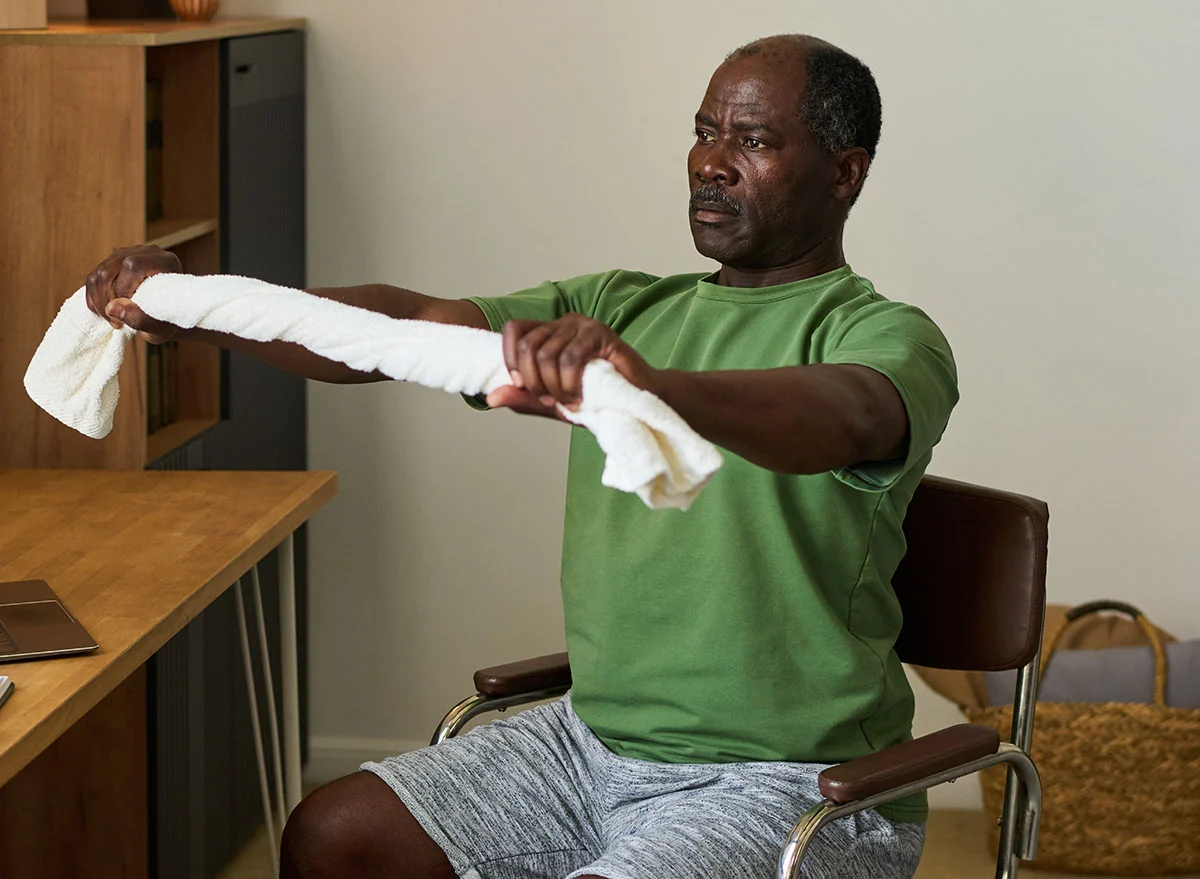
For many, the idea of strength training conjures images of clanging iron plates, complex cable machines, and the intimidating atmosphere of a commercial gym. However, a growing movement in geriatric physical therapy and functional fitness is shifting the narrative. The latest research and professional training methodologies suggest that the most effective tool for rebuilding arm strength after the age of 60 might already be hanging in your bathroom: a simple hand towel.
This low-impact, high-reward approach leverages the principles of isometric training—a method where muscles are activated and tension is applied without changing the length of the muscle or moving a joint through a full range of motion. For the aging population, this provides a pathway to increased muscle mass, improved joint stability, and enhanced grip strength without the risk of joint strain associated with traditional heavy lifting.
The Science of Isometric Strength
At its core, "towel training" relies on the physics of resistance. When you grip a towel and pull against it—either by using your own body weight as an anchor or by resisting one limb with another—you create a "closed-loop" of tension.
Scientific literature, including studies published in the Journal of Strength and Conditioning Research, has long supported the efficacy of isometric exercises for maintaining muscle fiber integrity in older adults. As we age, we experience sarcopenia, the gradual loss of muscle mass and function. By utilizing steady, controlled tension, practitioners can stimulate the nervous system to "recruit" more muscle fibers, effectively waking up dormant muscle groups that have become underutilized due to sedentary habits or fear of injury.
The Benefits of Accessible Resistance
The primary barrier to fitness for those over 60 is often not a lack of motivation, but a lack of accessible, pain-free equipment. Towel training removes the "equipment barrier." Because the user controls the resistance, the workout is inherently self-limiting. If a movement begins to cause discomfort in the shoulders or wrists, the user can instantly decrease the intensity. This biofeedback loop makes it an ideal protocol for individuals managing osteoarthritis, tendinitis, or general joint stiffness.
A Structured Routine for Rebuilding Upper-Body Strength
To maximize results, fitness experts recommend a consistent schedule of two to four sessions per week. Below is a comprehensive guide to the five fundamental towel movements designed to target the biceps, triceps, lats, and forearms.
1. Standing Towel Isometric Curl
This movement mimics the traditional barbell curl but eliminates the risk of "swinging" weights. By anchoring the towel under your feet, you dictate exactly how much tension your biceps face.
- The Technique: Stand on the center of a hand towel, gripping both ends. Keeping your elbows tucked to your sides, pull upward as if performing a curl. Because your feet hold the towel down, your arms provide the resistance.
- Targeted Areas: Biceps, brachioradialis (forearm), and core stability.
- Pro Tip: Maintain a neutral wrist position throughout the hold to avoid strain. Focus on a 15-second "all-out" effort, followed by a 45-second recovery.
2. Seated Towel Row
The seated row is essential for posture, specifically for countering the "slumping" often seen in older adults.

- The Technique: Sit on the floor with legs extended. Loop the towel around the soles of your feet. With a straight back, pull your elbows back behind your ribcage, squeezing your shoulder blades together.
- Targeted Areas: Rhomboids, latissimus dorsi, and rear deltoids.
- The Impact: This movement helps pull the shoulders into proper alignment, relieving the tension associated with prolonged sitting at a desk or in a chair.
3. Overhead Towel Triceps Extension
Triceps are the "workhorses" of arm extension—vital for pushing open heavy doors or pushing yourself up from a chair.
- The Technique: Hold the towel vertically behind your back. Your top hand pulls upward, while your bottom hand resists. Switch positions to ensure balanced development.
- Targeted Areas: Triceps and shoulder stabilizers.
- Crucial Note: Ensure your upper arm remains close to your ear to maximize the stretch on the tricep muscle without overextending the shoulder capsule.
4. Towel Pull-Apart Hold
This is a supreme exercise for upper-back health and rotator cuff stabilization.
- The Technique: Hold a towel out in front of you with hands shoulder-width apart. Attempt to "rip" the towel in half by pulling your hands outward. Hold this tension for 10 seconds.
- Targeted Areas: Rear deltoids and scapular retractors.
5. Towel Wring-Out
Grip strength is one of the most reliable predictors of longevity and independence in later life.
- The Technique: Mimic the action of wringing out a wet towel. Squeeze firmly and twist, holding for 30 seconds before reversing the direction of the twist.
- Targeted Areas: Hand intrinsic muscles, wrist flexors, and grip.
Chronology of Progress: What to Expect
When beginning a new strength program after 60, consistency is more important than intensity.
- Weeks 1-2: Focus on mastering the "clean position." Your goal is to feel the muscle activate without experiencing sharp joint pain.
- Weeks 3-6: Introduce "tempo variations." Slowing down the engagement of the muscles increases time-under-tension, which triggers metabolic adaptations in the muscle tissue.
- Week 6 and Beyond: Once baseline strength is established, increase the duration of holds or the frequency of the workouts to maintain the gains.
Implications for Daily Function
The implications of this training extend far beyond the aesthetic of "toned arms." For an older adult, these exercises directly translate to increased independence. The grip strength developed through wring-outs makes opening jars or carrying groceries safer. The back strength from rows improves balance and reduces the risk of falls by better centering the body’s gravity.
Furthermore, the psychological impact of being able to exercise effectively without a gym membership is profound. It empowers individuals to take ownership of their physical health. As noted by physical therapists, the ability to perform these movements anywhere—be it a hotel room, a living room, or a park—removes the excuses that often lead to the abandonment of fitness routines.
Conclusion: Simplicity as a Strategy
The simplicity of the towel is not a weakness; it is its greatest strength. By utilizing the tension created by your own anatomy, you bypass the need for external weights that may be cumbersome or intimidating.
When you approach your health with this "purposeful effort" mindset, you aren’t just doing chores with a piece of linen—you are performing a calculated, highly effective strength-training protocol. As you move forward with these five movements, remember that the goal is not to lift the heaviest weight, but to command the tension of your own body. Start slow, maintain strict form, and you will find that "rebuilding strength" is far more accessible than the fitness industry would have you believe.
References & Further Reading
- National Center for Biotechnology Information (NCBI): Studies on the efficacy of isometric contractions in elderly populations.
- Journal of Aging and Physical Activity: Research on sarcopenia prevention and low-impact resistance training.
- Clinical Guidelines for Geriatric Exercise: Recommendations for safe, accessible strength training protocols.